Yacht Organization on the North Coast of São Paulo
The vessel sits idle five days a week, and the ferry enters the maths before any crate does. Silvana Santanna organizes onboard in Ilhabela, São Sebastião, Ubatuba and Guarujá, with a plan built for the hull and for the crossing.
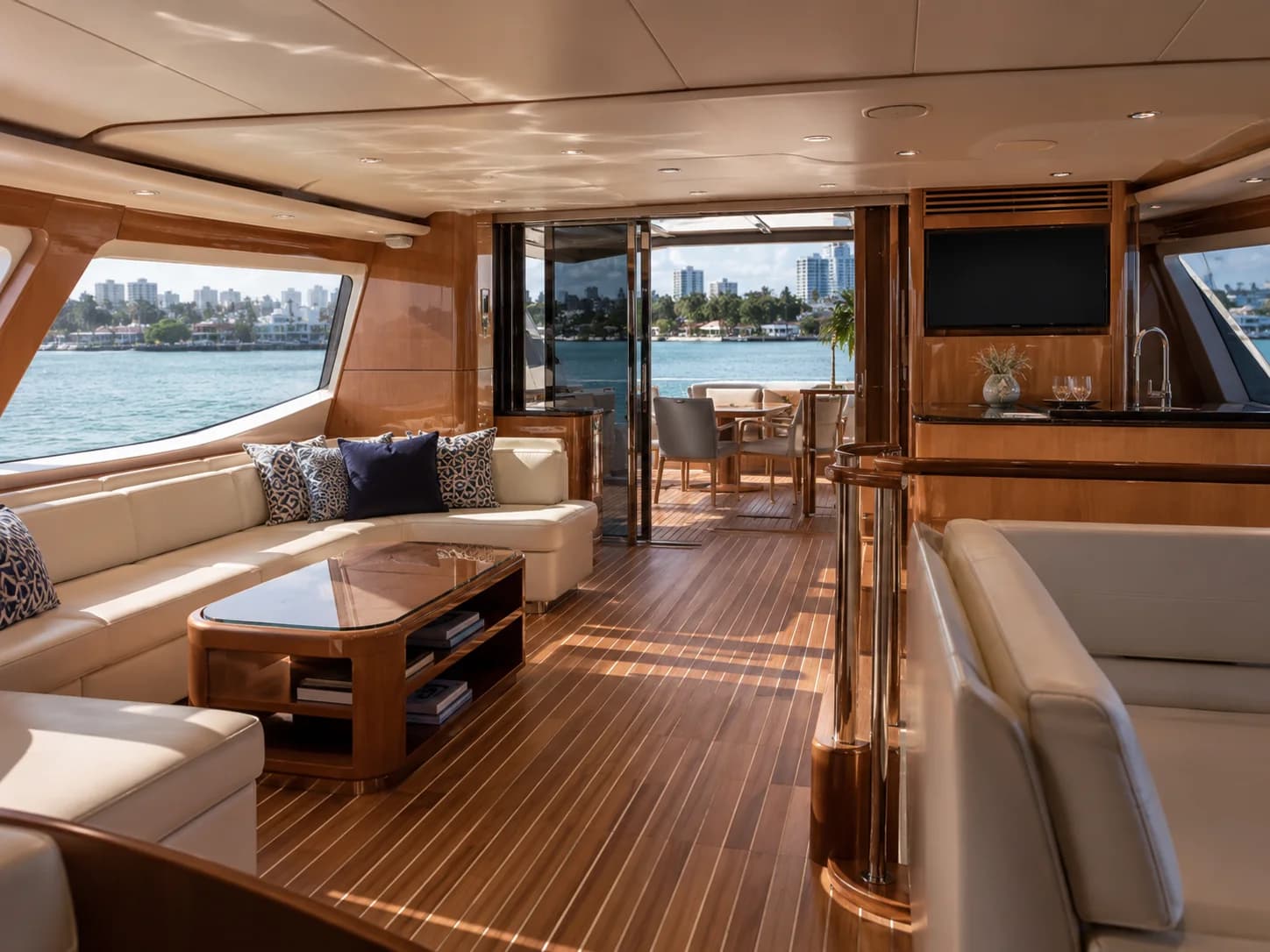
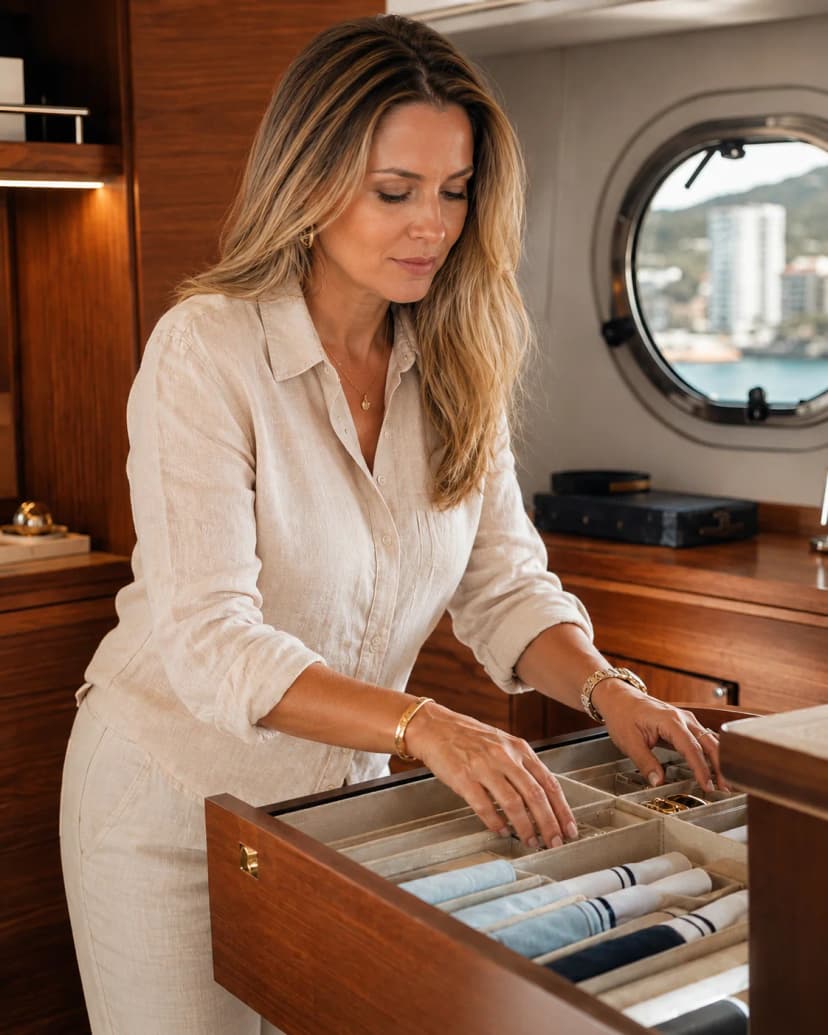
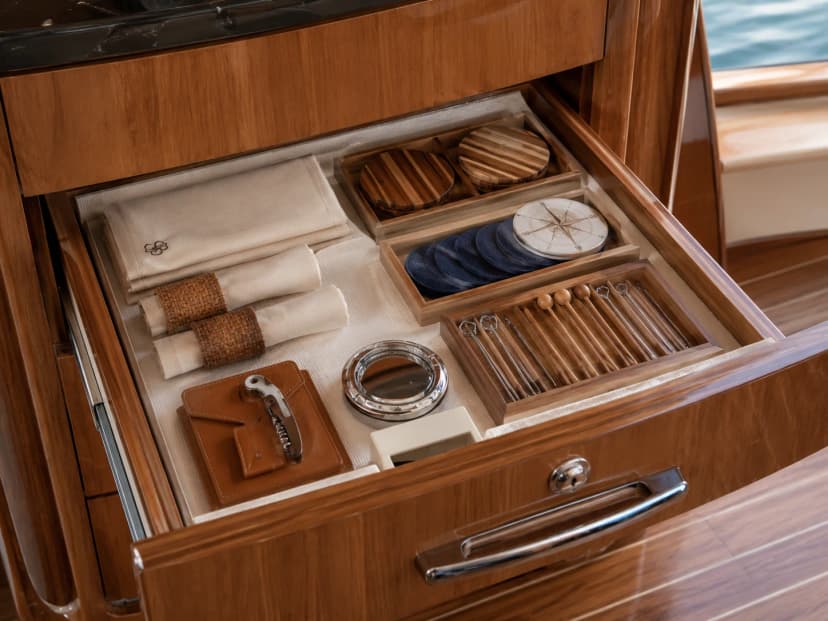
"The galley worked for a week before I hired her, then it kept working forever. I arrive on Saturday and find it exactly as I left it."
Fernanda L. · Focker 305 · Marina Astúrias, Guarujá
The problem nobody talks about
On the São Paulo coast, logistics come before the drawer
The ferry decides how the day starts
A vessel in Ilhabela means a crossing queue before a single crate goes aboard. Anyone who leaves the ferry out of the plan loses the first half of Saturday still on the mainland.
Friday arrival, no time to tidy
The trip here starts in São Paulo after work, three hours of road. The galley has to be ready when the car pulls in, because nobody sorts provisions at eleven at night.
A heeled sailboat hands everything back
In the São Sebastião channel the wind blows all year round. Anything not contained leaves its place on the first tack, and a household solution does not take that kind of load.
Two trips for the same crate
A purchase made without measuring turns into return freight. On an island, one measurement error costs a whole crossing, not a quick run to the shop.
What changes onboard
between Ubatuba and Guarujá
Every service happens with the vessel where it already is, with no relocation and no hauling out.
Complete organization with logistics built in
Bow to stern, with material sized to go over in a single trip and execution planned to fit the time between two crossings.
Securing for heeled sailing
Dividers, non-slip and fixings in sailboat lockers, with weight kept low and near the waterline. What sits loose in the channel does not stay organized for long, and the sound of crockery shifting gives the problem away before the first tack is over.
A galley for a Friday-night arrival
Breakfast, lunch and dinner for two days in separate zones, ready for whoever arrives late and wants to cast off early.
Weekend cabins and deck lockers
Space defined per guest, linen changed without dismantling the forepeak berth, and a deck locker holding only what is actually used at anchor, lines and fenders included.
Preparation before regatta season
The vessel ready before sailing week and before the turn of the year, when the marina and the crossing are both at their limit.
New vessel handover
A new boat in Ilhabela, São Sebastião or Guarujá gets the system before its first weekend of use.
How the onboard visit works on the North Coast
The method is the same across the three regions I serve and it is described in Yacht Organization. What changes here is logistics, because everything crosses to Ilhabela by ferry, and the type of hull, because the channel is sailing country.
Onboard visit, with the crossing arranged
- ·Ilhabela, São Sebastião, Ubatuba, Guarujá or Bertioga
- ·Date set together with the ferry or road schedule
- ·Reading the hull: sailboat or motor yacht, and what each demands
A plan per compartment
- ·Material list closed and measured before the trip
- ·Securing defined by the type of sailing
- ·Your approval before work starts
Execution and handover
- ·1 to 2 days onboard, with or without you present
- ·A short maintenance guide for each area
- ·A system the crew can restock without phoning to ask
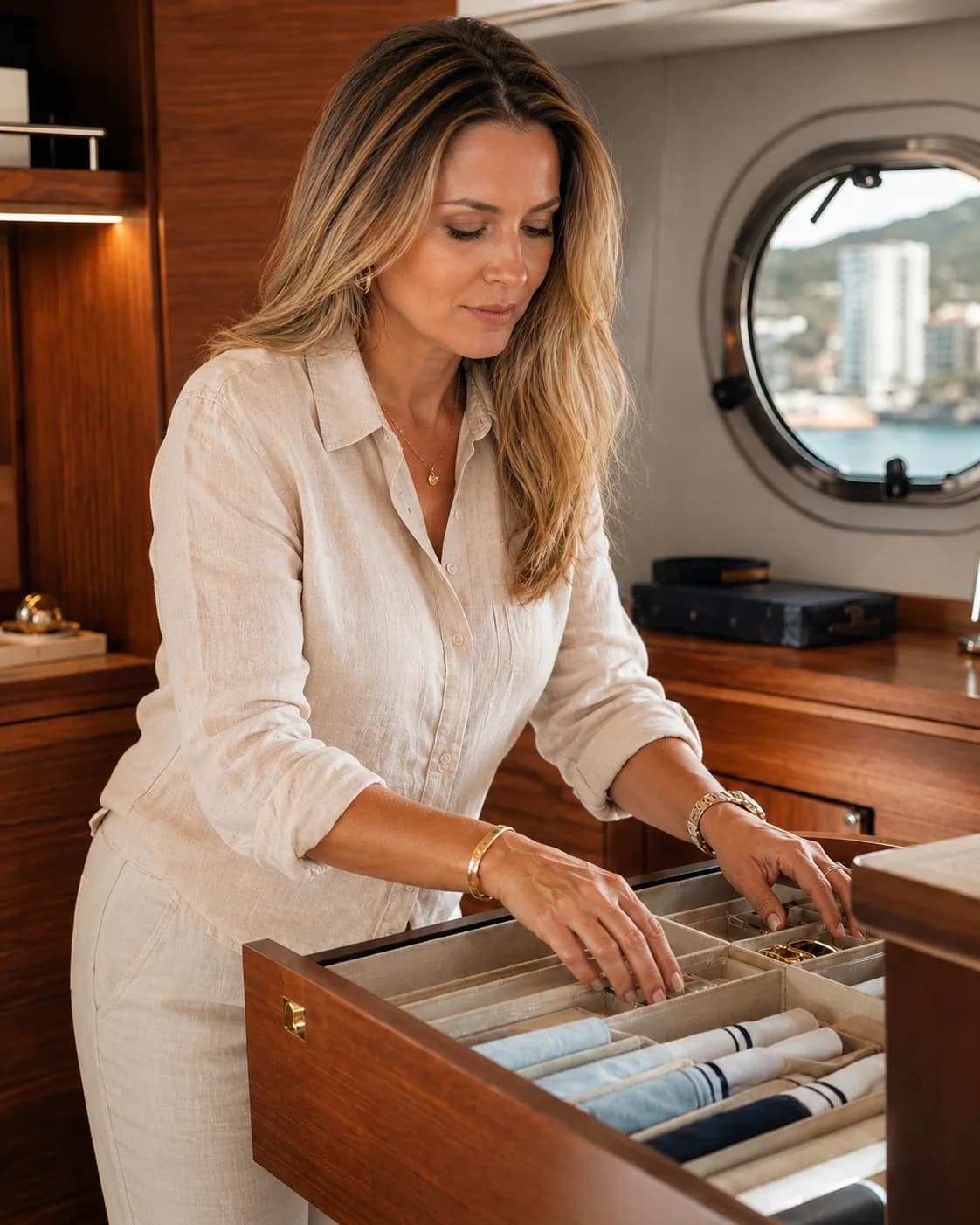
Who does the work: sailboats and motor yachts are not organized alike
A plan that counts the crossing
The ferry runs 24 hours and takes 20 to 30 minutes, but the queue keeps no schedule. Material measured, one trip only, and the working day starts onboard.
From Saco da Ribeira to Marina Astúrias
Ilhabela, São Sebastião, Ubatuba, Guarujá and Bertioga. Each place gets its own date, because the road does not allow both ends of the São Paulo coast in a single day.
A sailboat is a different organizing project
Ilhabela has been the national capital of sailing by federal law since 2011, and much of the fleet heels. Securing and low weight enter the plan from the first compartment.
The system holds between visits
A weekend vessel sits idle at the marina for five days. The system is built so you arrive on Saturday and find it as you left it the Sunday before.
I am Silvana Santanna and I organize vessels onboard along the São Paulo coast
A boat on the North Coast tends to have an owner who lives in São Paulo. He leaves on Friday after work, drives three hours and wants to be aboard early on Saturday. That framing decides the rest: the system has to hold on its own through the five days when nobody shows up.
The second difference is access. Ilhabela is an island, and an island means a ferry. Everything that goes aboard crosses the channel first, so the plan is born with the measurements of the material and the crossing time already inside it.
The third is the hull. The São Sebastião channel has constant wind all year and a sailing fleet that is not organized like a motor yacht. Securing, dividers and low weight stop being a detail and become the first item in the plan.
The calendar counts too. New Year, carnival and sailing week in Ilhabela push both the marina and the crossing to their limit. Organizing goes further in an ordinary week, Monday to Thursday, when the dock is empty and every compartment can be opened without getting in anyone's way. Silvana Organizer brings 6 years of practice, more than 100 delivered projects and 10 certifications in the field.
Testimonials
Owners who organized on the São Paulo coast
"I thought yacht organization was a minor detail. It is not. The galley worked for a week before I hired her, then it kept working forever.
"I organized the Azimut 43 before the season. Two days of Sil’s work and every compartment makes sense. My guests started asking if I had bought a new boat.
"I stepped onto the new yacht with Sil already onboard. The first day of use with everything in place is a privilege I did not know existed.
Where the vessel is berthed on the São Paulo coast
Each place gets its own date, arranged by WhatsApp together with the crossing schedule.
Also serving Angra dos Reis → Yacht Organization in Angra dos Reis
Frequently Asked Questions About Yacht Organization on the North Coast
My boat is in Ilhabela. How does the organizing material get across?
On the São Sebastião ferry, and it enters the plan before any purchase. The crossing runs 24 hours a day, takes 20 to 30 minutes, and each vessel carries up to 40 cars per trip, with the fare charged only in the São Sebastião to Ilhabela direction. On holidays and in high season the real bottleneck is the queue, not the distance. So the material goes over in a single trip, measured beforehand, and the working day starts once the car is already on the island.
Are sailboats and motor yachts organized the same way?
No, and that is the main technical difference in this region. A sailboat sails heeled, so anything not contained shifts on the first tack: the forepeak berth, the saloon settee and the quarter berth need dividers, non-slip and weight kept low, near the waterline. A motor yacht has more lockers and less movement, and the problem there is usually volume, not securing. The plan starts from the type of hull, not from the length.
Ilhabela is the national capital of sailing. Does that affect scheduling?
It affects the calendar. Semana Internacional de Vela de Ilhabela has run since 1973, has been part of the international sailing calendar since 2004 and takes over the town for a week, with Yacht Club de Ilhabela hosting vessels above 100 feet at its floating marina. During that window the marina is full and the ferry is at its limit. Anyone who wants the vessel ready for regatta week books before it, not during.
Do you serve Ubatuba?
Yes, concentrated in Saco da Ribeira, the largest anchorage on the São Paulo north coast, where the marinas and Ubatuba Iate Clube sit. The club has been active since 1961, with 84 slips, capacity for vessels up to 88 feet and sailboats drawing up to 3 metres. Travel along the Rio-Santos road is arranged together with the date, because that stretch varies a great deal depending on the day.
Do Guarujá and Bertioga fall under the same booking as Ilhabela?
They are covered, but not in the same block of days. Guarujá and Bertioga sit on the opposite side of the São Paulo coast from Ilhabela and Ubatuba, and the access road is different. A vessel at Marina Astúrias or in Bertioga gets its own date, so road time does not eat into the working window onboard.
How long does organizing a boat on the North Coast take?
From 28 to 40 feet, usually one day onboard. From 40 to 60 feet, one to two days. In Ilhabela the calculation includes the crossing: the date is closed with the ferry inside it and the material goes over already measured, because going back to the mainland for one crate costs half a morning of work. The final timeline is set after the assessment, together with the window the marina releases.
Can the work be done with the vessel in dry storage?
It can, and on the São Paulo coast that is common: much of the fleet up to 40 feet sits in a dry slip and only goes in the water at the weekend. In that case execution happens with the vessel ashore, which makes sorting easier because nothing moves, and the final check waits for the first launch. For a boat in a wet slip or on a mooring, the work happens directly onboard, with the marina notified of the date.
How does the investment in yacht organization on the North Coast work?
It is defined after the onboard visit and takes into account size, the number of compartments and travel to the marina. A vessel on an island has different logistics from one on the mainland, and that shows up in the scope, not in a ready-made price list. The proposal comes in writing after the assessment.
Next Saturday can start onboard
The assessment visit happens at the marina where the vessel lies, on a date arranged together with the crossing schedule.
Request an Assessment