Yacht Organization in Angra dos Reis
Passages that last days, guests sleeping aboard, and one of the rainiest stretches in the state of Rio. Silvana Santanna organizes onboard at the marinas of the Baía da Ilha Grande, from Verolme to Bracuhy.
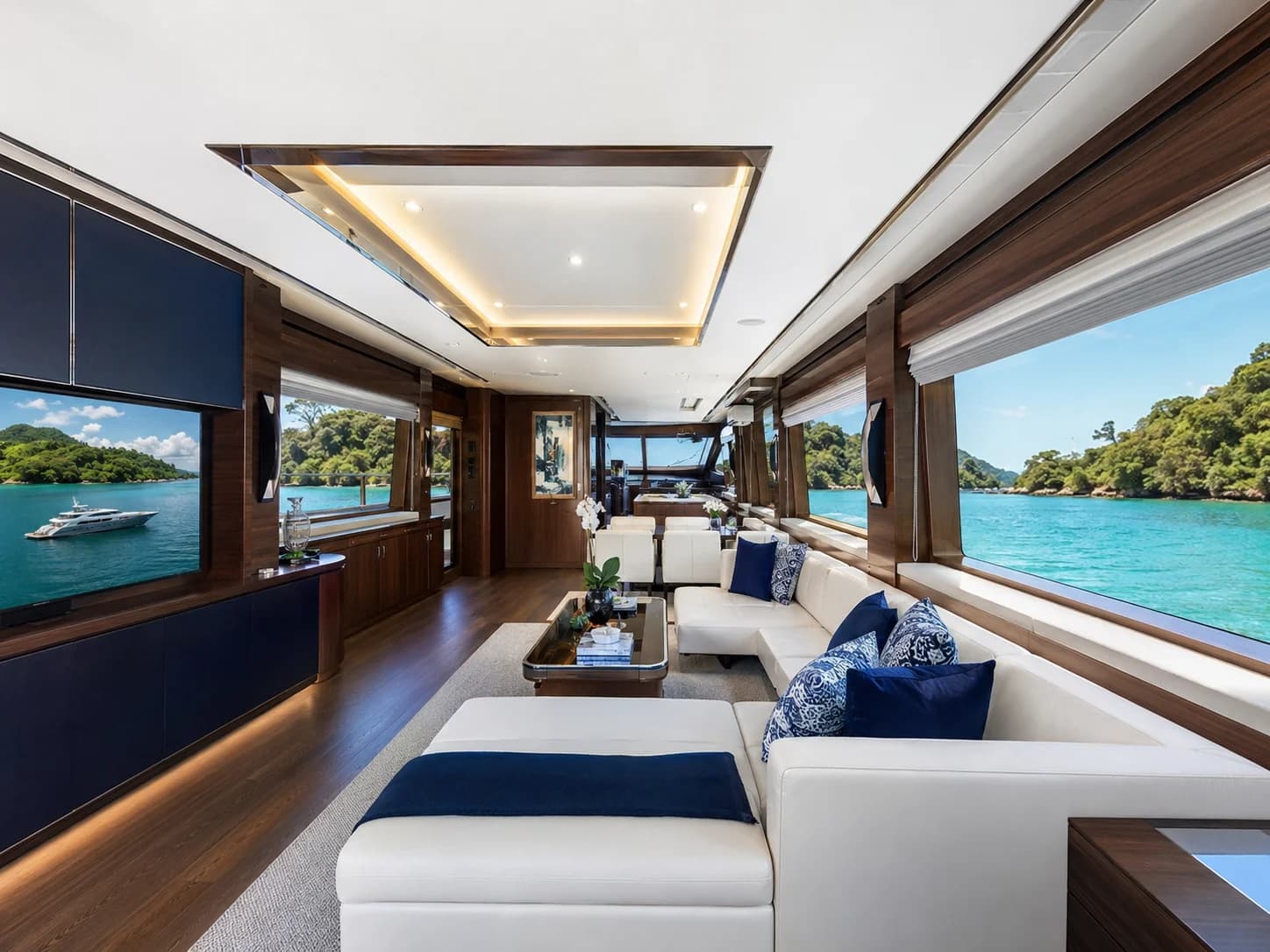
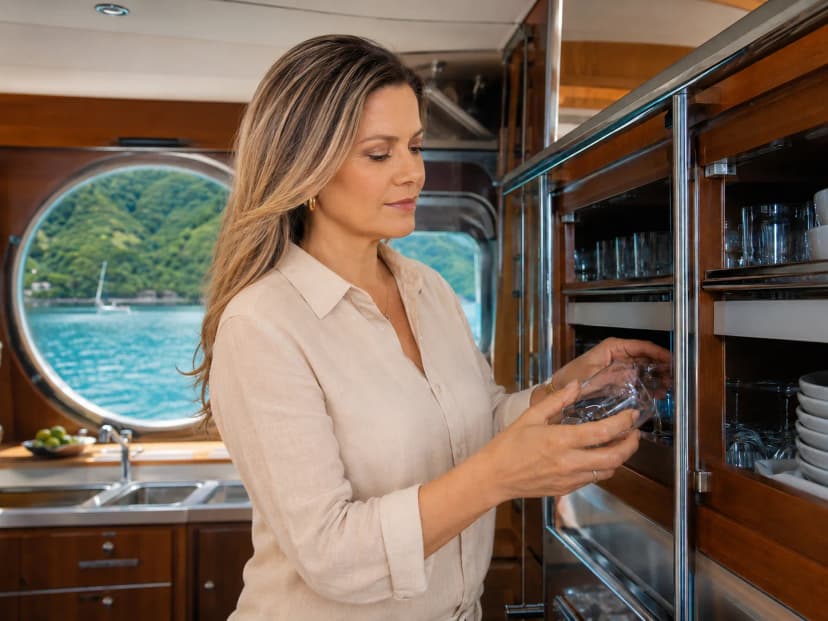
"A summer season with the family onboard for two weeks. Before Sil, the first few days were always chaos. Afterward, we arrived and started sailing."
Marcelo R. - Azimut 55 - Marina Verolme, Angra dos Reis
The problem nobody talks about
In Angra, damp disorganizes before people do
The Serra do Mar rains inside the boat
Around 1,900 mm of rain a year, and over 2,500 mm at points in the Baía da Ilha Grande basin. A vessel shut up all week hands the smell back on Friday, and the smell comes from the linen locker, not the bilge.
Four nights aboard expose everything
An afternoon cruise hides the problem. Four nights with guests reveal every drawer that will not close and every cabin with no defined place for a guest suitcase.
There is no shop between the islands
Anchored off Gipoia or Lopes Mendes, whatever is missing stays missing. Provisions without rotation and without horizon become an improvised dinner on the second night.
A large vessel deceives on volume
Above 60 feet the space looks endless. It is many small compartments and no inventory, so the same duplicated item turns up in three different places.
What changes onboard
in the Baía da Ilha Grande
Every service happens with the vessel berthed at the marina, with no relocation and no hauling out.
Complete organization against damp
Bow to stern, with air circulation in lockers, textiles separated by use, and a single dry point for paper, documents and onboard electronics.
A galley for cooking days in a row
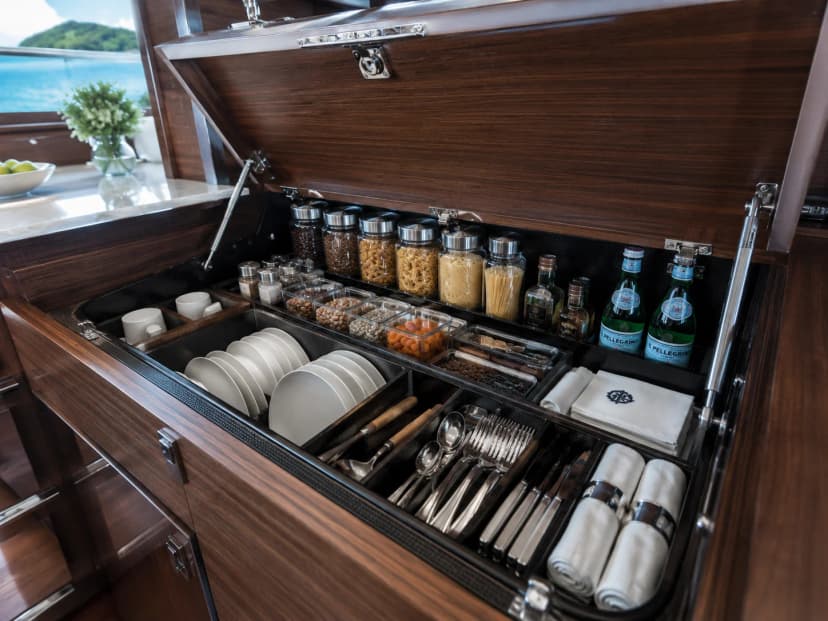
Three meals a day, for six to eight people, for the whole stay. Provisions split between the day, the trip and the reserve, with rotation visible without opening everything.
Guest cabins for people who sleep aboard
Each guest with their own space and a defined place for the empty suitcase, the object that gets in the way most on a long passage.
Bilge, sump and safety items
Life jackets, flares, first aid kit and tools in a fixed, marked place. In an open bay, what costs dearly is time spent searching.
Opening and closing the season
The vessel handed over ready for the first week of summer, and closed down with textiles and leather protected through the months of concentrated rain, with a written list of what went ashore.
New vessel handover
A boat newly delivered at Verolme, Bracuhy or Frade gets the system before its first crossing to Ilha Grande.
How the onboard visit works in Angra
The method is the same across the three regions I serve and it is described in Yacht Organization. What changes here is climate and size: high humidity all year, and vessels with more compartments than many homes.
Onboard visit at your marina
- ·Verolme, Bracuhy, Porto Frade, Marinas do Atlântico or another
- ·Reading damp in lockers, linings and drawer bottoms
- ·Use profile: long stays, crew, number of guests
A plan per compartment
- ·Splitting what stays aboard from what goes ashore
- ·Provisions in three horizons for days at anchor
- ·Your approval before work starts
Execution and handover
- ·1 to 3 days onboard, depending on size
- ·Maintenance guide by area and by season
- ·Final walkthrough with you or with the captain
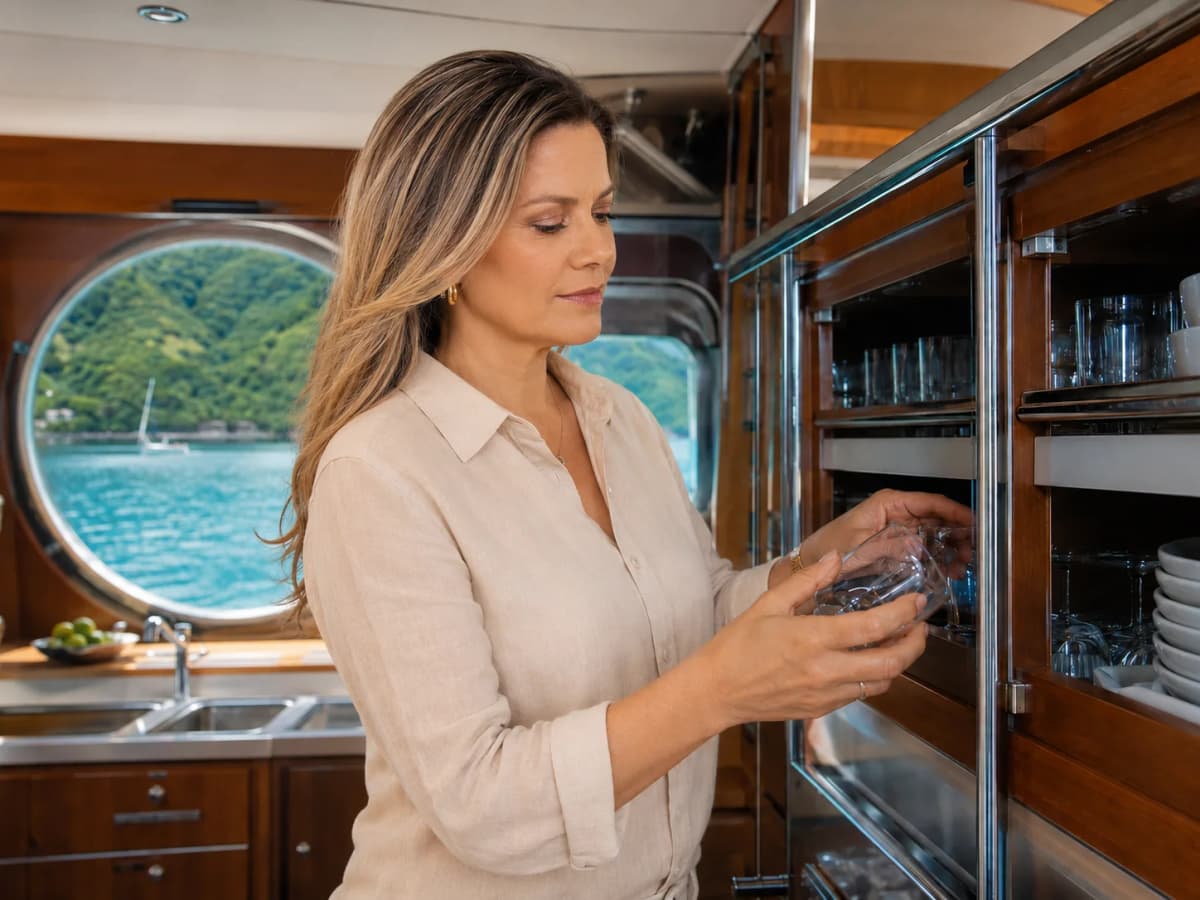
Who does the work: experience with vessels from 40 to 100 feet
Long stays change the logic
I organize for people who sleep aboard for days, not for an afternoon out. Provisions with rotation, guest cabins with real space, and empty suitcases with a destination.
Serving the marinas of the Baía da Ilha Grande
Verolme in Jacuecanga, Bracuhy, Porto Frade and Marinas do Atlântico. Contractor access is arranged in advance with the marina office.
Sizes from 40 to 100 feet
The bay concentrates part of the largest fleet in Brazil. What size changes is the timeline and the length of the inventory, not the sorting criteria.
The route among the islands and on to Paraty
Paraty and Ilha Grande form a mixed UNESCO World Heritage site, and the passage there takes days. The vessel has to be self-sufficient before casting off.
I am Silvana Santanna and I organize vessels onboard in the Baía da Ilha Grande
Angra is not an afternoon destination. The vessel goes out for days, with guests sleeping aboard and coves changing across the 365 islands of the bay. What works on a short cruising boat fails here on the second night, when the guest suitcase already has nowhere to go.
The second factor is climate. The Serra do Mar escarpments leave the region among the rainiest in the state, and a closed vessel feels it. A good part of the assessment is deciding what should not stay aboard between one season and the next.
Logistics here are simpler than they look. The marinas in the bay have docks, trolleys and direct road access, so material comes in all at once. What eats time in Angra is not reaching the vessel: it is the inventory. A large boat keeps the same item in three different compartments and nobody notices until sorting begins.
Work happens on an agreed schedule, without interfering with the routine of whoever uses the vessel. Silvana Organizer brings 6 years of practice, more than 100 delivered projects and 10 certifications in the field.
Testimonials
Owners who organized in Angra
"A summer season with the family onboard for two weeks. Before Sil, the first few days were always chaos. Afterward, we arrived and started sailing.
"The size of the yacht does not make organizing easier, it makes it harder. Sil mapped every compartment and solved problems I did not even know existed.
"I referred two friends with yachts at Verolme. Both hired her. That says it all.
Where the vessel is berthed in the bay
For a vessel at another marina in the region, access is arranged in advance by WhatsApp.
Also serving the North Coast of São Paulo → Yacht Organization on the North Coast of São Paulo
Frequently Asked Questions About Yacht Organization in Angra
Angra is one of the rainiest areas in the state of Rio. What does that change inside the vessel?
It changes the priority of the plan. Angra dos Reis records around 1,900 mm of rain a year and, in a study of the Baía da Ilha Grande hydrographic region published in the Revista Brasileira de Meteorologia, the index passes 2,500 mm at points in the basin, an effect of the Serra do Mar escarpments. A vessel shut up in that environment grows mould on textiles, leather and paper. The plan separates what can stay aboard from what goes ashore, opens air circulation inside lockers, and gathers paper and documents into a single dry point.
The vessel spends days at anchor among the islands. How do you organize for that?
Through autonomy. There are 365 islands and roughly 2,000 beaches in the bay, and between one cove and the next there is no shop. Provisions get split into three horizons: the day, the trip, and the reserve nobody touches. Safety equipment stays in a fixed, marked place, because whoever needs it never has time to search.
Do you serve Verolme, Bracuhy and Marinas do Atlântico?
Yes. BR Marinas Verolme sits in Jacuecanga and holds 490 dry slips and 80 wet slips for vessels up to 40 metres, inside a nautical hub with more than 100 companies. Porto Marina Bracuhy runs 320 wet slips for up to 50 metres and 125 dry slips. Marinas do Atlântico takes vessels from 50 to 120 feet, and Marina Porto Frade has 190 dry slips and 100 wet ones. Contractor access is arranged in advance with each marina office.
Does the method work on a vessel over 60 feet?
It does, and size changes the timeline, not the logic. The bay holds part of the largest fleet in the country, and a three-cabin vessel with an accessible engine room has more compartments than many homes. Above 60 feet execution usually takes two to three days onboard, with a full day spent on inventory alone.
Can the work be done with the vessel in a dry slip?
It can, and with one advantage: without movement, sorting goes faster. What a dry slip does not allow is testing the system under way. When the calendar permits, execution starts ashore and the final check happens later, with the vessel afloat and the crew onboard.
Do you organize the crew quarters and the engine room?
Crew cabins and service lockers are included when they exist, because on a vessel above 60 feet that is where disorder starts, and from there it migrates into the social areas. The engine room is covered only on the storage side: tools, spare parts and fluids identified and secured, with inspection points left clear. Mechanical maintenance stays with the yard or the marina technical team.
What is ready on handover day?
The vessel walked compartment by compartment with you or with the captain, a short maintenance guide for each area, and the restocking rule for provisions. In Angra that guide includes the ventilation routine: which lockers stay ajar while the vessel sits idle, what goes ashore at the end of the season, and in which compartment a dehumidifier actually makes a difference.
How does the investment in yacht organization in Angra dos Reis work?
It depends on size, the number of compartments and the starting condition, and it is defined after the onboard visit. A large vessel with little build-up can take fewer days than a mid-size one that has never been sorted. The proposal comes in writing after the assessment.
Before the next long passage
The assessment visit happens onboard, at the marina where the vessel is berthed, on a date that works for you.
Request an Assessment