High-End Home Organization in São Paulo: What Changes in Practice
What is different when a personal organizer works in high-end apartments in São Paulo: collections, coordination with the architect, and 200m²+ projects. Understand this before you hire.
Neste guia você verá:
- 01What makes a high-end project different?
- 02The method: diagnosis, sorting and systems that last
- 03Closet, linen room and designer wardrobe
- 04Collections that need protocol: wine, silver and art
- 05Butler's pantry, food pantry, laundry room and home office
- 06Coordination with architect, designer and carpenter
- 07Discretion, confidentiality and an in-house team
- 08What changes in a 200m²+ move in São Paulo
- 09How to choose the right personal organizer
- 10Frequently asked questions
What makes a high-end project different for a personal organizer?
It sounds obvious: the bigger the property, the easier it should be to organize. More space, more closets, more shelves. Except high-end properties come with a complexity that 70m² apartments do not have: collections that need protocol, custom cabinetry designed for looks without asking how you actually use each space, and multiple professionals on the project with no one coordinating what will actually work day to day.
The architect delivered the 210m² apartment in Jardins after 8 months of construction. Finishes chosen down to the last detail, custom cabinetry in six rooms, lighting planned room by room. The day the furniture arrived, the client opened the closet and realized: the rods were set at the standard catalog height. She wears long dresses. That conversation had never happened in 8 months of project work.
This is the kind of gap that shows up often in high-end properties. Not because the architect made a mistake. The architect designs aesthetics and structure, the designer handles color and furniture, the carpenter builds what was requested. None of them is asking: how do you actually use this space day to day? What clothes do you own? Where do you keep what you wear every morning?
In larger properties, organization involves more variables at once: collections that need a specific protocol, coordination with other professionals already on the project, and different timing for each stage. A mistake made after everything is installed costs more to fix. A high-end residential organization project therefore starts with a full assessment of the space and of who will live in it.
This market has been growing in São Paulo for years. According to data compiled by Secovi-SP and published by the Portas portal, 1,879 apartments priced above R$5 million were launched in the city in 2025, a 1,312% increase over ten years. Moema, Jardim Paulista and Itaim Bibi account for 61% of high-end deliveries. This number matters because that volume of launches represents a steady stream of families moving into large apartments, often for the first time, with no clear protocol for organizing collections, coordinating teams or calibrating spaces that were designed with aesthetics in mind, not routine.
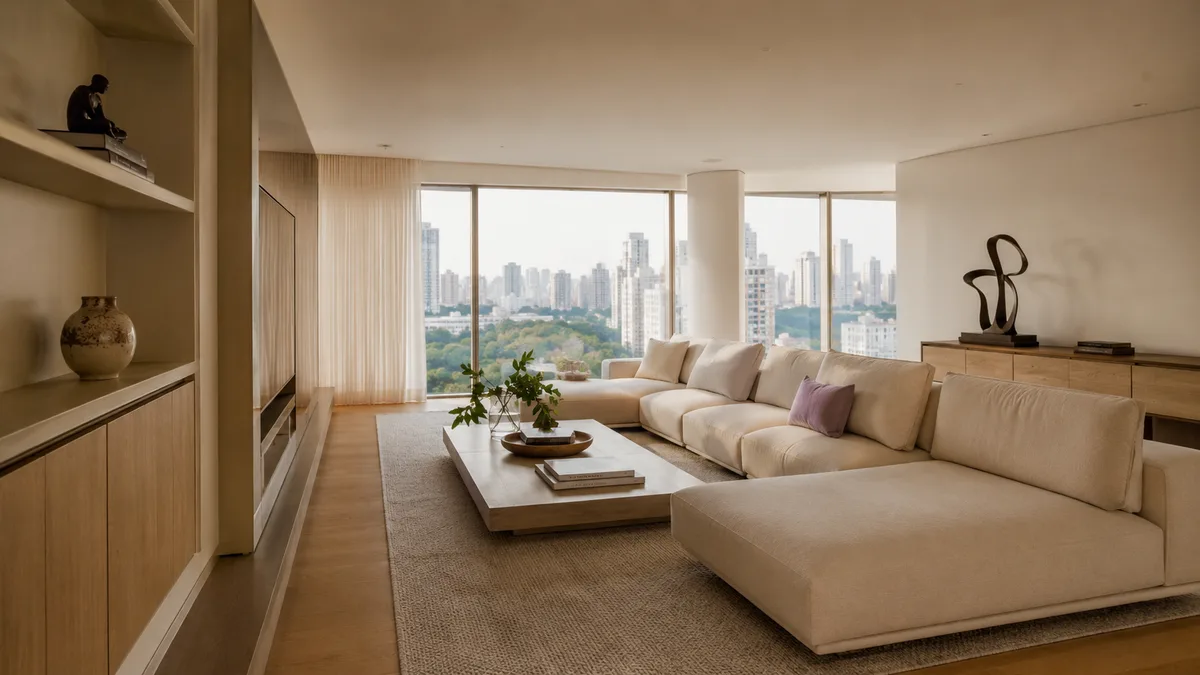
The method for high-end properties: diagnosis, sorting and systems that last
High-end projects follow a structured process, with stages defined before any object is moved. Each phase has a clear objective.
1. Diagnosis: understanding the space and who will live in it
The first visit is not about organizing. It is about listening. Who lives in the home, how each space is used, what the morning and evening routines look like, who goes into the closet and how often, where the everyday pieces are kept versus the occasional-use ones. In homes with support staff (a housekeeper, a cook, a nanny), each person's routine needs to be mapped too: a system that the cleaner cannot maintain returns to chaos within two weeks.
This stage also includes a survey of collections: wine, silverware, art, jewelry, books, designer clothing. Each category has a different protocol for mapping, storage and maintenance.
2. Careful sorting: no rush, no forced discarding
Sorting in high-end properties is not about letting go. It is about defining what has a place, what needs a place, and what is taking up space without serving any real routine. Silver pieces that have not been used in years still have value and need proper storage, not disposal. A collection of 80 pairs of shoes needs a system, not forced reduction.
The sorting criteria always start from real use, not the ideal. The goal is not the minimalist wardrobe from the photos. It is the space that works for the routine of whoever lives there.
3. Defining use zones by room and by routine
After sorting, each room gets use zones defined by frequency and access logic. In the closet: a daily-use zone (easily reachable), an occasional-use zone (higher or inner shelves) and a collection-storage zone (numbered bags, wrapped shoes, seasonal clothing). In the food pantry: a weekly restocking zone, a stock zone and a zone for specific-use items. In the butler's pantry: everyday china separated from the family pieces that only come out for special occasions.
This division by zone is what turns an organized space into a system that lasts. Without clear zones, the space returns to its previous state the first time things get busy.
4. Curating products and storage systems
High-end properties do not need more organizers. They need the right organizers for each type of item. Open boxes for daily-access items. Closed, labeled boxes for collection storage. Drawer dividers calibrated to the size of the real accessories. Dust covers for leather bags. Anti-tarnish flannel for silverware. The product is chosen after the system is defined, not before.
5. Maintenance systems that work without the personal organizer
A system that depends on the PO to hold up is not a system. It is a temporary tidy-up. In high-end projects, the maintenance stage includes defining who in the home is responsible for each zone, what the everyday decision points are (where does the laundry that came back go? where does the gym bag live?), and when it is worth revisiting the system. Most clients go through a follow-up visit at three to six months to adjust for what has changed in the routine.
The problem was not lack of space. It was an excess of postponed decisions.
A 230m² apartment in Itaim Bibi, recently renovated, with three bedrooms and four living areas. The resident, an executive with a packed schedule, had just moved in and spent three weeks living among partially opened boxes. Every time she needed something specific, she opened one box, did not find it, opened another, and left both open in the hallway. By the end of the third week, there were eleven open boxes scattered across three rooms. She described the apartment as "the most expensive chaos of my life," a phrase that captured both the frustration of not knowing where anything was and the weight of having invested so much in a space that still did not work.
During the assessment, it became clear the problem was not the volume of belongings. It was the absence of an order of operations. We started with the kitchen and the primary bedroom, the two spaces that needed to function for her routine to find its rhythm again. Boxes were opened in sequence, one at a time, only after the previous room was put away and functional. By the fifth day of work, the apartment was organized and the boxes were gone. The rule that came out of this project: in large-scale moves, the priority order of rooms determines whether the move actually "ends" or drags on for weeks.
Luxury closet, linen room and designer wardrobe: what changes in the organization
The closet is, generally, the most complex space in a high-end property. Not because of its size, but because of what it holds. Designer clothing, numbered leather bags, collectible shoes, costume jewelry and valuable jewelry, silk scarves, tailored suits. Each category has a different storage condition and a different frequency of access.
The most common mistakes in high-end closets that come in for organization:
- Rods set at a standard catalog height, without considering that long dresses and coats need different heights than blazers. The result is wrinkled clothing at the base of the rod or mixed lengths that make it hard to see anything.
- Bags stacked without boxes or covers, losing their shape under the weight of the ones on top. A structured leather bag stored without internal support loses its shape within months.
- Shoes with no labeling in opaque boxes, making it impossible to find a specific pair without opening every box.
- No designated drop zone: nowhere for pieces that came back from the laundry, from a trip, or that were worn once but do not need washing yet. Without a defined drop zone, those pieces end up on a chair, on the bed, or mixed back in with clean clothes.
- Jewelry and accessories with no separation by type and frequency, mixing everyday costume jewelry with occasion jewelry in the same space with no dividers.
The linen room looked organized. It only took opening the third drawer to understand the bottleneck.
An 18m² closet in a 280m² apartment in Vila Nova Conceição. The resident had 74 bags, 62 pairs of numbered shoes and a wardrobe with designer pieces spanning at least four decades of collecting. The space had been built with high-end cabinetry, built-in lighting and dedicated niches for bags. The problem: the center drawers held everyday pieces mixed with occasion jewelry, silk scarves and travel accessories, all with no dividers. Every morning, finding what she needed meant digging through three drawers. The client described it as "losing half an hour every morning without knowing where she lost it."
The work started with a full mapping of the real wardrobe: how many pieces per category, frequency of use for each group, what had entered the closet in the last 12 months versus what had been stored for more than three years. The center drawers were reorganized with dividers calibrated to the size of her accessories. Each bag got a labeled box with a photo on the outside. The shoes got a photo glued to the original box. Occasion jewelry was separated into its own case, out of the everyday drawers. The rule that stuck: a collection closet needs a visual identification system, not memorization.
The post on how to organize a closet in São Paulo covers the zone system for large wardrobes and the specific protocol for designer clothing and collectible bags.
Linen rooms integrated into high-end apartments have one more particularity: they are often the only space in the home where the family's bed and table linens are stored alongside personal clothing and accessories. In that case, the zone division needs to separate personal use, the household's linen stock and seasonal storage, with access calibrated to whoever uses each thing.
Why do valuable collections need protocol before any organizing?
Wine, silverware, art and jewelry carry a risk that ordinary objects do not: a handling mistake is costly. That is why the protocol starts before the organizing itself: mapping, cataloging and proper wrapping come before any decision about where each piece will live.
Wine and home cellars
The wine market in Brazil reached R$21.1 billion in 2025, according to Bloomberg Línea. In São Paulo, home collections of 40 to 200 bottles have become part of the design for many high-end apartments, and the cellar has gone from a kitchen appliance to a space planned by the architect. This creates a problem that did not exist when the bottle sat under the stairs: the space was planned to look good, but not necessarily to function as a storage and consumption system.
Climate-controlled cellar installed, bottles arriving in boxes: the most common mistake is starting to arrange before cataloging. The first step before any bottle goes in: confirm the shelves are meant for horizontal storage. A bottle with a cork stopper stored upright dries out the cork within weeks, air gets in, and the wine oxidizes. A quality climate-controlled cellar usually comes with horizontal racks, but it is worth checking before organizing. Once that is confirmed, the system defines zones by serving temperature and frequency of use, not by bottle size. Without a vintage criterion within each zone, a collection of 60 labels turns into a puzzle every time you want to serve something specific.
For those who collect as well as drink: an inventory with a photo, label, year and position in the cellar lets you track the collection's evolution and know what is ready to drink. Without an inventory, you open whatever you see, not what you should open. The post how to organize a home wine cellar covers the zone system and cataloging by type and vintage.
Silverware, silver objects and heirloom pieces
A 19th-century silver tray got dented during a move. It was not carelessness. It was the lack of a protocol.
A 65-year-old client in Higienópolis had 34 pieces of family silverware: cutlery, trays, candelabras. She stored them in different places around the home, with no inventory. During a previous move, three pieces ended up in the wrong boxes, mixed in with kitchen items. A tray was dented. The client only found out months later, when she went looking for the piece for a dinner party.
In the following pre-move organization, the protocol changed: each piece was photographed, cataloged with a description and wrapped individually in anti-tarnish flannel. A full list with photos was handed to the home insurance provider before the move began. The unpacking sequence was defined room by room, with the silver pieces coming out of the boxes last, once the spaces were ready to receive them. No piece was damaged. The inventory still exists today as a document for the insurance broker.
The post how to store silverware and silver accessories covers the full protocol for wrapping, anti-tarnish care and inventory for family pieces.
Art, design objects and one-of-a-kind pieces
Art pieces and high-value design objects share one particularity: size and fragility vary widely. A bronze sculpture behaves differently from a canvas painting. A 20th-century porcelain vase does not go in the same box as a metal object.
Mapping these pieces before any organizing defines what stays permanently on display, what gets stored with occasional access, and what needs special packaging during a move. Without that mapping, pieces that require specific care get treated like any other decorative object.

Butler's pantry, food pantry, laundry room and home office in high-end properties
In large properties, the scope of organization goes well beyond the closet and the cellar. The butler's pantry, food pantry, laundry room and home office each have their own logic that needs the same level of care.
Butler's pantry and family china
The butler's pantry in high-end apartments usually holds three distinct categories: everyday china, family pieces for occasional use (dinner sets, crystal glasses, porcelain platters), and serving items for hosting guests. Mixing these categories in the same space with no separation criteria means delicate pieces get exposed to unnecessary everyday handling, and occasional-use items get lost among what is used every week.
The butler's pantry system divides the shelves by frequency of use and fragility, with the most delicate items placed at lower risk of falling and the everyday pieces at immediate access. Family china with emotional or historic value gets the same cataloging treatment as silverware: photo, description and inventory.
Food pantry structured by rotation
Food pantries in large properties tend to accumulate duplicates: three bags of rice at different stages of use, four bottles of olive oil open at the same time, forgotten items in the back that have already expired. The food pantry system in high-end properties works with rotation zones: what was bought most recently goes to the back, what is close to its expiration date stays at the front, in immediate reach.
In homes with a cook or housekeeper, the system needs to be understandable to whoever uses the space day to day, not just to the resident. A labeling system that only the PO understands does not last.
The pantry system was "working." Except no one knew what was inside.
A 6m² pantry in a 240m² apartment in Higienópolis, with a cook working five days a week. The resident kept buying the same items every week because she could not see what was at the back of the shelves. When the survey was done, we found fourteen expired items, three bags of rice in simultaneous use and four bottles of extra virgin olive oil open at the same time, two of them more than six months old. The cook stored every new purchase at the front, without checking what was behind it. The resident felt like the pantry "swallowed things" but could not pinpoint where the problem was.
The new system organized the shelves by rotation zone: weekly restocking items at the front, in immediate reach; stock at the back, with the oldest item always positioned for next use. Each category got a fixed spot that the cook learned within two days. The restocking rule became visible: when the front of a shelf empties, the stock moves forward. The system was documented with laminated cards taped to the inside of the pantry door. Three months later, the duplicate purchases had disappeared. The rule that came out of this project: a well-organized pantry works when the person using it understands the system, not just when the system looks organized from the outside.
Laundry room and care for designer clothing
Laundry rooms in high-end properties usually have quality machines, but no defined separation protocol. Designer clothing with specific washing instructions mixed with ordinary items causes damage that dry cleaning cannot reverse afterward.
The organized laundry room system defines zones by fabric type, wash frequency and specific care needs. Silk, cashmere and linen pieces get a separate protocol. In homes with a housekeeper, the protocol is documented with visual cards by clothing type: what goes in the machine, what goes to an outside laundry service, what gets hand-washed.
Home office integrated into the home
The home office in a high-end apartment is often in a passage space or integrated into the living room, with no clear separation between what belongs to work and what belongs to the home. The result is that work papers mix with personal mail, meeting equipment stays visible in spaces meant for hosting guests, and there is a constant sense that work never ends because it is literally sitting in the living room.
Organizing the home office in these contexts works with two criteria: what needs quick access during work hours and what can be put away once the workday ends. The boundary between these two worlds, made real through how the space is organized, determines whether the home office functions as a space for focus or as a permanent zone of tension.
The post on how to organize a home office covers the zone system for offices integrated into the living space.
Who takes the lead when the architect, designer and carpenter are all on the project?
Each professional on a high-end project has their own scope: the architect delivers the construction, the designer delivers the look, the carpenter delivers the furniture. None of them, by definition, is thinking about where you will keep your shoes or where your husband will put his gym bag when he gets home from work.
When the personal organizer joins the project alongside these professionals, adjustments can happen before installation. A closet rod 10cm higher costs one instruction to the carpenter. Once it is installed and has clothes hanging on it, it costs undoing and redoing. A kitchen shelf at the wrong height costs a quick fix before anything is put away. After 3 months of use, it costs a stressful night reorganizing everything. The post on custom cabinetry consulting with a personal organizer explains how this alignment works in practice and what the carpenter does not ask by default.
The client with the 210m² apartment in Jardins mentioned earlier went through exactly this process. The assessment visit happened once the cabinetry was installed but the boxes had not arrived yet. At that point, the closet was empty and it became clear the rods would not work for her wardrobe. One adjustment from the carpenter solved it before any clothing entered the space.
The 18m² gourmet kitchen had cabinets designed to "fit everything." But no cabinet had been positioned based on where she actually uses each thing. The stove sat in one corner. The stove utensils were in the cabinet across from it. Salt up high, olive oil down low. Adjusting the layout before putting anything away took one afternoon of work. After months of living in the space, the same adjustment would have required a full reorganization.

Your home was designed with care. What is missing is defining how it will function in your real routine.
See residential organization →Discretion, confidentiality and an in-house team: what a high-end client expects
Hiring a personal organizer for a high-end property is a decision that goes beyond organization preferences. The professional enters the home, with access to valuable objects, personal documents, collections, routines and family dynamics that no client would expose to a stranger without trust.
Discretion is not a differentiator that needs to be requested. It is part of the scope. That means:
- An in-house, trained team: for projects that need more than one person, the team is selected and trained by Silvana Organizer, not outsourced last-minute for the specific project. Everyone who enters the home has gone through an onboarding process and follows aligned professional conduct.
- No sharing of images or project information: address, interior photos, collection details and any information about the family are not shared without the client's explicit authorization. Process photos, when used as internal reference, do not identify the property or the resident.
- Conduct inside the home: a team spending hours in a private space needs to operate with discreet presence. That includes an appropriate tone in conversation, focus on the work, and respect for personal items encountered during the organizing process.
- Transparency about what will be moved: no valuable collection, document or personal item is moved without the client knowing what is happening. The mapping protocol exists precisely so the client stays in control of the process, even while delegating the execution.
The trust that makes genuine organization possible starts when the client feels safe showing how the home really functions before any system is proposed. A home that has not yet been organized has its own logic, even if it looks chaotic on the surface. Understanding that logic is the first step of the diagnosis.
What changes in a 200m²+ move in São Paulo?
A high-end residential move has a trait that sets it apart from a 70m² apartment: volume is not the biggest challenge. The challenge is simultaneous complexity. While boxes are arriving, art pieces need careful placement, the wine collection is waiting to go into the cellar, the furniture store confirmed a delivery time for the console table, and the carpenter needs an answer about the extra closet shelf.
The moving company transports boxes from one address to another. Deciding where everything goes, handling heirloom silverware with a specific protocol, defining which drawer is for everyday use: that is different work, and it goes beyond the scope of any moving company.
In properties above 200m², a move without organization coordination tends to stretch over weeks, with boxes partially open in several rooms at the same time. The emotional cost is high: you live in chaos longer than you should, in a space that cost a lot to build or buy.
What professional moving organization does in this context: defines the priority order by room (which ones need to function first), coordinates unpacking with criteria (not opening 10 boxes at once if you cannot put everything away at the same time), and makes sure collections that need protocol are handled before any other box. The result is a move that actually ends, instead of dragging on week after week.
The post organizing a large home adds a specific perspective for multi-story properties, in-house staff, and spaces that need to function independently.
How do you choose a personal organizer for a high-end property in São Paulo?
There are a few questions that separate a project that will actually work from one that will look organized for three months and then return to its previous state.
- Has the professional worked on projects above 150m²? Scale changes the dynamic. Managing four rooms at once requires a different project structure than working one room at a time.
- Does she have experience with collections? Wine, art, silverware: anyone who has never handled these items before will organize them like ordinary objects.
- Does she talk to the architect and carpenter, or does she work in isolation? In high-end projects, a personal organizer who does not communicate with the rest of the team misses the moment to make adjustments at no cost.
- How does she ensure the team's discretion? For projects requiring more than one person on-site, who selects and trains the team? A last-minute outsourced team does not have the same level of commitment to the conduct expected in a private home.
- How does she define the maintenance system? A system the client cannot maintain on her own does not work. What works is a system calibrated to the home's real routine, without depending on the PO to hold up.
- Does she come back for a follow-up visit after a few months? Routines change. Families grow. A system that worked in the first six months may need adjusting. A professional who delivers the project and disappears is not offering the same level of care as one who follows the space's evolution.
The criterion that separates a good project from one that lasts is simple: the system still works six months after the PO has left.
Frequently asked questions about organizing high-end properties
What is different about organizing a high-end property in São Paulo?
In high-end properties, organization involves more variables than in smaller homes. Collections with financial and emotional value (wine, silverware, art, jewelry) require a specific protocol for wrapping, cataloging and storage. 200m²+ spaces usually have multiple professionals involved (architect, designer, carpenter), and the personal organizer needs to coordinate with all of them. Timing changes too: the ideal is to hire the PO once the cabinetry is installed but before the moving boxes arrive.
How does a personal organizer handle valuable collections like wine, silver and art?
Valuable collections require mapping before any placement decision. For wine: cataloging by type, grape and vintage before it goes into the cellar, defining zones by temperature and access. For silverware: photographing each piece for an insurance inventory, wrapping each item individually in anti-tarnish flannel, and defining the unpacking order before the move. For art pieces: mapping dimensions and fragility, never mixing them into boxes with other items. The process starts with mapping, not with tidying.
What is the best time to hire a personal organizer for a high-end property?
The ideal moment for high-end projects is once the cabinetry is already installed but the moving boxes have not arrived yet. With the closets ready and the space empty, it is possible to calibrate rod heights, adjust dividers and define use zones before anything is put away. After the move, corrections mean undoing to redo. Before, an adjustment costs an hour of a carpenter's time. In organization projects without a move, the ideal starting point is also before buying organizers.
Does a high-end personal organizer work alongside the architect and interior designer?
Yes, and that alignment makes a difference in the outcome. The architect designs the space with a focus on aesthetics and structure. The designer handles color, finishes and furniture. The personal organizer focuses on how the space will function day to day: where each thing goes, how the closets will be used, which zone serves which routine. When these professionals talk before the project is finalized, adjustments to rods, shelves and drawer units cost nothing. Once everything is installed, the same adjustment becomes construction work.
How does discretion and confidentiality work in high-end projects?
Discretion is part of the scope, not an optional differentiator. A personal organizer who serves high-net-worth clients works inside the home, with access to valuable objects, documents, routines and family dynamics. That requires clear professional conduct: an in-house, trained team, no last-minute outsourcing for the client's project, and a commitment not to share images, addresses or any project details. A space organized by a third party only works when the client feels safe showing how the home really functions before the organization takes place.
What is a high-end closet and what are the most common organization mistakes?
High-end closets in São Paulo usually have custom-built cabinetry, built-in lighting and space for designer clothing, bags and collectible shoes. The most common mistakes: rods installed at a standard catalog height without considering the resident's actual wardrobe, drawers with no dividers that mix valuable accessories with everyday pieces, and no designated drop zone (where clothes that came back from the laundry sit temporarily before being put away). Good closet organization starts with mapping the real wardrobe, not the available space.
Does the personal organizer also handle the pantry area, storage room and home office in large properties?
Yes. In high-end properties, the butler's pantry, food pantry, home office and laundry room are all part of the scope of residential organization. Butler's pantry: focus on serving pieces, family china and occasional versus everyday items. Food pantry: a rotation system by expiration date and zones by frequency of use. Home office: a clear separation between what belongs to work and what belongs to the home, especially in offices integrated into the living space. Laundry room: a protocol by fabric type and special care for designer clothing. Each space has its own logic of use that needs to be mapped before any system is defined.
How long does a high-end residential organization project take?
The duration depends on the scope and the initial condition of the property. A post-move organization project in a 200m²+ apartment can take three to five working days, with a team. A luxury closet and collections reorganization project can be completed in one to two days. Projects that involve sorting older collections, cataloging silverware and coordinating with a carpenter tend to have on-site stages and follow-up stages. The initial assessment defines the real scope, the timeline and the team required.

About the author
Silvana Santanna →Personal Organizer in São Paulo, specialized in residential move organization and functional organizing projects for homes, closets, kitchens, trousseaux and home offices. Creator of the Casa Pronta™ Method, with more than 100 projects completed across São Paulo and the greater metro area.
Related posts
Organizing a Large Home in São Paulo: A System by Room
14 min · Read article →
How to Organize a Gourmet Kitchen in São Paulo: The Complete System
10 min · Read article →

How to Organize a Home Wine Cellar: System and Care
11 min · Read article →

How to Store Silver Jewelry Without Tarnishing: Complete Guide
8 min · Read article →
Ready to have your home organized
without lifting a finger?
Project assessment visit.