Kitchen Organization: The Zone System That Doesn't Fall Apart in a Week
The professional personal organizer method for kitchens that actually work, not just look good for a few days.
Neste guia você verá:
Every organized kitchen has one thing in common: it was designed for the person who cooks in it, not for a photo. The kitchen is the space that suffers most from pretty, dysfunctional organization, the kind that looks lovely on Sunday and turns to chaos by Thursday.
The reason is always the same: the logic behind it was aesthetic, not functional. Matching containers on a shelf look beautiful. But if you can't grab the flour without pulling out three other items first, the system doesn't work, and within days you abandon it and slide back into chaos mode.
In this guide, I'll walk through the method I use with my clients to build kitchens that work for the real routine of the person cooking in them. There is no single model. There's the right model for your way of cooking. If you want to understand how organization changes by type of space (a large kitchen, an open-plan kitchen, or a compact one), the kitchen organization guide for São Paulo covers each scenario in detail.
The real problem: why kitchens fall back into clutter
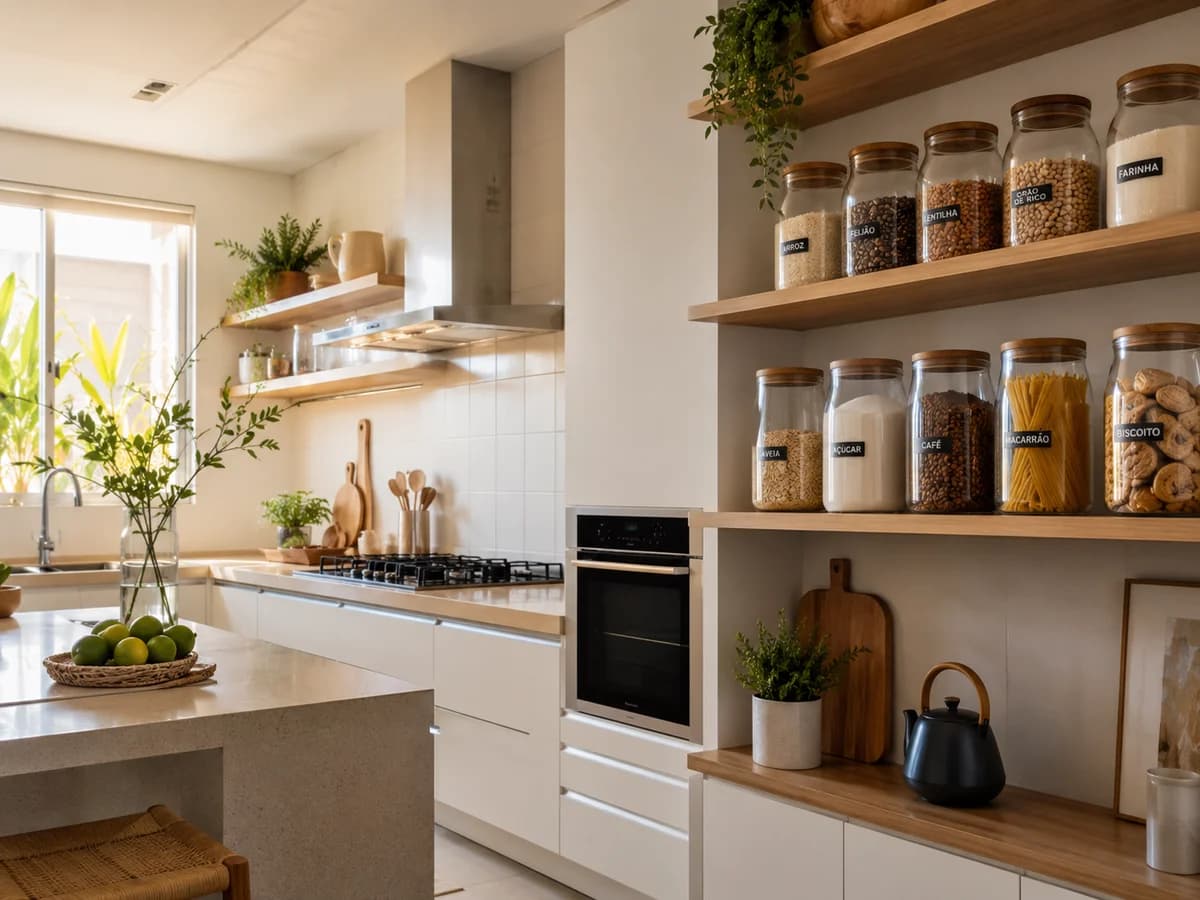
Kitchens fall back into clutter for three reasons: items stored far from where they're used (and that keep "migrating" back), volume that exceeds the space's capacity, and a visual organization that doesn't reflect the real flow of the person cooking. The system needs to fix the root problem, not the symptom.
Before organizing, we need to understand why the previous attempt didn't last. There are three main reasons:
- Items stored far from where they're used. If the dish sponge lives in a cabinet on the other side of the kitchen, it will end up sitting on the edge of the sink, permanently. An item will always "migrate" toward where it gets used.
- Volume beyond the space's capacity. When there's more stuff than the space can hold, any system collapses. No amount of organizing fits 40 pots into a cabinet built for 20.
- A system built for looks, not for use. Organizing by color or size looks nice, but when you're cooking you don't think "I need the blue one," you think "where's the colander?"
She had organized the kitchen three times in two years. Every time, it went right back to chaos in less than a week.
In a 72-square-meter apartment in Pinheiros, a client called me because her kitchen never stayed organized. She had made three attempts in two years, with matching containers and pretty shelves. She told me she felt frustrated with herself, thinking the problem was a lack of discipline. The real problem was written into the cabinets: the dish sponge lived in a cabinet across the kitchen from the sink, the pots sat in a cabinet above the fridge, and the trash can was tucked into a corner that required a detour every single time. The system looked good, but no item was near where she actually used it. We remapped everything by zone: pots next to the stove, sponge under the sink, trash bin next to the prep counter. Two months later, she told me it was the first time the kitchen had stayed organized without any effort. A pretty system in the wrong place creates work every time you cook, and she had been carrying that extra work for two years.
Step 1: declutter before any organization
This step is non-negotiable. Empty one cabinet at a time and sort everything into three groups:
- Keep: used regularly (at least once a month)
- Donate or discard: never used, duplicated, or no longer useful
- Expired or broken: goes straight in the trash
Questions that help you decide: Have I used this in the last month? Do I have two of these? If I were moving right now, would I bring this? If the answer is no to the first two and yes to the third, reconsider.
Common items people keep without using: appliances that came as gifts and never left the box, pots with broken handles, containers without lids, lids without containers, cutlery from incomplete sets, old baking pans. All of it takes up space that belongs to the things you actually use.
Step 2: map your kitchen's zones
The concept of zones is the heart of the method. A kitchen has four functional zones, and every item should live in the zone that matches where you actually use it:
Prep zone (counter and nearby cabinets)
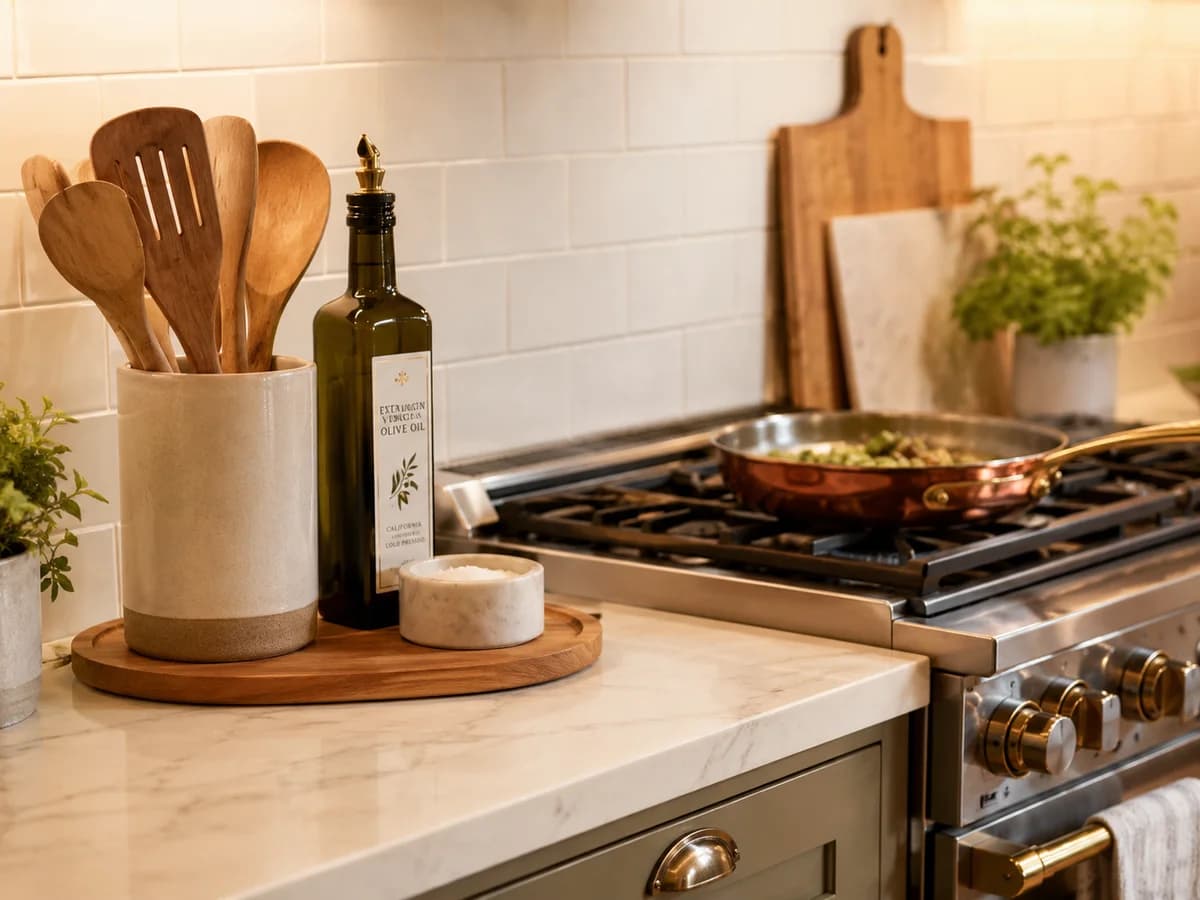
Everything you use while preparing food lives here: cutting board, knives, peelers, bowls, wooden spoons, spatulas, salt, olive oil, daily-use seasonings, and the trash can. This zone needs to be the most accessible and clutter-free spot in the kitchen.
Cooking zone (near the stove)
Pots, lids, baking pans, skimmer, ladle, and the seasonings you add while cooking. These stay in the cabinet right next to or below the stove, never on the other side of the kitchen.
Storage zone (pantry and stock cabinets)
Food, canned goods, grains, pasta, flours, and stock items. Organized by category, with rotation (oldest at the front) and maximum visibility.
Cleaning zone (near the sink)
Dish soap, sponge, dish rack, kitchen towel, gloves, and kitchen cleaning products. All of it near the sink, not scattered across the kitchen.
How to organize the inside of your cabinets
Once the zones are set, it's time to organize the inside of each cabinet. A few rules that make a real difference:
- The most-used items go at the front, at eye level. What you use every day shouldn't require crouching or a step stool to reach.
- Stack lids separately from pots. Lids standing upright (in a rack or leaning against something) save a lot of space and make it easier to find the right size.
- Lazy susans in corner cabinets. Corners are the most wasted space in a kitchen; a lazy susan solves that completely.
- Extra shelves inside cabinets. Deep cabinets with a single shelf waste half their available height. An added middle shelf doubles the capacity.
The pantry: the space that wastes the most food
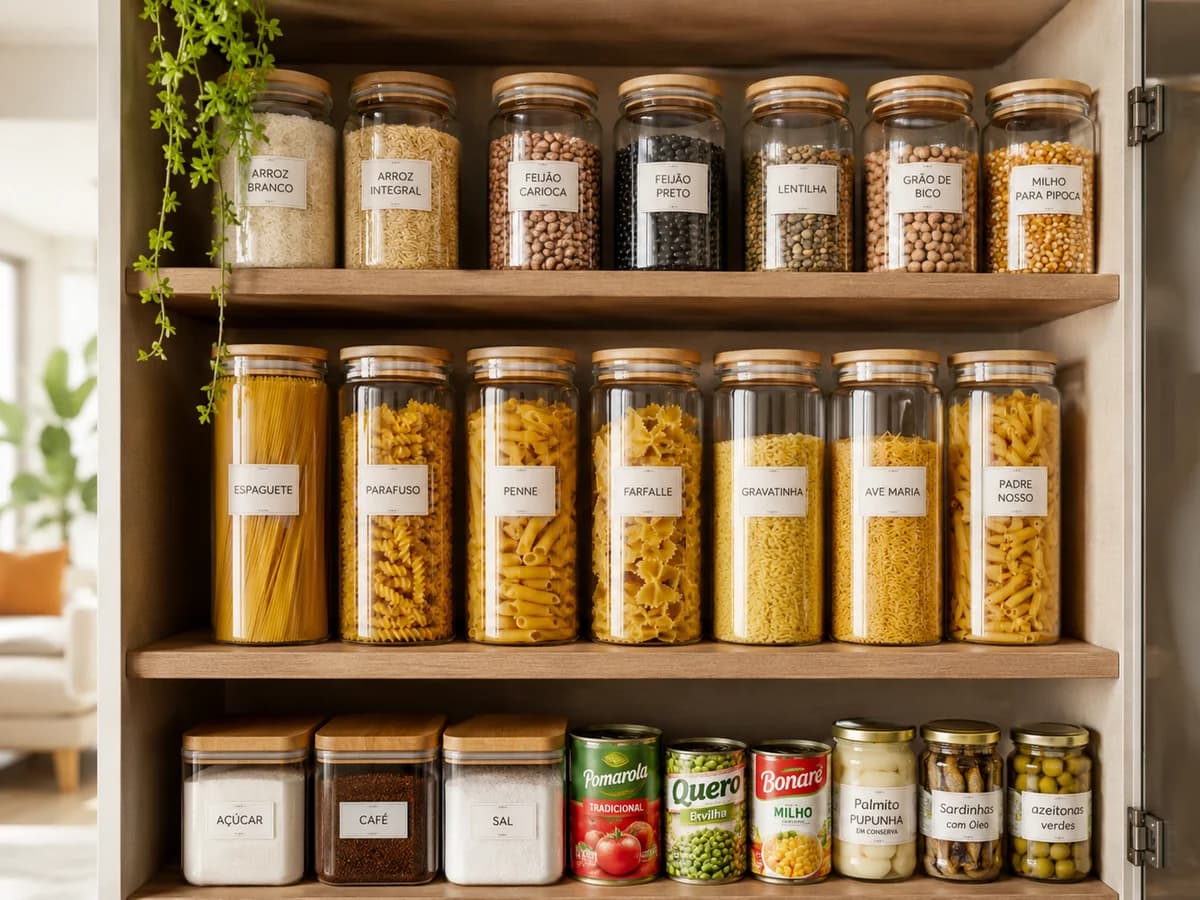
Poorly organized pantries cause two kinds of waste: food expiring unseen at the back, and duplicates bought because you didn't know what you already had. The fix is total visibility: clear containers by category, older items at the front (FIFO), and a 15-minute monthly review.
Poorly organized pantries cause real waste: food expires because it's hidden at the back, you buy duplicates because you don't know what you have, and you lose time every time you need to find something. The fridge loses food for the same reason plus one more: items end up in the wrong temperature zone of the appliance. See how to organize the fridge by temperature zones.
The system that works for the pantry:
- Group by category: pasta, grains, canned goods, preserves, flours, snacks
- Daily-use items at eye level; stock items up high or down low
- Clear containers for bulk items: you see what you have without opening anything
- FIFO principle: what comes in last goes to the back; the oldest stays at the front
- Monthly expiration check: 15 minutes that prevent a lot of waste
Four packages of pasta, three of rice, two of wheat flour. She kept buying what she couldn't see.
In an 85-square-meter apartment in Vila Madalena, a client called me to organize her pantry because her monthly grocery bill kept blowing past budget. She thought she was simply eating too much. When we opened the pantry, we found four opened packages of pasta, three bags of rice in different stages of use, two containers of wheat flour, and a bag of oats she didn't even know she had. She told me she felt embarrassed whenever someone saw inside that cabinet; it was impossible to see what was there because everything was stacked inside closed boxes. We transferred everything into clear, labeled containers by category: pasta, grains, flours, canned goods, with the oldest at the front and new purchases going to the back. The backup stock moved to a separate, visible shelf. The following month, her grocery bill dropped. With the pantry visible, she bought what she needed and stopped restocking what she already had.
Drawers: where everything gets mixed up
Drawers without dividers turn into a "chaos drawer" within days. The fix is simple and cheap: drawer dividers (bamboo, plastic, or acrylic) and a clear rule for each section.
A division that works well in practice:
- Drawer 1 (closest to the counter): everyday cutlery: fork, knife, spoon, dessert spoon
- Drawer 2: small utensils: peeler, small grater, bottle opener, juicer, small strainer
- Drawer 3: kitchen towels, gloves, plastic bags, aluminum foil, plastic wrap
The most-used drawer in the kitchen held 47 items. It took her six seconds to find the peeler.
In a 95-square-meter apartment in Moema, a client called me to organize her kitchen three months after a renovation. A brand-new kitchen with custom cabinets and quartz countertops. She told me she got irritated every time she needed to cook because she could never find anything quickly. There was a wide drawer near the stove holding 47 mixed items: cutlery, utensils, batteries, phone cables, bottle caps, and three peelers. I laid everything out on the counter and counted. We split the kitchen items into three groups: daily cutlery, prep utensils, serving utensils. We installed adjustable bamboo dividers in the two main drawers. We removed everything from the drawer that wasn't kitchen-related. She wrote to me the following week: "I never thought a drawer could give me anxiety. Once I organized it, I understood the problem was sitting right there in the drawer." A custom-built drawer without dividers holds the same chaos as an old one. The system lives inside it.
What stays on the counter (and what doesn't)
A clear counter is functional. A cluttered counter goes unused. The rule is simple: only what you use every day stays on the counter.
On the counter: coffee maker (if used daily), knife block, spice rack (if you cook daily), soap dish, and sponge. Everything else goes into a cabinet.
Off the counter: blender (if used less than 3 times a week), stand mixer, air fryer when not in use, fruit bowl (a mini-fridge works better for some), any appliance you don't use daily. Wine bottles don't belong in the kitchen either: the temperature swings near the stove and fridge compromise quality. If you keep wine at home, see how to organize a home wine cellar with the right system and temperature. Kitchens with a lot of large equipment and specialty ingredients face specific challenges beyond the zone method: see how to organize a gourmet kitchen in São Paulo for a system built for that profile.
A functional kitchen isn't an empty kitchen. It's a kitchen where everything lives in a place that makes sense for the person who uses it.
See home organization →How to keep the kitchen organized day to day
Maintenance is simpler than organizing, as long as the initial system is solid. Three daily habits are enough:
- Every item goes back to its place after use, not "later"
- Wipe down the counter at the end of each meal (5 minutes)
- A quick weekly check: anything out of place goes back
And one monthly habit: review the pantry, discard anything expired, put back anything that has drifted out of place. 15 minutes a month prevents an hours-long quarterly overhaul.
Frequently asked questions about kitchen organization
Where should I start when organizing a messy kitchen?
Start by emptying one cabinet at a time. Before reorganizing, get rid of anything expired, broken, or that you never use. Only then organize by zone of use. Trying to reorganize without emptying first is the most common mistake.
How do I organize a small kitchen with limited space?
Small kitchens demand priority: only what you actually use stays. Use wall cabinets up to the ceiling, use organizers that double the internal space, and keep only daily-use items on the counter. The less volume, the more functional a small space becomes.
If you live in a compact apartment, there's a dedicated guide on how to organize a small kitchen in São Paulo with a zone method, vertical solutions that require no construction work, and how to handle a kitchen that's open to the living room.
What should I store near the stove and what should stay far from it?
Near the stove: pots, lids, wooden spoons, spatulas, salt, olive oil, and frequently used seasonings. Far from the stove: rarely used appliances, formal dinnerware, pantry stock, and anything used less than once a week.
How do I organize the pantry so food doesn't go to waste?
Use the FIFO principle: what comes in last goes to the back, the oldest stays at the front. Group items by category and keep them visible. Clear containers help a lot. Do a monthly check to review expiration dates.
Is it worth hiring a personal organizer for the kitchen?
It is especially worth it if you are moving into a new home, if the kitchen has never really worked for your routine, or if you tried organizing it yourself and the result didn't last. A personal organizer builds a system tailored to how you actually cook.
Prefer to have a professional handle it?
Organized kitchen with a professional method in São Paulo
A zone system built for your real routine. Silvana Santanna serves São Paulo and the surrounding region. Project assessment included.
Request a kitchen quote on WhatsAppServing São Paulo and the surrounding region

About the author
Silvana Santanna →Personal Organizer in São Paulo, specialized in residential move organization and functional organizing projects for homes, closets, kitchens, trousseaux and home offices. Creator of the Casa Pronta™ Method, with more than 100 projects completed across São Paulo and the greater metro area.
Related posts
How to Organize a Closet for Good: 4 Zones That Stay Tidy for Weeks
12 min · Read article →
How to Organize a Home Office: 7 Changes That Double Your Focus
9 min · Read article →

Custom Cabinetry Consulting with a Personal Organizer
12 min · Read article →
Ready to have your home organized
without lifting a finger?
Project assessment visit.