Postpartum Organization: How to Prepare Your Home for the Baby
Postpartum organization in São Paulo: how to set up the nursery, dresser, kitchen, laundry room and documents for a lighter routine with the baby.
Neste guia você verá:
- 01Why the home needs to function, not be perfect
- 02What to prepare before coming home from the hospital
- 03Nursery, dresser and clothes: the logic most people miss
- 04Kitchen, laundry room and functional stations
- 05Documents, medication and the diaper bag
- 06How to make help work without relying only on the mother
- 07Frequently asked questions
Why does the home need to function, not be perfect, in postpartum?
The trousseau can be complete, but is the home actually functional for the baby's arrival? That is the question I ask every expecting mother who calls me to organize before delivery. The difference between a complete trousseau and a functional home can look small on paper. At three in the morning, when you cannot find the ointment and the emergency change of clothes is in the wrong closet, the difference is enormous.
Postpartum already involves plenty of physical and emotional adjustments. According to Jornal da USP, 25% of Brazilian mothers develop postpartum depression. An overloaded environment does not cause PPD, but when the home demands constant decisions (where is the diaper, where did the ointment go, who knows how to put the clothes away), the routine gets even heavier. Organization does not solve clinical issues, but it can reduce the domestic load.
Postpartum organization in São Paulo is not about a pretty dresser or matching baskets. It is about reducing the number of decisions the mother has to make in the first months. And about building a system that works for whoever is there when she needs to rest.
What to prepare before coming home from the hospital (and what can wait)
Four areas need to be functional before delivery: the nursery with a diaper station, the kitchen with a defined area for feeding items, the laundry room with baby clothes kept separate, and a documents and health kit. Everything outside that list can wait. Shelf decor, organizing toys for future stages, the mother's closet, a fully stocked pantry, all of that can wait. The home does not need to be perfect. It needs to be ready to function.
- Nursery: diaper station with diapers, ointment, wipes and an emergency change of clothes
- Dresser: drawers organized by frequency of use, not by type of item
- Kitchen: a defined area for bottles, sterilizer and feeding items
- Laundry room: a separate basket for baby clothes
- Health: a first-care kit with items indicated by the pediatrician
- Documents: a folder with the birth certificate, health plan card and hospital guidance
- Diaper bag: a base checklist so you do not start from scratch before every outing
Preparing before the hospital also matters for whoever takes care of the home while you are admitted. Mother, mother-in-law, husband, nanny: whoever steps in will need to function without you. That changes what to organize and how to organize it.
Nursery, dresser and clothes: the logic of use most people miss
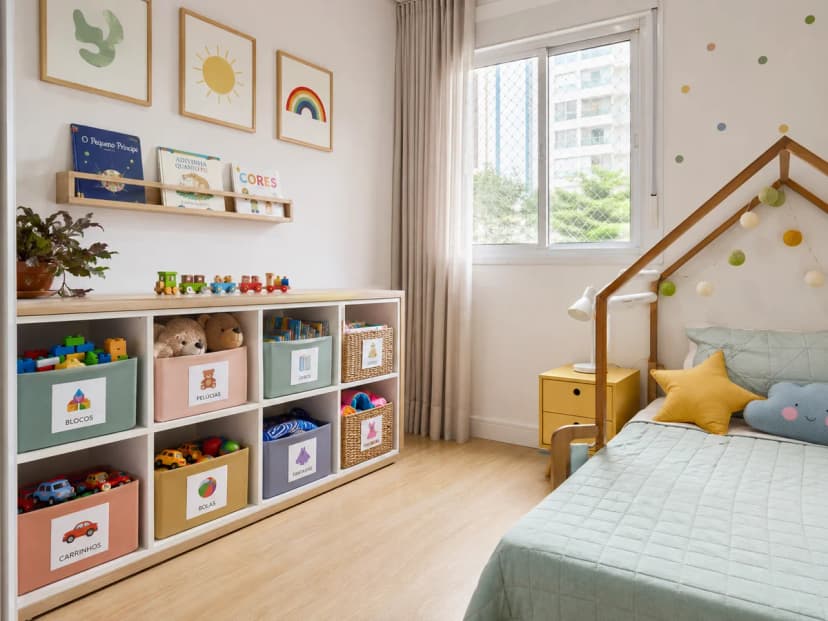
The baby's dresser needs to be organized by frequency of use, not by type of item or size. Whatever gets used ten times a day goes in the most accessible drawer. Diapers, ointment, wipes and a full change of clothes stay on the changing table or in the most accessible drawer. Not in the closet, not in the bottom drawer, not inside a decorative basket that requires opening, searching and closing. Whatever looks nice for visitors goes somewhere else.
One of the things I hear most is: "I want everything ready before going to the hospital." But ready for whom?
A client who was 34 weeks pregnant in Itaim called me to organize the nursery before delivery. An 85m² apartment, renovated, a decorated nursery, a new dresser full of baby clothes. The problem: the drawers were organized by clothing size, like in a store. Decorative blankets shared space with changing items. Hygiene products were in the couple's bathroom. Her husband traveled for work. Her mother would come from out of town for two weeks to help.
When I asked where her mother would find a diaper at two in the morning without waking anyone up, she did not know how to answer.
We reorganized the dresser by use: the first drawer with everything for the changing table, the second with everyday clothes in the current size, the third with blankets and towels, the fourth with stock for the next stage, closed and labeled. We created a laminated location list inside the closet door. When she went to the maternity ward, her mother managed on her own for two weeks without needing to call and ask where anything was.
There was resistance on one point: the client wanted the changing items inside a rattan basket she had bought to match the decor. We talked through opening a basket in the dark at three in the morning with a crying baby in her arms. The basket did not make the cut.
For clothes: keep only the size the baby currently wears in the dresser. Clothes for the next stage go in a labeled, separate, closed box, out of the way. Babies outgrow sizes in a couple of weeks, so you will get to that box soon, but until you need it, it does not need to stay open.
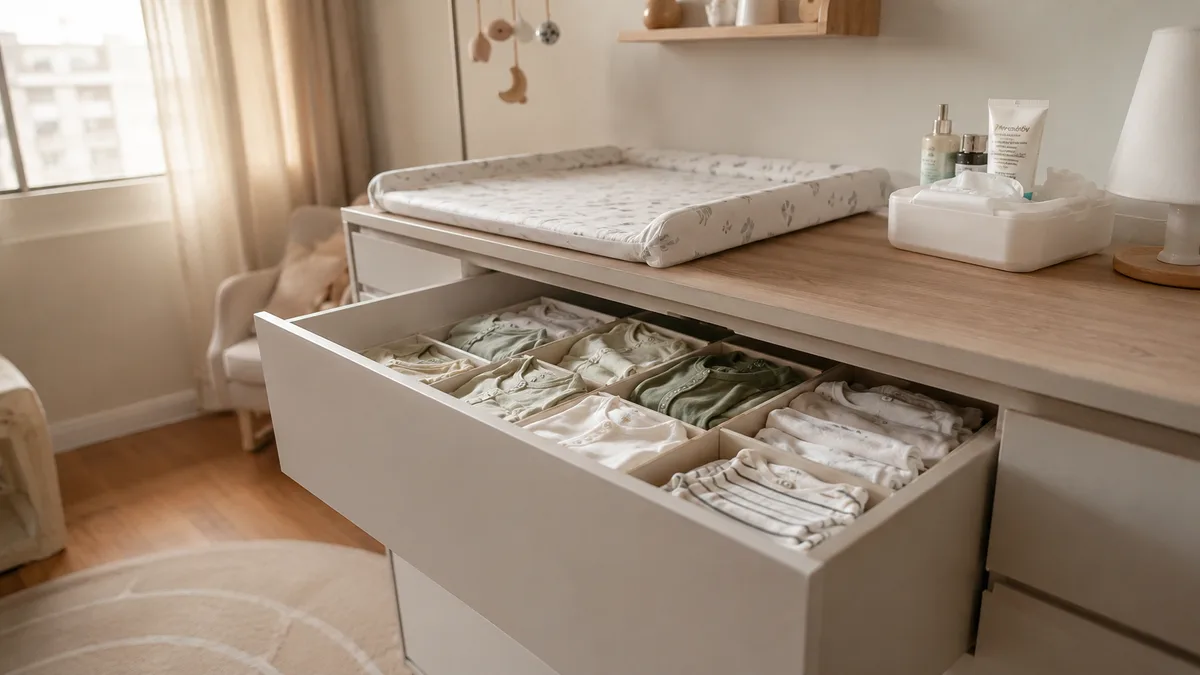
A home planned for postpartum works for the mother, for the baby and for whoever helps. Without anyone needing to ask where things are.
Prepare my home for the baby's arrival →Kitchen, laundry room and functional stations
The kitchen and the laundry room are the two rooms that change the most with postpartum, and the ones nobody thinks to organize beforehand. The kitchen, because baby items arrive with no defined area and the counter disappears within days. The laundry room, because the volume of clothes triples and there is no longer a clear flow of who sorts, who washes, who puts away.
Three weeks postpartum with twins, a client told me something that stuck with me: "I cannot stand being the only person who knows where everything is anymore."
She lived in a 110m² apartment in Brooklin. Premature twins, born earlier than expected. The nursery had been prepared for one baby. The 12m² kitchen was not prepared for either. The sterilizer sat on top of the microwave. The formula was on the spice shelf. The measuring cups lived mixed in with everyday utensils. Her husband worked from home in the same apartment and wanted to help, but could not, because he did not know where anything was. She spent entire nights on her feet because she was the only one who knew how to run the baby-feeding setup they had put together with no method.
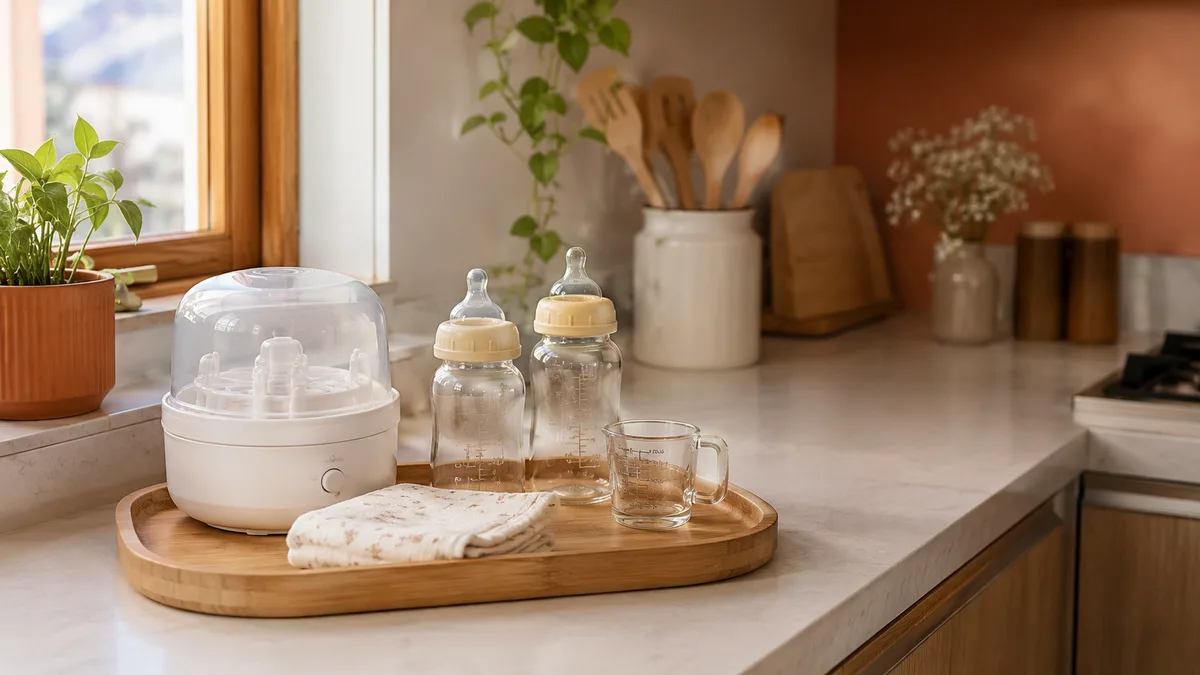
We created a neonatal feeding station: a tray on the side counter with the sterilizer, formula, measuring cups, collection containers and burp cloths. Everything labeled. A laminated nighttime prep list stuck to the fridge. In the first week after organizing, her husband took over the night bottles. The main counter went back to being used for cooking.
The tray ended up in the wrong spot on the first try: too close to the stove, the steam affected the items. We moved it on the second visit. Not everything works the first time. Sometimes you need to live with it for a few days to spot the problem.
Six weeks after a C-section, a baby with reflux, a laundry room that had turned into a battlefield.
For the laundry room, the most common issue is the volume of clothes the baby generates, especially with reflux or frequent changes throughout the day. A client in Pinheiros, six weeks into recovery from a C-section, a baby with reflux, four to five outfit changes a day. She was bedridden much of the time, her mother-in-law present but unsure how to help. The 4m² laundry room had two large baskets with no separation, baby clothes mixed with adult clothes, and cloth diapers piled on the floor because nobody could keep up with folding and putting them away.
She had chosen cloth diapers during pregnancy. After a C-section, with a baby dealing with reflux, keeping up with them without a structured system was not realistic.
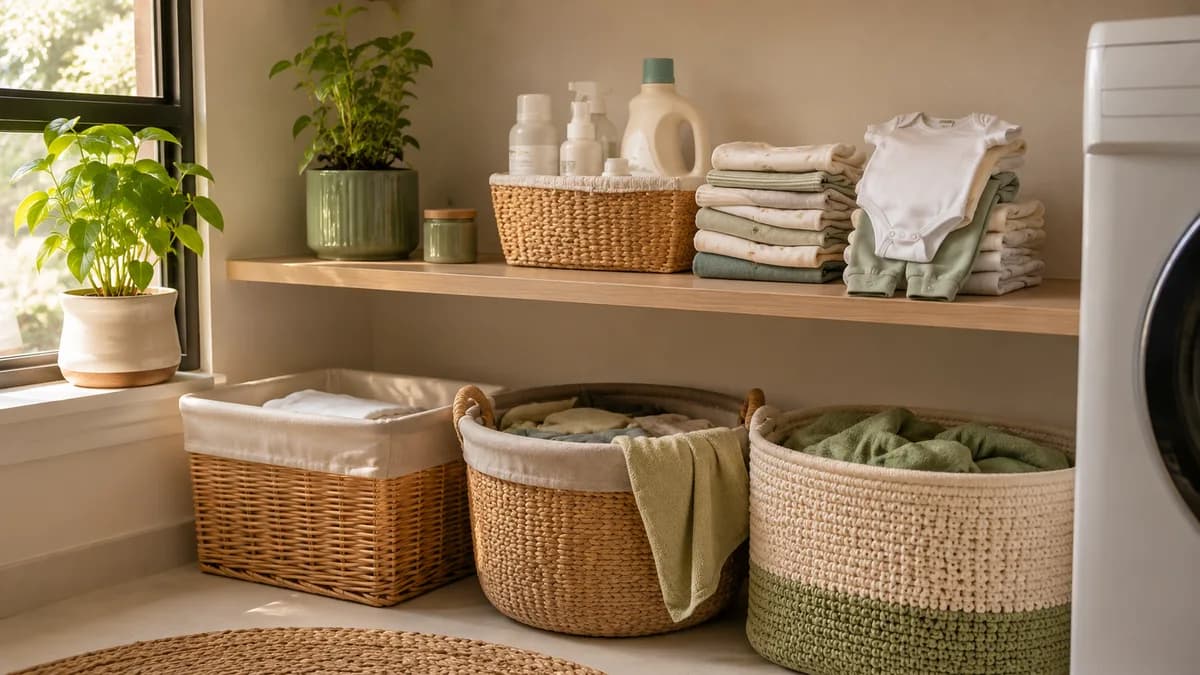
Three baskets: dirty baby clothes, adult clothes, clean baby clothes waiting to be put away. A minimal-fold system for the baby clothes: pants tucked inside the bodysuit, put away in thirty seconds with no table needed. Cloth diapers paused temporarily, with a plan to resume in eight weeks. The client hesitated over that decision. It was a long conversation. She went back to the cloth diapers in the third month, as planned.
Her mother-in-law took over managing the laundry room on her own from the second week on. Even with the volume from a baby with reflux, the system held up.
Documents, medication and the diaper bag: one single system
Birth certificate, health plan card, vaccination record, prescriptions, pediatrician guidance and test results need one single, easy-to-reach place. Not in a drawer with other papers, not in a folder mixed in with general documents. A dedicated, labeled folder for the baby, kept close to where the family grabs what it needs before leaving the house. The baby will generate a lot of paperwork in the first months: test results, medical reports, specialist referrals. Without a dedicated folder for document organization, that paperwork disappears.
The baby's medication needs to stay in the medicine cabinet separate from the adults' medication, with the pediatrician's guidance kept alongside it. Dose, frequency, expiration date. Any adult giving the baby medication needs to find that information without having to ask.
The diaper bag works best with a fixed base checklist: diapers, wipes, ointment, a change of clothes, a burp cloth, a blanket, small bags. The list does not change with every outing. What changes is restocking whatever got used. Checking the bag weekly, not before every single outing, is the difference between leaving the house in ten minutes or in forty.
How to make help work without relying only on the mother
When everything depends on the mother's memory, help never really works. A husband, grandmother, nanny or caregiver needs to be able to find diapers, clothes, medication and hygiene items without asking. Organization that enables other people to help is different from organization that simply tidies up. A tidy home with an intuitive system can be navigated by anyone. A tidy home with no system depends on whoever tidied it.
What makes a system navigable: labels on drawers and baskets, visible quantity (a clear diaper container that shows when supplies are running low), easy restocking (backup stock in a labeled spot near the point of use), and an emergency location list (a laminated sheet inside the closet showing where everything is).
In postpartum, the mother cannot be the system. She needs to be able to rest while someone else cares for the baby with real independence. That does not happen without physical organization of the space.
An honest note: no organization system solves everything. In postpartum, the routine changes every week. The baby who used to sleep in one spot starts sleeping in another. The newborn stage gives way to the two-month stage, which is different in almost every way. The system needs to be reviewed. The goal is not a perfect, permanent setup. It is a functional base that adapts without requiring everything to be rebuilt from scratch.
For the full picture of the phases that follow, from the nursery to the children's room with toys on rotation and upkeep shared between the adults, see the family and baby organization guide.
Frequently asked questions about postpartum organization
When is the right time to organize the home for postpartum?
The best window is between week 32 and week 36 of pregnancy, when energy still allows for working more than an hour at a stretch and there is time for adjustments before delivery. Organizing beforehand makes sure the home is functional the day you get back from the hospital, without having to make exhausting decisions during recovery. If the baby has already arrived, organizing is still possible, focusing on the most used rooms first: nursery, kitchen and laundry room.
What is most urgent to organize before the baby arrives?
Priority goes to the rooms used most often in the first weeks: the nursery with a complete diaper station, a dresser organized by frequency of use, a kitchen with a defined area for baby feeding items, and a laundry room with clothes separated by category. Documents and a health kit round out the essentials. What can wait: shelf decor, organizing toys and anything that belongs to later stages of the baby.
How do you organize the home for postpartum in a small apartment?
In small apartments, the principle of functional stations replaces dedicated rooms. A diaper station can be any sturdy surface with essential items arranged by frequency of use. In the kitchen, a tray or basket set aside for baby items solves the problem without a dedicated cabinet. In the laundry room, a separate basket for baby clothes already reorganizes the flow. The goal is to create clear points of use, not to duplicate space.
Does postpartum organization need to be redone as the baby grows?
Yes, but not from scratch. The system needs a review at each stage: when newborn clothes give way to 3-month sizes, when solid food introduction starts around 6 months, when the baby starts moving around. Each transition calls for an adjustment to the dresser, the kitchen and the diaper bag. An organization system planned well from the start adapts far more easily than one that never had a clear logic to begin with.

About the author
Silvana Santanna →Personal Organizer in São Paulo, specialized in residential move organization and functional organizing projects for homes, closets, kitchens, trousseaux and home offices. Creator of the Casa Pronta™ Method, with more than 100 projects completed across São Paulo and the greater metro area.
Ready to have your home organized
without lifting a finger?
Project assessment visit.