How to Organize the Baby Trousseau: A Complete Guide Before Birth
The complete personal organizer guide to preparing the home for a baby: nursery, trousseau, bathroom and kitchen. What to buy, what to expect, and how to organize each space.
Neste guia você verá:
A baby's arrival transforms everything in the home, and preparing the trousseau is one of the most exciting, and potentially most chaotic, parts of that transformation. Overbuying, duplicate baby shower gifts, clothes in the wrong size, and a nursery built more for photos than for the 3 a.m. feeding.
After organizing trousseaus for dozens of babies in São Paulo, I've learned what actually matters: a system that works with a baby in your arms, half-asleep, in the dark at 3 a.m. Not a nursery that photographs well. A space that takes care of you while you take care of your child.
This guide covers everything: when to start, what to actually buy, how to organize each space, and how to prepare for what nobody tells you.
When to start organizing the trousseau
The ideal window is between the 28th and 32nd week of pregnancy. By then you've likely already had the baby shower, still have the energy to organize calmly, and have time to wash and fold everything before the baby arrives.
Leaving it for the ninth month is the most common mistake. With a bigger belly, fatigue at its peak, and rising anxiety, organizing turns into a stressful task at a time that should be about rest.
What to do before setting up the nursery:
- Decide which baby shower gifts you'll use and which ones to exchange
- Wash all the clothes and crib linens before storing them
- Assemble the furniture and confirm everything works (crib, dresser, changing station)
- Take stock of what you already have before buying more
What you truly need in the trousseau, and what's overkill
The essentials before birth: 7 bodysuits, 5 rompers, 5 pajamas, diapers for the first few days, 3 hooded towels, 2 fitted sheets, a basic hygiene kit, and a crib with a mattress. Baby swings, expensive ergonomic bathtubs, and lots of extra clothes: wait until the baby arrives to decide what you'll actually use.
The baby products industry is very good at creating need where none exists. Before buying everything on the nursery checklist, understand what's essential versus what you'll discover you need (or don't) after the baby arrives.
Essential: buy before birth
- 7 short-sleeve bodysuits + 7 long-sleeve (small or medium size; newborn size goes fast)
- 5 rompers for everyday wear
- 5 pajamas or sleep rompers
- 10 multi-use cloth diapers or 1 pack of disposable diapers for the first days
- 3 hooded towels
- 2 fitted crib sheets
- 1 light blanket
- Hygiene kit: diaper cream, soap, shampoo, cotton, thermometer
- Crib or bassinet with a proper mattress
- Changing station and supplies (diapers, wipes, cream)
Wait to decide after birth
- Nursing pillow: comfortable for some mothers, useless for others. Try before investing.
- Baby swing and bouncer: some babies love them, others hate them. Many families buy one and never use it.
- Extra quantities of clothing: you'll receive gifts and hand-me-downs from people who've already been through it.
- Expensive ergonomic bathtub: many mothers prefer bathing the baby in the sink or a simple tub.
The nursery was ready before month seven. She never opened half of what was in it.
In a 90-square-meter apartment in Brooklin, a client called me at 30 weeks pregnant to organize the nursery. There was an electric swing, an ergonomic bathtub, and clothes in every size, from newborn to two years old. She'd bought out of fear of running short. She told me she felt anxious seeing everything spread out, not knowing what she'd actually need. We reviewed item by item: the swing and the expensive bathtub stayed sealed to test after the birth. Of the clothes, we set aside newborn and small sizes in the nursery, medium and large in a labeled bin in the hallway. By the third month, the swing was still sealed; she had swapped the expensive bathtub for a simple one. The medium and large clothes sat in the bin the entire three months. The excess buying had turned into work during a phase when she needed rest.
With the trousseau organized before delivery, the next step is adapting the home to work once the baby arrives: nursery, kitchen, laundry, and a system that works for whoever helps out. See the postpartum home organization guide.
How to organize the nursery
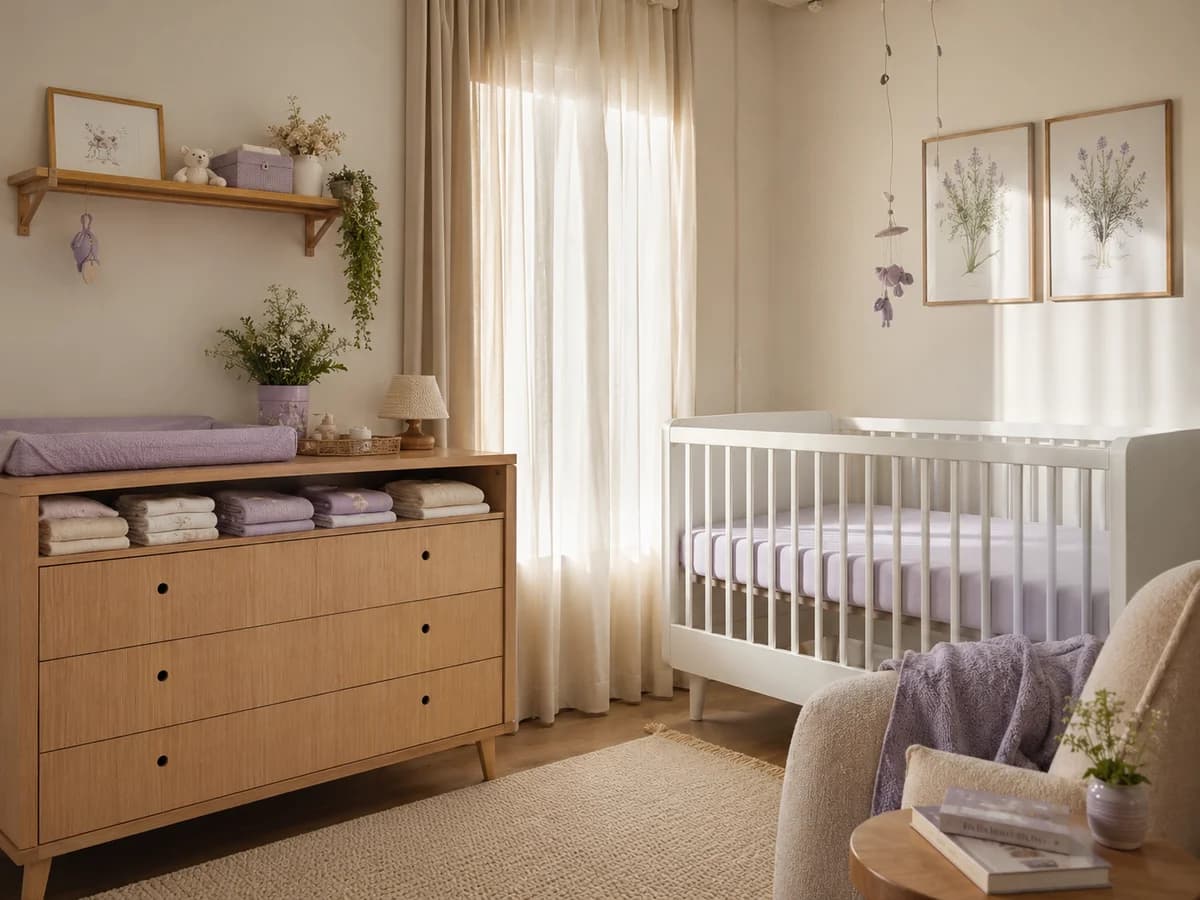
Set up the nursery with the middle of the night in mind: everything you'll need with the baby crying, in the dark, with one hand occupied, needs to be within reach. Changing station with diaper, wipes and cream up front; crib with a fitted sheet; soft lighting; a nursing chair with a pillow and a glass of water beside it.
The nursery should be set up with one question in mind: does this work well at 3 a.m., with the baby crying, in low light, and in a hurry? If the answer is no, the system needs rethinking.
The crib and sleep area
A crib with a fitted sheet (never loose), side bumpers if needed, and nothing else inside the crib: no pillows, no stuffed animals, no bulky blankets. Safety first.
Next to the crib: a lamp with soft, warm light (not white), a humidifier if the room is very dry, and a baby monitor if the nursery is far from yours.
The changing station
The changing station needs to be functional above all. Organize it like this:
- Diapers reachable with one hand (you'll be holding the baby with the other)
- Wipes with an easy-open front flap
- Diaper cream on the changing station shelf, not in a cabinet
- Small bags for used diapers right beside it, not underneath
- Change of clothes at eye level, sorted by type
A decorated nursery, everything in its place. On the second night, the mother couldn't find the diaper cream.
In a 75-square-meter apartment in Perdizes, a client called me three weeks after her first baby was born. The nursery had a coordinated color palette and matching storage bins. She told me she'd wake up with the baby and go back to bed more tired than when she got up. She'd use her phone as a flashlight, hunting for diapers. The baby's pajamas were behind a heavy sliding closet door; the cream sat at the bottom of a bin on a high shelf. We reorganized the changing station so everything was reachable with one hand: diapers up front, wipes with no lid, cream loose on the shelf. We put the extra pajamas in an open basket next to the crib. We installed a motion-sensor light at baseboard level. The following week, she messaged me at 4 a.m.: "Changed a diaper without waking the baby and without turning on a single light." The decor stayed the same. We changed where each thing lived.
The clothing drawers
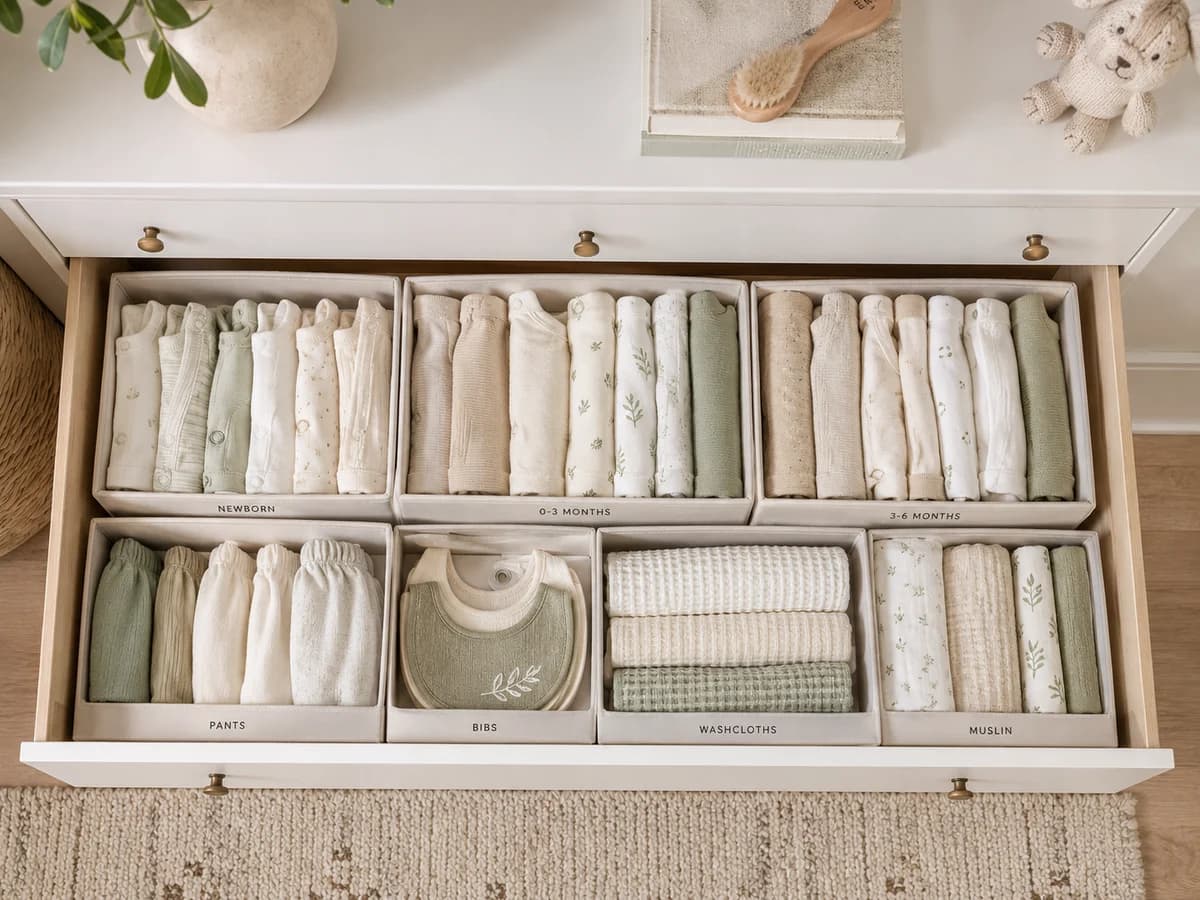
Organize by size first, by type second:
- Drawer 1 (current size): bodysuits, rompers, pajamas in the size the baby is wearing now
- Drawer 2 (next size): already-washed clothes for when the baby grows
- Labeled bin (future sizes): outside the dresser, organized by size and labeled
Fold clothes into rectangles and store them standing up: you see everything at once without digging through the whole drawer.
The baby's bathroom
If the baby will bathe in the family bathroom (rather than in the nursery), set aside an exclusive area for their products. Mixing adult and baby products creates confusion at bath time.
- A basket or tray with the baby's soap, shampoo and conditioner
- Hooded towels hung within reach, not in a cabinet in another room
- A bath thermometer if you use a tub
- An extra change of clothes in the bathroom for bath days
The kitchen setup for the baby (if using bottles or purees)
If you plan to use bottles or formula, set aside a dedicated drawer or shelf in the kitchen for the baby's supplies:
- Bottles and nipples (keep sterilized ones separate from those that still need it)
- An electric or steam sterilizer within easy reach
- A bottle thermometer
- A bottle rack on the dish drainer
- Once purees start: baby food, silicone spoons, and bibs
Baby shower gifts: how to organize what comes in
The baby shower is wonderful, and it almost always creates chaos of packaging, duplicates, and items in the wrong size. How to organize it:
- Open everything and sort by category before storing
- Identify duplicates and items you won't use, and exchange them while you still can
- Clothes received as gifts: wash, fold, and store by size
- Duplicate hygiene items: keep the extra as backup stock
- Items you definitely won't use: donate or sell
The "survival kit": what to prepare for the first days at home
The first days with the baby at home are intense. Prepare an easily accessible kit with what you'll use in the first 48 hours:
- Newborn or small-size diapers (enough for 3 days)
- Alcohol-free wipes
- Diaper cream
- Clothes for the first few days, already washed and folded
- Postpartum pads for the mother
- Quick snacks for the mother (bars, fruit)
- The pediatrician's contact saved on your phone
Everything bought, nothing with a place. At 32 weeks, she felt she'd come home with the baby and just wing it.
In an 88-square-meter apartment in Moema, a couple called me at 32 weeks to organize the trousseau before birth. They'd bought everything. Nothing had a place. She told me the thought of arriving home with the baby in her arms and having to open drawers by trial and error made her anxious. We put together two kits before the birth: one in the nursery, with diapers for three days, wipes, cream, and three washed pajamas; one in the bathroom for the mother, with postpartum pads, prescribed vitamins, and the pediatrician's contact printed out. We organized the rest of the trousseau into labeled bins by size. The baby arrived. Both of them spent the first week knowing exactly where everything was. On the third day at home, she messaged me: "We got to focus only on the baby." The first days with a newborn are too intense to spend energy hunting for a diaper. With everything organized in advance, that energy went to the baby instead.
The trousseau solves the arrival. What comes after, the children's room by phase, toys on rotation, and upkeep shared between the adults, is in the family and baby organization guide.
A trousseau organized before birth gives you time to rest afterward. This work can have professional support.
See the trousseau service →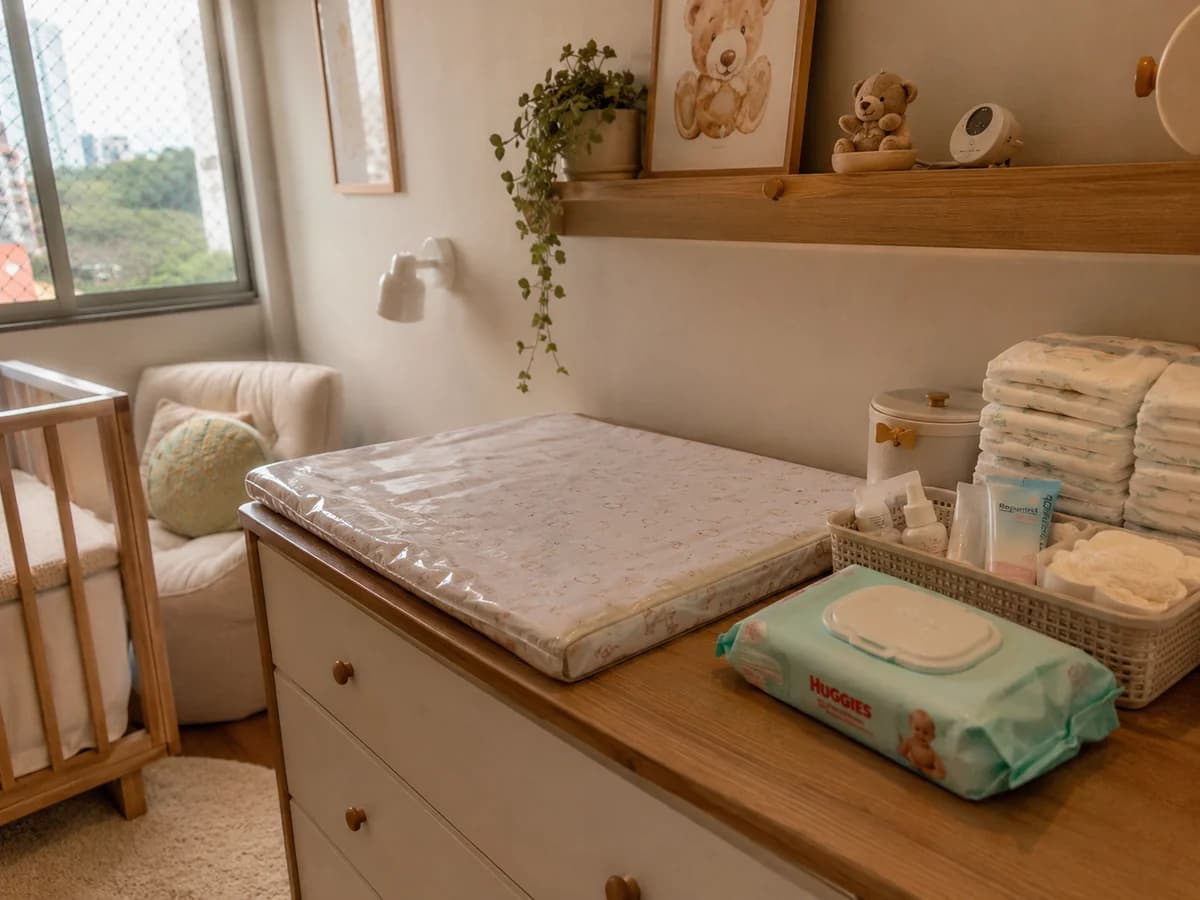
Frequently asked questions about baby trousseau organization
When should I start organizing the baby trousseau?
The ideal is to start between the 28th and 32nd week of pregnancy. That gives you time to receive gifts, exchange items, wash the clothes, and organize everything calmly before the fatigue of the ninth month sets in.
What do you actually need in a baby trousseau?
The essentials: 7 bodysuits, 5 rompers, 5 pajamas, diapers for the first days, 3 hooded towels, 2 fitted sheets, a basic hygiene kit, and a crib with a mattress. You'll discover what else you need (or don't) after the baby arrives.
How do I organize baby clothes by size?
Separate by size (newborn, small, medium, large) in labeled drawers. Within each size, organize by type: bodysuits, rompers, pajamas. Fold and store standing up so you can see everything without digging through the drawer.
What should I prepare in the nursery before the baby arrives?
A crib set up with a sheet, a changing station with diapers and cream within reach, a dresser with clothes sorted by size, soft lighting, and a comfortable chair for nursing. Function first, aesthetics second.
Is it worth hiring a personal organizer for the baby trousseau?
It is, especially for first-time mothers. A personal organizer helps build a system that works for your routine with the baby, prevents unnecessary purchases, and organizes baby shower gifts efficiently.

About the author
Silvana Santanna →Personal Organizer in São Paulo, specialized in residential move organization and functional organizing projects for homes, closets, kitchens, trousseaux and home offices. Creator of the Casa Pronta™ Method, with more than 100 projects completed across São Paulo and the greater metro area.

Ready to have your home organized
without lifting a finger?
Project assessment visit.