How to Let Go of Belongings Without Guilt: A Personal Organizer Method
Good decluttering is not pressure or an abstract lecture. It is a practical decision, item by item, with a clear criterion for keeping, donating, selling, or discarding.
Neste guia você verá:
In a session, decluttering almost never starts with the question "what do I throw away?" It starts with a more concrete one: what actually still plays a role in the home today? Once that answer is clear, the decision weighs less.
In practice, the categories that come up most are strikingly similar: moving boxes that were never opened, clothes from an old phase of life, gifts still in their packaging, impulse-bought organizers never actually used, and inherited items nobody knows whether to keep, donate, or simply store out of inertia.
It is not only a matter of space. A study conducted at UCLA, which followed families inside their homes, linked excess belongings to cortisol patterns associated with higher stress, especially in the women responsible for running the household. What accumulates does not weigh only on the closet, it weighs on the body too. Seen this way, the decision to let go stops being a loss and becomes relief from a burden that works in silence.
The personal organizer's role here is not to force a purge. It is to guide the decision with clear criteria: real use, emotional value, duplication, condition, and a possible destination. Once the process becomes objective, it stops feeling like an emotional battle.
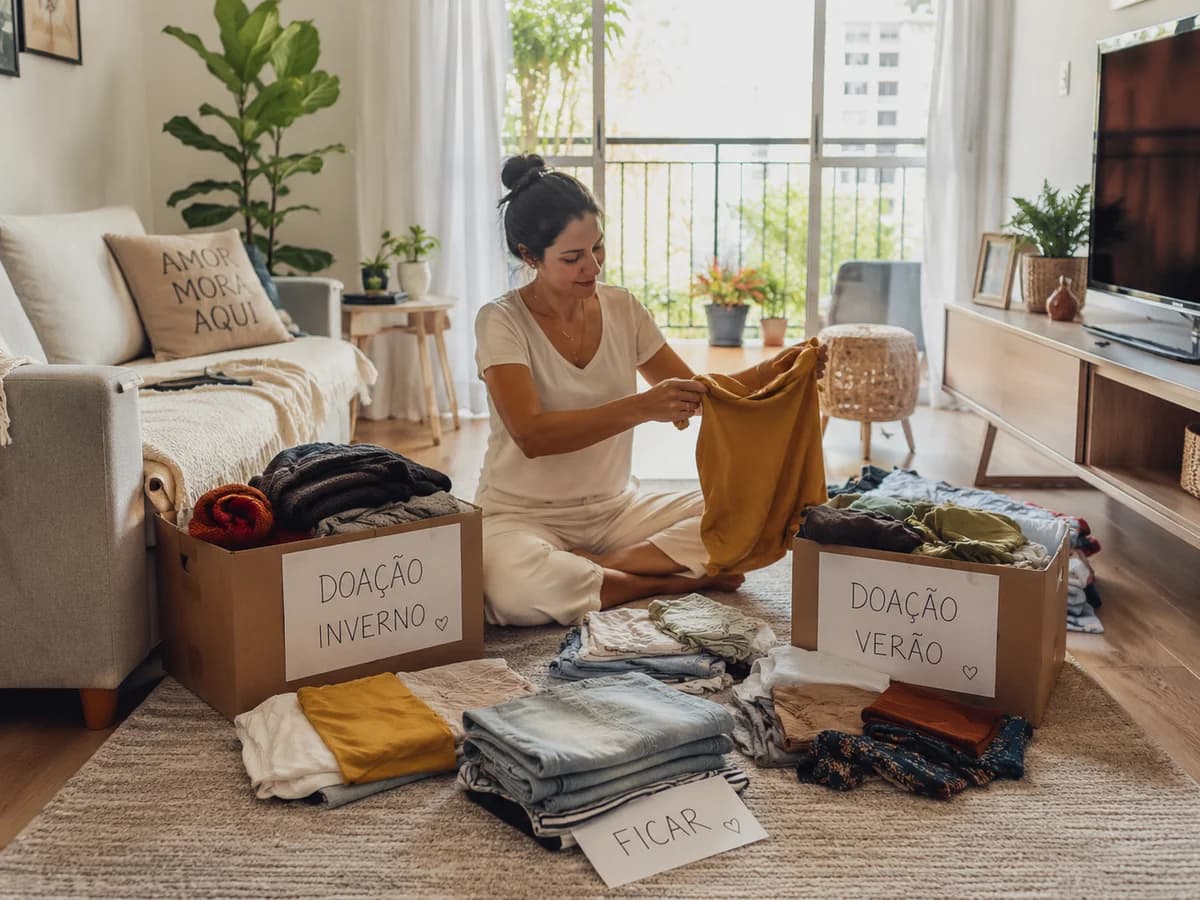
How decluttering works in practice
Before sorting donation bags, I usually organize the conversation into five simple filters. They prevent impulsive decisions and also prevent the "I'll decide later" that sends everything back into the closet.
1. Real use
The first question is objective: does this take part in your current routine, or is it just taking up volume? In many sessions, the client discovers that half the closet is filled with things that have not been in use for years but are still sitting there as if they were useful.
2. Emotional value
Emotional value is real, but it does not need to spread through the whole house. When an item genuinely matters, it can go into a defined memory box. When it only matters because it recalls an old phase of life, a photo usually does the job better than keeping the object.
3. Duplication
Duplication shows up constantly: five toiletry bags open at once, three can openers, piles of old cables, organizers bought without ever being used. What stays is the best version and the quantity the routine actually uses.
4. Condition
A broken, dried-out, stained, or incomplete item should not take up the same space as something that still works. Classic examples: the bag with no strap, the pot with no lid, expired makeup, or the box of parts waiting for a repair that never comes.
5. A possible destination
When an item leaves, it needs a clear destination already in mind: donation, sale, proper disposal, or the memory box. This prevents the false declutter where bags sit inside the house for weeks.
A full closet, nothing to wear. When the volume does not match actual use, chances are no real sorting has ever happened.
In a 947-square-foot apartment in Perdizes, a client called me because her wardrobe would no longer close. I counted 147 pieces. She wore fewer than 30. She told me she stood in front of the closet every morning unable to choose, and had stopped buying new clothes because there was no space, but did not know what to remove. We sorted everything: every piece on the bed, one by one. She ended up with 61 pieces, all in use and with a place. She told me it was the first morning in years she had picked an outfit in under two minutes. Of 147 pieces, 30 had real use. The closet that would not close before now had room to spare. Sorting is what changed her morning.
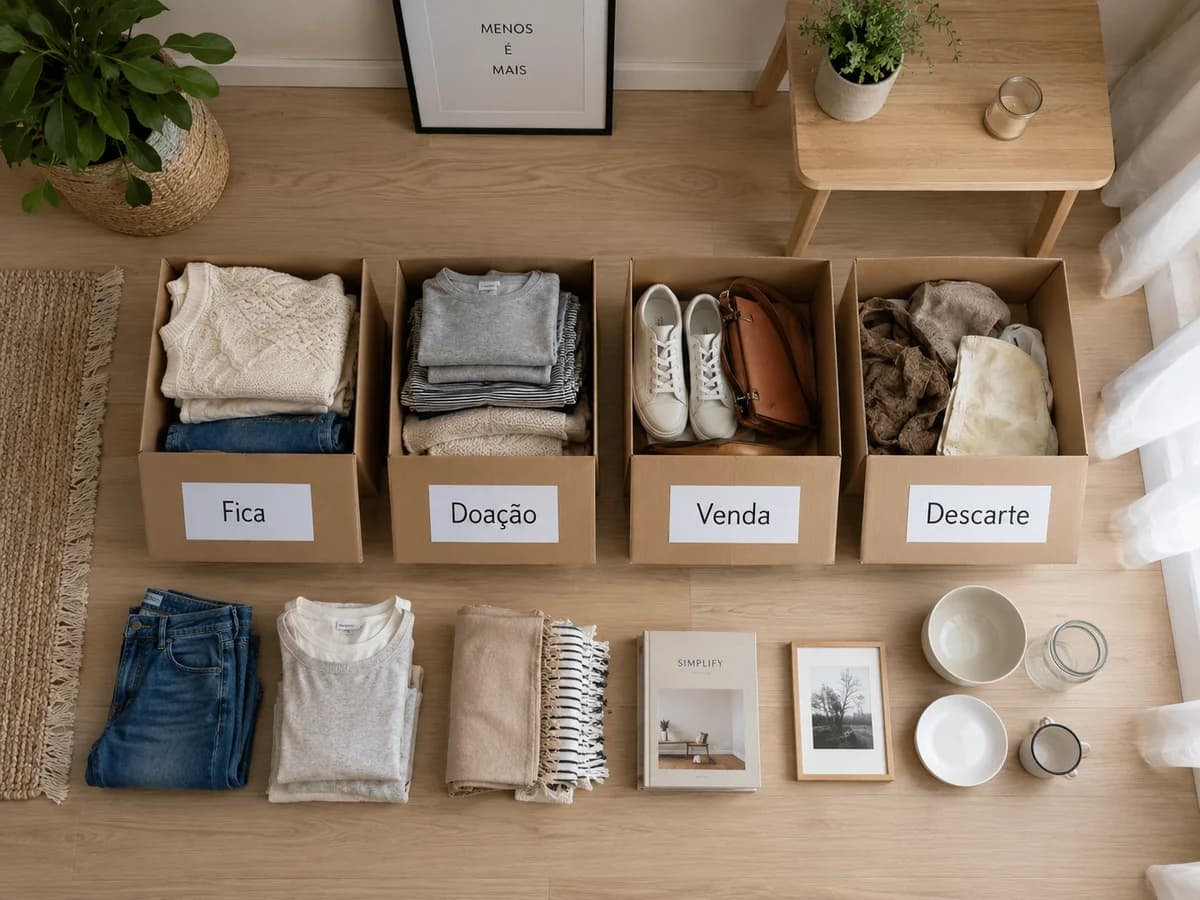
The 4 categories of conscious decluttering
Every item you assess needs to leave the session with a decision. What stalls the process is not doubt about one or two items, it is leaving everything undecided.
1. Keep
You use it regularly (at least once in the last month for everyday items, or at least once per season for seasonal ones). You feel good having it. It has a defined place in the home.
2. Donate
It is in good condition but you do not use it. Someone else can benefit from it. This includes clothes from an old phase of life, never-used gifts, duplicate kitchenware, and items that no longer fit your household routine.
3. Sell
It has market value and is worth the effort of selling. If it has not sold within 30 days, the practical rule is to reassess and donate it. The main goal remains removing the excess from the home.
4. Discard
It is damaged, broken, stained, incomplete, or expired. It has no use value and no useful destination. It leaves the house without going back into the pile of pending decisions.
Room by room: how to declutter
Decluttering the whole house at once is paralyzing. The right approach is room by room, across separate days or sessions.
When sorting happens with professional guidance, the order usually follows what unlocks the home fastest: visible excess first, high-use areas next, and emotional items last. This avoids burning energy on the hardest items right at the start.
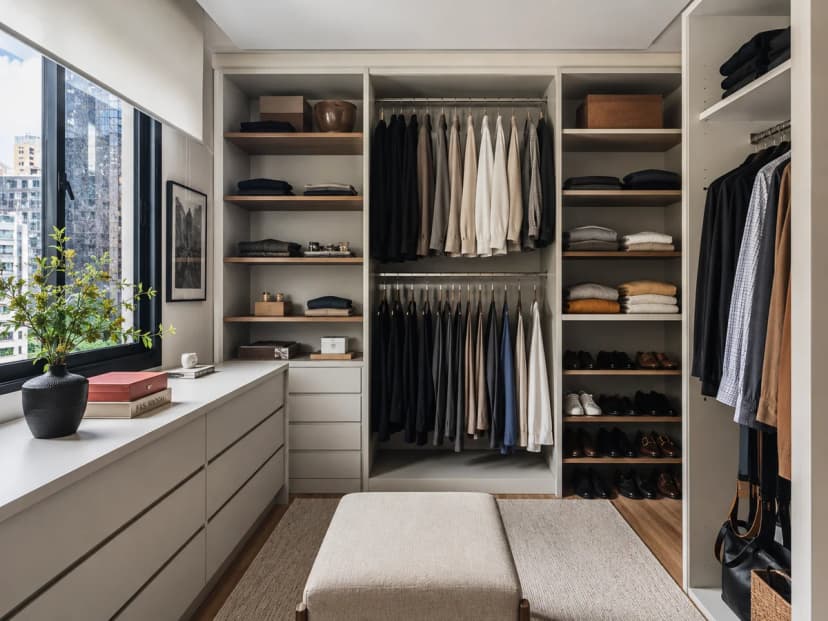
Wardrobe and closet
- Empty everything onto the bed: truly everything
- Item by item: does it fit? Did you wear it in the last year? Do you feel good wearing it?
- Unjustified duplicates: keep the best one, let the rest go
- "Will fit again when I lose weight" clothes: it is a hard call, but the wardrobe should serve the body you have today
- Shoes: the ones that hurt your feet do not deserve a place in your home
A very common case is a client keeping an entire wardrobe from an old phase of life, without wearing a single piece from it. When that takes up the space of current clothes, the organization stops serving the present and starts propping up an old version of the routine.
Kitchen
- Appliances that never leave the cabinet: assess them honestly
- Containers with no lid and lids with no container: discard immediately
- Expired food or food you will never use: out
- Dishes, glasses, and cutlery in excess: a reasonable quantity for your household
- Duplicate pans and utensils: keep the best one
Unused organizers also pile up a lot: baskets, containers, trays, and dividers bought for a solution that was never implemented. If the organizer never went into operation, it becomes clutter itself.
Bathroom
- Expired products or ones you will never use: out
- Accumulated samples from hotels, pharmacies or giveaways: use them or discard them
- Expired medication: dispose of it at a pharmacy (not in regular trash)
- Worn-out towels and mats you "keep as a backup"
Living room and home office
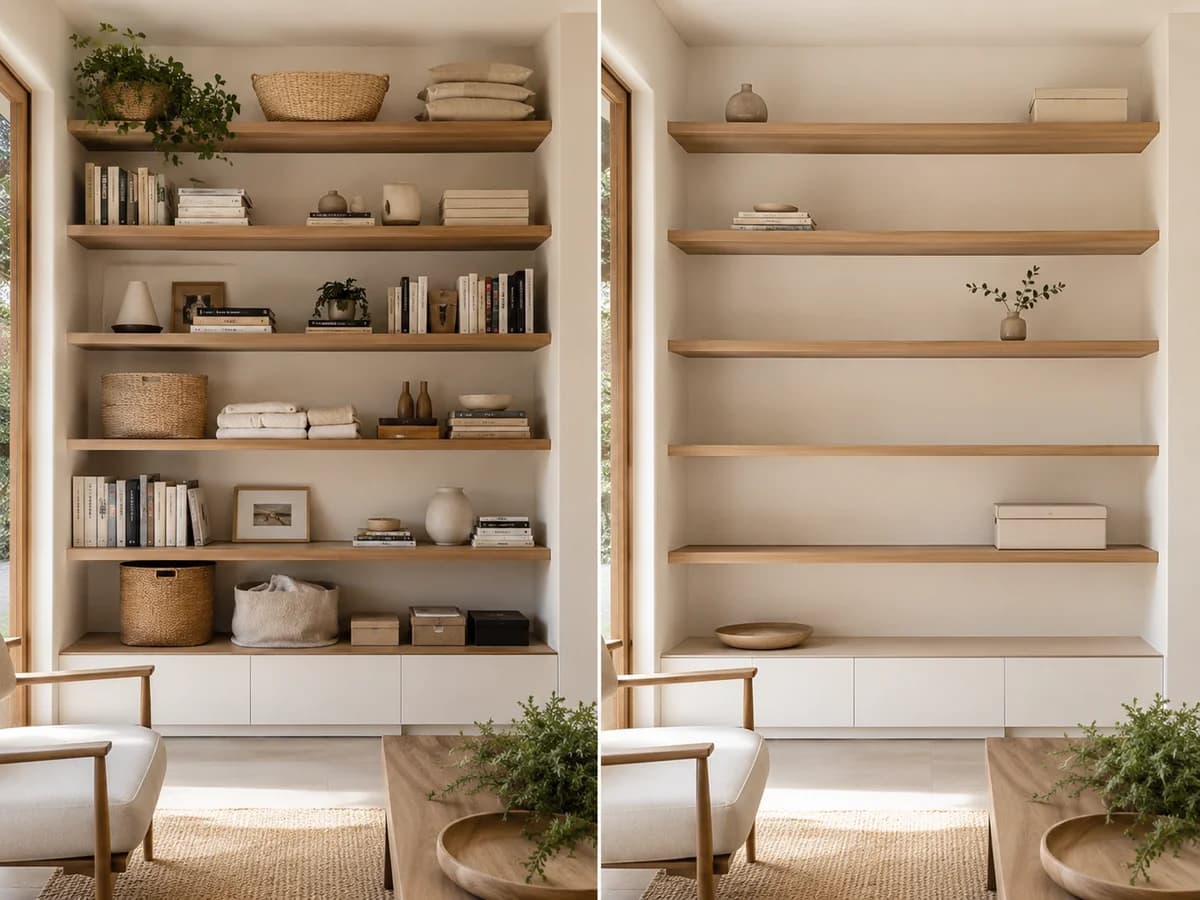
- Books: the ones you definitely will not reread or recommend can go
- Old magazines and accumulated newspapers: discard or recycle
- Cables and chargers for devices that no longer exist
- Documents: organize what you need to keep, shred the rest
- Decor you do not like but keep because "it was a gift"
Books deserve specific attention at this stage: deciding what stays goes beyond a regular declutter. If you have an overflowing bookshelf and want a complete process for sorting, systems, and upkeep, the guide on organizing books at home covers each of those steps.
How to handle sentimental items
Sentimental items call for more time and less impulse. The goal is not to keep everything or discard everything, but to set a real limit for what stays in the home. Emotional attachment to objects is a phenomenon studied in psychology, and recognized by organizing experts such as Marie Kondo as the central challenge of letting go.
The method that works: create a "memory box" about the size of a shoebox (or slightly bigger). Everything with genuine sentimental value can go in. Whatever does not fit, you consciously decide what to do with. You do not store it "somewhere else."
For large items with sentimental value (a family piece of furniture, a wedding gift you never use, inherited objects with no function): photograph it and write down its story. The memory keeps existing even after the home stops holding onto the object.
Four years with sealed boxes from her mother, in a room she avoided entering. Attachment and postponement are hard to tell apart.
In a 1,020-square-foot apartment in Brooklin, a client had six boxes of belongings from her mother, who had passed away four years earlier. The boxes took up the entire guest room. She told me she wanted to deal with them but could not bring herself to open them. She would walk in, stand in the doorway, and leave. The feeling of an unpaid debt came back every time. We opened the boxes together. Most were ordinary items: clothes she would never wear, duplicate kitchenware, papers. We set aside what carried real history: three pieces of clothing, two framed photos, a set of teacups. We photographed the rest before packing it for donation. The boxes left the house that same day. Two months later, the room became an office. She sent me a photo. Four years of sealed boxes had kept the debt alive. One afternoon, opened and decided, closed it.
What to do with what you decided to remove
Getting it out of the house matters as much as deciding to let it go. Donation and sale items that sit "waiting" in the living room become clutter again.
- Donation: drop it off the same day or the next, to a charity, thrift shop, or a neighbor who accepts it. Do not let donation bags sit "waiting" for weeks.
- Sale: list it within 48 hours of sorting. Set a deadline (30 days): if it has not sold, donate it.
- Discard: goes straight to the trash on sorting day. No "I'll see if someone wants it."
Three months with six donation bags sitting in the garage. Discarded items that stay in the house are still clutter.
In an 840-square-foot apartment in Vila Madalena, a client had done an extensive declutter on her own two months before calling me. She had set aside six bags for donation that were still sitting in the garage. She told me it weighed on her every day, the garage was partly blocked, and she felt like she owed herself something for not finishing. We checked the bags together: three went to a nonprofit thrift shop half a mile from the apartment, two went to the building's front desk with a sign, one went to the trash that same day. It took under an hour. She said she felt lighter in that moment than on the day she had sorted everything. The difference was getting it out. Sorting without removing it from the house is only half the job.
How to keep clutter from coming back
Decluttering is not a one-time event, it is a different way of thinking about what comes into your home. Three habits that prevent re-accumulation:
- "One in, one out": bought something new? Something equivalent leaves the house.
- Before buying, ask: where will this live? If there is no place for it, do not buy it.
- Annual review: once a year, walk through the home with a decluttering mindset.
When clutter stalls the process, having someone guide the decluttering changes everything.
See home organization services →If you know the sorting process will require conversation, criteria, and support to decide without pushing everything back into the closet, it is worth requesting a quote for an organization session. And if you want to arrive more prepared for that kind of session, the post on how to prepare your home for a personal organizer helps you understand how the session usually works.
Frequently asked questions about letting go and decluttering
Why is it so hard to let go of belongings?
For two main reasons: emotional attachment (objects tied to memories) and the sunk cost bias (keeping something because it cost a lot). Understanding these mechanisms makes decisions more conscious and less overwhelming.
Should I throw away everything I haven't used in over a year?
Not necessarily. The '1 year' rule is a starting point, but there are exceptions for seasonal and occasional-use items. The right question is: does this have a real role in my life today?
What should I do with sentimental items I no longer want?
Photograph it before letting it go: the memory stays, the object doesn't need to. Create a small, defined 'memory box': whatever doesn't fit, you decide consciously.
How do I let go of clothes I never wore but that cost a lot?
The money is already spent, no matter what you do with the item. Keeping it doesn't recover the investment. It just takes up space and creates guilt. Donate it or sell it. If you sell it, you recover part of the value. If you donate it, someone will actually use it.
How long does a full home declutter take?
A 2-bedroom home with moderate clutter takes an average of 1 to 2 days with a personal organizer. Doing it alone, with interruptions, can take weeks, which often leads to abandoning the process.
Declutter with professional support, no pressure, no regrets
Sorting, categorizing, and the right destination for every item. Silvana guides the entire process from outside the decision.
Talk to Silvana →
About the author
Silvana Santanna →Personal Organizer in São Paulo, specialized in residential move organization and functional organizing projects for homes, closets, kitchens, trousseaux and home offices. Creator of the Casa Pronta™ Method, with more than 100 projects completed across São Paulo and the greater metro area.

Ready to have your home organized
without lifting a finger?
Project assessment visit.