Residential Moving in São Paulo: What the Data Shows
What IBGE, SECOVI, and the São Paulo market reveal about residential moving in São Paulo, and why organizing stopped being a luxury.
Neste guia você verá:
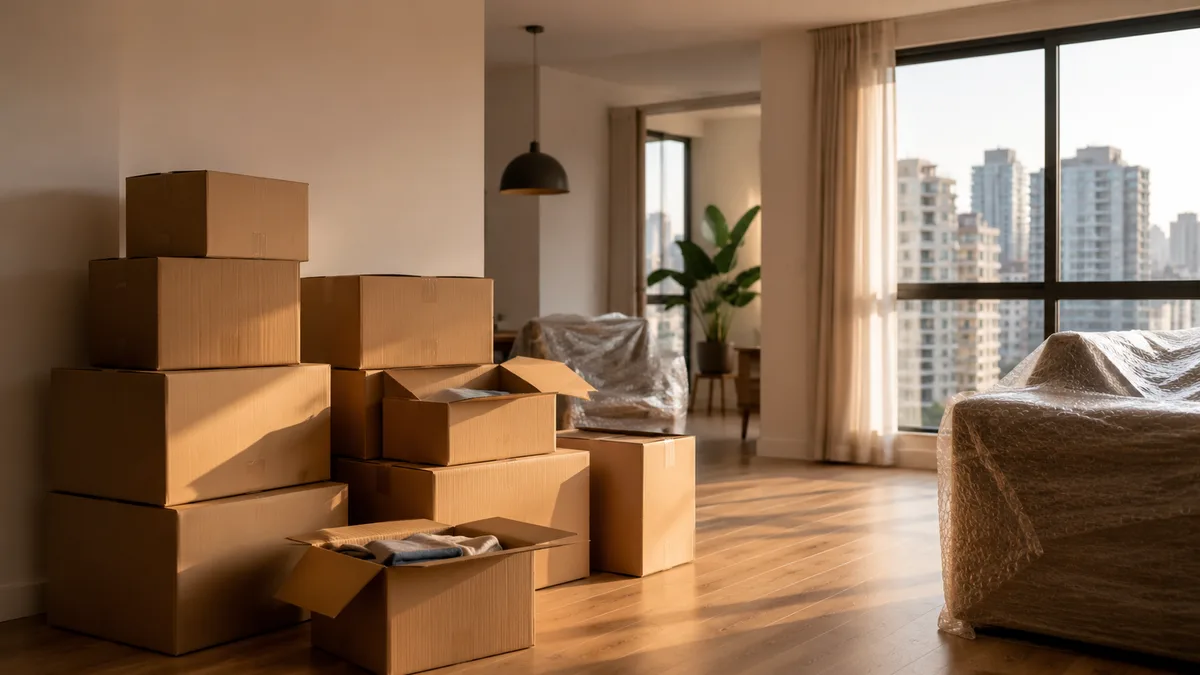
Anyone who has moved in this city knows the scene: the truck is gone, the apartment is full of boxes stacked to the ceiling, and nobody knows where to start. Moving in São Paulo has a problem that few articles mention, and the numbers explain why.
How many people move in São Paulo every year?
There is no official number of moves per year, but the scale of the city gives a sense of it. São Paulo has 4.9 million households, the largest number of any municipality in Brazil, according to the IBGE's 2022 Census. That is 27% more than in 2010. Every new household started with a move.
The flow of people is also the largest in the country. Between 2017 and 2022, the state of São Paulo received 736,000 migrants from other regions, the largest contingent in Brazil during the period, according to IBGE. Add to that everyone who switches neighborhoods within the city, gets married, separates, or buys their first property. Moving is a mass event in SP, and it is almost always experienced as an individual crisis.
Why is moving in São Paulo harder than average?
Because São Paulo residents face high volume and small spaces at the same time. The capital's density reaches 7,528 residents per km², according to IBGE, and the market has shrunk the size of new properties. More than half of the units launched in 2024 have up to 45m², against a much smaller share of larger properties.
Market data is direct. In 2024, properties of up to 45m² represented most of the supply for middle and high income buyers, and in the first months of the year they reached 81.6% of launches in the city, according to Secovi-SP. Most are two-bedroom units. Moving into an apartment like this means part of what you had simply will not fit, and discovering that on moving day is too late.
A client called me thinking the problem was a lack of closets. It was the opposite.
In a compact 48m² apartment in Moema, a client who lived alone reached out three weeks after getting the keys. She had bought a bookshelf and a sideboard sized for her old, 90m² apartment, and the two pieces swallowed the living room. She told me she felt the place was suffocating, that she walked in and immediately wanted to leave. It was not a lack of storage space: it was furniture too large for the new floor plan. We replanned the zones based on what she actually used, returned the sideboard, and swapped the bookshelf for a vertical model. The living room could breathe again. The lesson she took away was simple: in a compact apartment, the most expensive mistake is buying before measuring real use.
How long does it take to settle in after a move?
Without professional help, most families take three to four weeks to truly settle in, with boxes open in several rooms at once. With a team working by method, complete projects are usually ready in three to five days, depending on size and volume. That difference matters for daily life: the home starts working again in days, not at the end of a month of boxes.
What weighs on that timeline is the accumulated volume, and it is bigger than it looks. Clothes and shoes alone: each Brazilian household discarded an average of 44 kg in 2024, according to Agência Brasil. In a move, that accumulation shows up all at once, inside boxes nobody wants to open. Volume is time, and time is the scarcest resource for anyone moving and working at the same time.
They kept six boxes of "maybe." Two weeks later, they donated five.
In a 70m² apartment in Pinheiros, a recently arrived couple called me because, three weeks after the move, they still could not work from home. The home office was the most cluttered room: boxes stacked on the desk, the monitor still in its packaging, cables tangled together. Both of them worked remotely and took turns using the kitchen table so they would not fall behind on deliverables. The frustration was daily. We organized following the order that works for moves: kitchen and bed on day one, then bathrooms, then the office. Within three days the home office was operational. The hard part was decluttering: they insisted on keeping six boxes of "maybe" items. I agreed, with one condition: review them in two weeks. At the review, they donated five. Accumulation usually loses its importance once the home is already functioning without it.
Want to arrive at your new home with the essential rooms working from day one?
See how it works →Who hires a personal organizer for a move?
The most common profile is someone who has no time to stop. Families with both adults working, home office professionals, couples with young children, and people moving on a short deadline. Home office, in fact, has become the norm: 6.6 million people worked remotely in 2024, according to IBGE. Anyone working from home cannot go three weeks without a set-up workspace.
In Brazil, the profession that handles this has an official code: the personal organizer is recognized under CBO 375130 by the Ministry of Labor and Employment, and organizations like ANPOP provide training and certification. The job is to plan how each room will work for that specific family, well beyond cleaning or decorating. To understand what goes into the value of this service, see how much a personal organizer costs in São Paulo.
What does the data say about handling the move alone?
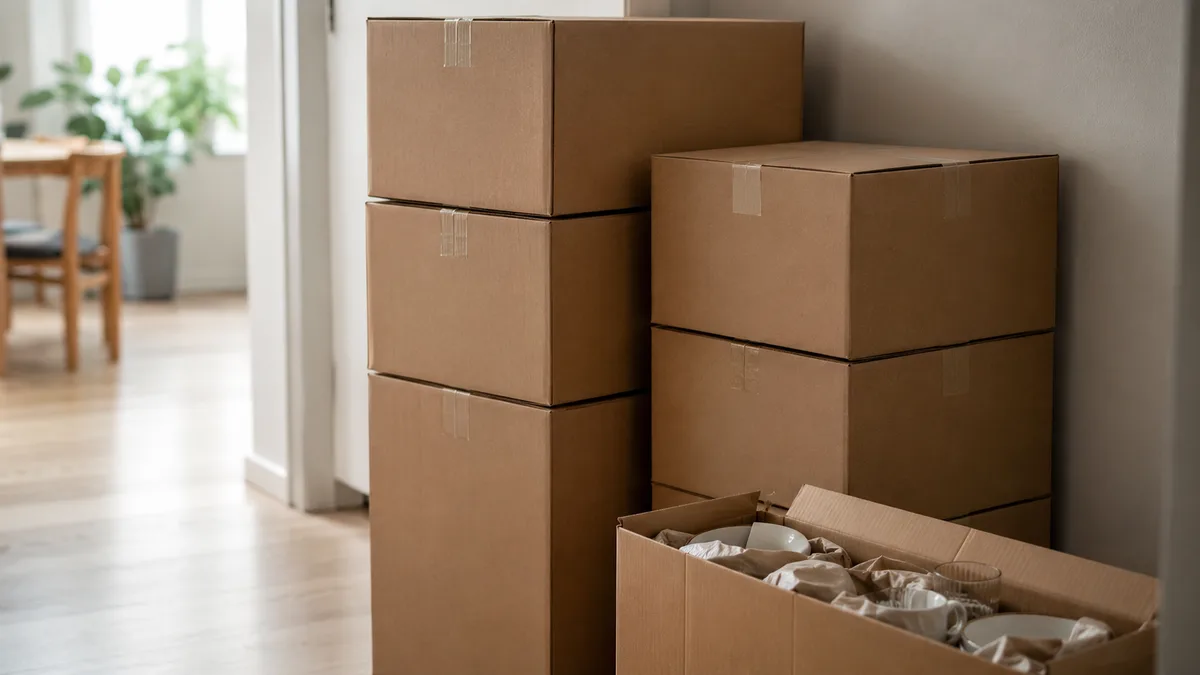
It says it can be done, but the invisible cost is high. Anyone organizing a move alone while working full time trades weeks of weekends, nights, and days off for the process, and still makes decluttering decisions while exhausted, which tend to be poor ones. In a city of compact apartments, a poorly made decluttering decision is the one that weighs the most afterward.
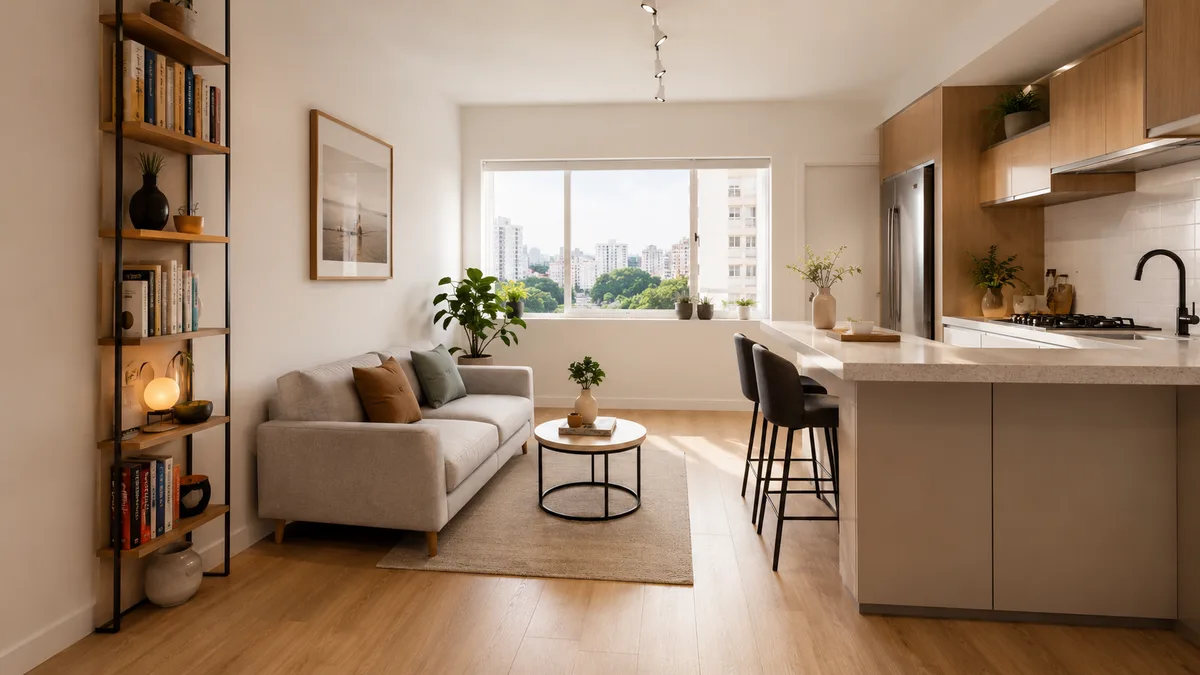
The blind spot is size. With 54% of launches at up to 45m², according to Secovi-SP, the new home is almost always smaller or has fewer built-in closets than the old one. Without sorting before packing, whatever does not fit becomes a pile in a corner, and the pile becomes the new normal. The data on small properties and the data on clothing accumulation, together, describe exactly this impasse.
Twelve years at the same address fit into how many boxes? More than the family expected.
A family of four in Tatuapé moved from a large house to an apartment after twelve years in the same place. When I arrived, the volume had paralyzed everyone: boxes in every room, and nobody could decide where to start. The mother got stuck on decluttering, mainly with books, which filled four large boxes. We sorted by category, not by room, which speeds up decisions. Within four days the apartment was set up and functional. The books were the point of conflict: she wanted to keep all of them, and they did not fit. We reached a middle ground, she kept half and donated the rest to a community library. Nobody needs to empty out their home to organize it. They need to decide what deserves space in the new place.
How does the method change these numbers in practice?
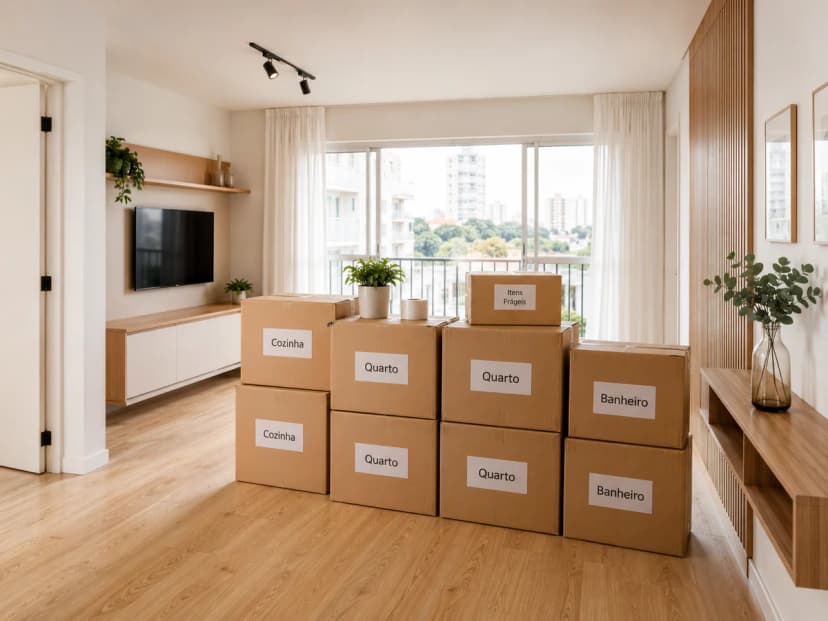
The method turns moving from a weeks-long event into a days-long project. Instead of opening boxes on impulse, an order is set: kitchen and bed working on day one, then bathrooms and closet, and finally the living room and decorative items. Each room is planned for the family's real use, not for a delivery-day photo.
This is where the Casa Pronta™ Method comes in: a briefing before the move, layout planning for each room, guidance for the moving company, sorting and decluttering, and room-by-room organization. For the complete step-by-step of the post-move phase, the São Paulo moving organization guide covers every stage, and the moving checklist helps you not forget anything.
São Paulo's numbers are not going to change: the city will keep being dense, with ever smaller properties and people arriving all the time. What changes is how you get through it. Organization does not make a move perfect or painless. It makes the home work before exhaustion wins, and that, in practice, is what separates starting well from taking months to feel at home.
Project assessment
Moving in São Paulo?
Tell me about the property and the timeline on WhatsApp: I'll reply with a project assessment.
Request AssessmentFrequently asked questions about residential moving in São Paulo
How many people move in São Paulo every year?
There is no single official number of moves per year, but the scale gives a sense of it: the city of São Paulo has 4.9 million households, the largest number in the country, according to the IBGE's 2022 Census. The state received 736,000 migrants between 2017 and 2022, the largest flow in Brazil. Every new resident and every property change is a move that needs to be organized.
Why is moving in São Paulo harder than average?
Because São Paulo combines high volume with small spaces. The capital's density reaches 7,528 residents per km², according to IBGE, and more than half of the properties launched in 2024 have up to 45m², according to Secovi-SP data. Moving into a smaller space forces you to decide what comes in before you open the first box, and that is where most people get stuck.
How long does it take to settle in after a move?
Without professional help, families usually take three to four weeks to fully settle in, with boxes open in several rooms at the same time. With a team organizing by method, complete projects are usually ready in three to five days, depending on the size of the property and the volume of belongings. The difference is not just time: it is when the home starts working again.
Is it worth hiring a personal organizer for a move in SP?
It is worth it mainly for people with a short deadline, a large property, heavy accumulation, or a full-time job during the move. In compact apartments, which dominate the São Paulo market, planning each room decides whether the space will work. The cost of the professional is usually lower than the cost of weeks of chaos and poorly made decluttering decisions.

About the author
Silvana Santanna →Personal Organizer in São Paulo, specialized in residential move organization and functional organizing projects for homes, closets, kitchens, trousseaux and home offices. Creator of the Casa Pronta™ Method, with more than 100 projects completed across São Paulo and the greater metro area.

Ready to have your home organized
without lifting a finger?
Project assessment visit.