Bathroom Organization: A Complete System by Zones
How to organize a bathroom with a professional method: 5 functional zones, humidity control in São Paulo, a medicine cabinet with expiration tracking, and a maintenance routine. Complete personal organizer guide.
Neste guia você verá:
Why the bathroom gets messy so fast
In most homes I work in, the bathroom is not disorganized because there is not enough space. It is disorganized because there is too much in it: cosmetics that were never opened, hotel samples forgotten at the bottom of a basket, three open lotions at the same time, perfume sachets tucked in a drawer since who knows when.
What shows up most often during a sort: expired products nobody threw out, makeup packaging damp from steam, shampoos that stopped being used but never left, and a drawer where everything ended up because nobody defined what should go there. Without a logic for placement, anything comes in and nothing goes out. If the laundry room is in the same state, the bathroom and laundry guide covers both rooms together, under the damp rule that governs the two.
Almost nobody who calls me for a bathroom wants more drawers. They want the bathroom to stop feeling small. Those two requests rarely have the same solution.
In an 85 m² apartment in Paraíso, I worked with a client who thought her bathroom was simply too small to function. The counter was packed, the mirror cabinet jammed from the sheer number of bottles leaning against each other, the wicker basket overflowing. When we did the sort, we counted 47 products. She used 12 regularly. The other 35 were: hotel samples that were going to be used someday, three open lotions at once, perfumes lined up on the mirror shelf, creams that had stopped working but stayed anyway. Once the expired items left, the perfumes moved to the bedroom, and the samples went to disposal, 18 products remained. The counter opened up, the cabinet started closing again. The bathroom did not change size.
The client said that bathroom, for the first time, did not stress her out in the morning.
The takeaway: a bathroom that feels small is almost always a bathroom that is full. Sorting reveals how much space exists before you buy a single organizer.
Sorting comes before any organizer. Before thinking about where to store things, you need to decide what stays. Take everything out, check expiration dates, and get rid of what you do not use. Only then, with what is left, do you organize.
The 5 zones of an organized bathroom
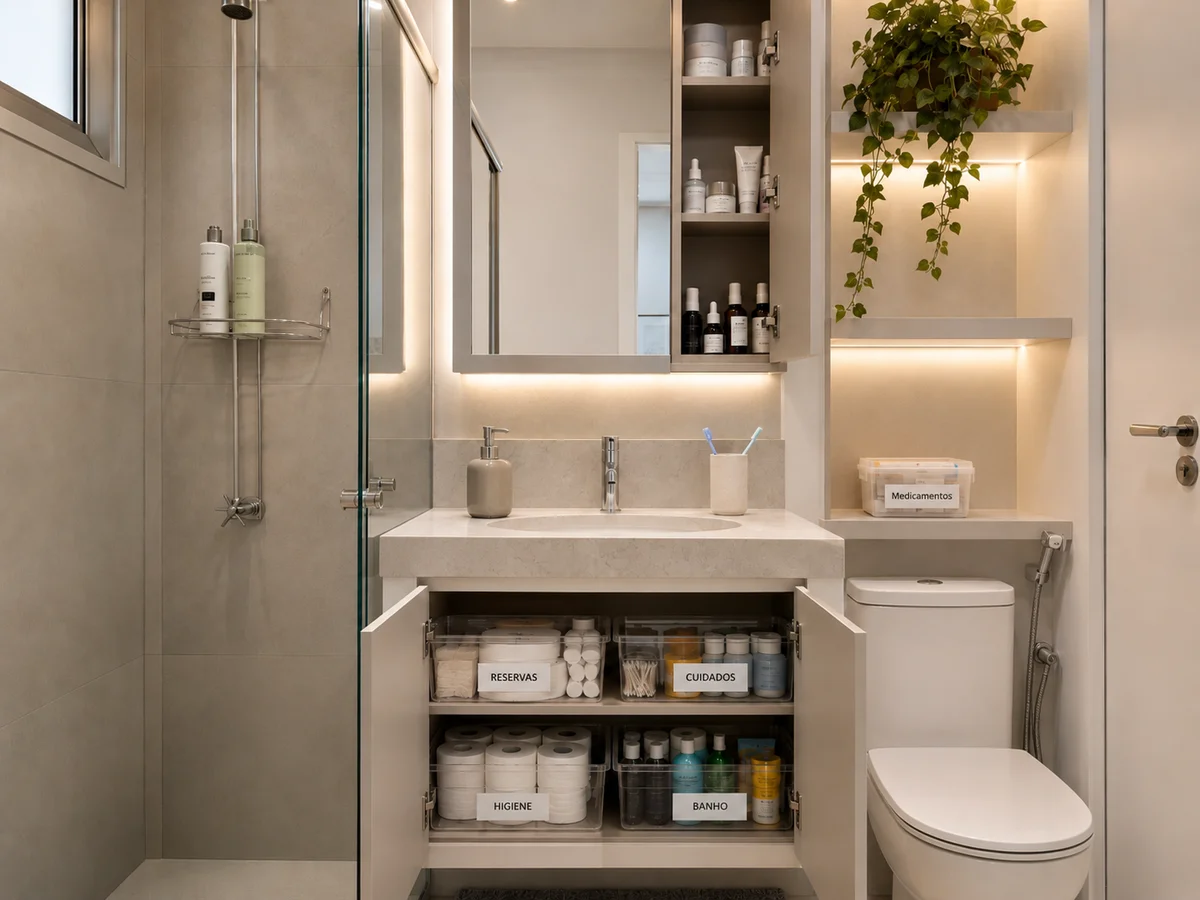
A professionally organized bathroom is not organized by product type. It is organized by use zone: each area of the bathroom has a specific function and holds only the items used in that space, at that moment.
Zone 1: Shower
Inside the shower, only what is used during bathing. Nothing more. Use a suction-cup shelf or a tension rod organizer to create vertical space without drilling into the wall.
Critical limit: no more than 1 to 2 products per category. One shampoo, one conditioner, one liquid soap, one loofah. Not five shampoos. The rule "a new one comes in only when the current one runs out" solves the buildup problem at the root.
Zone 2: Sink counter
On the counter, only what is used at the sink every day: hand soap, a dish sponge (if you wash cups in the bathroom), toothbrush, toothpaste, and floss. Anything used daily but not at the sink goes in a drawer or cabinet.
A clear counter is not about looks: it is functional. An open surface can be cleaned in 30 seconds. A counter with 15 items takes 5 minutes to clean and rarely gets cleaned as often as it should.
Zone 3: Mirror cabinet
The mirror cabinet is for face products used daily in front of the mirror: serum, facial moisturizer, quick makeup (if applicable). Second shelf for weekly-use items. Top shelf or back for monthly-use items.
Entry rule: if you do not use it in front of the mirror, it does not belong in this zone.
Zone 4: Extra storage
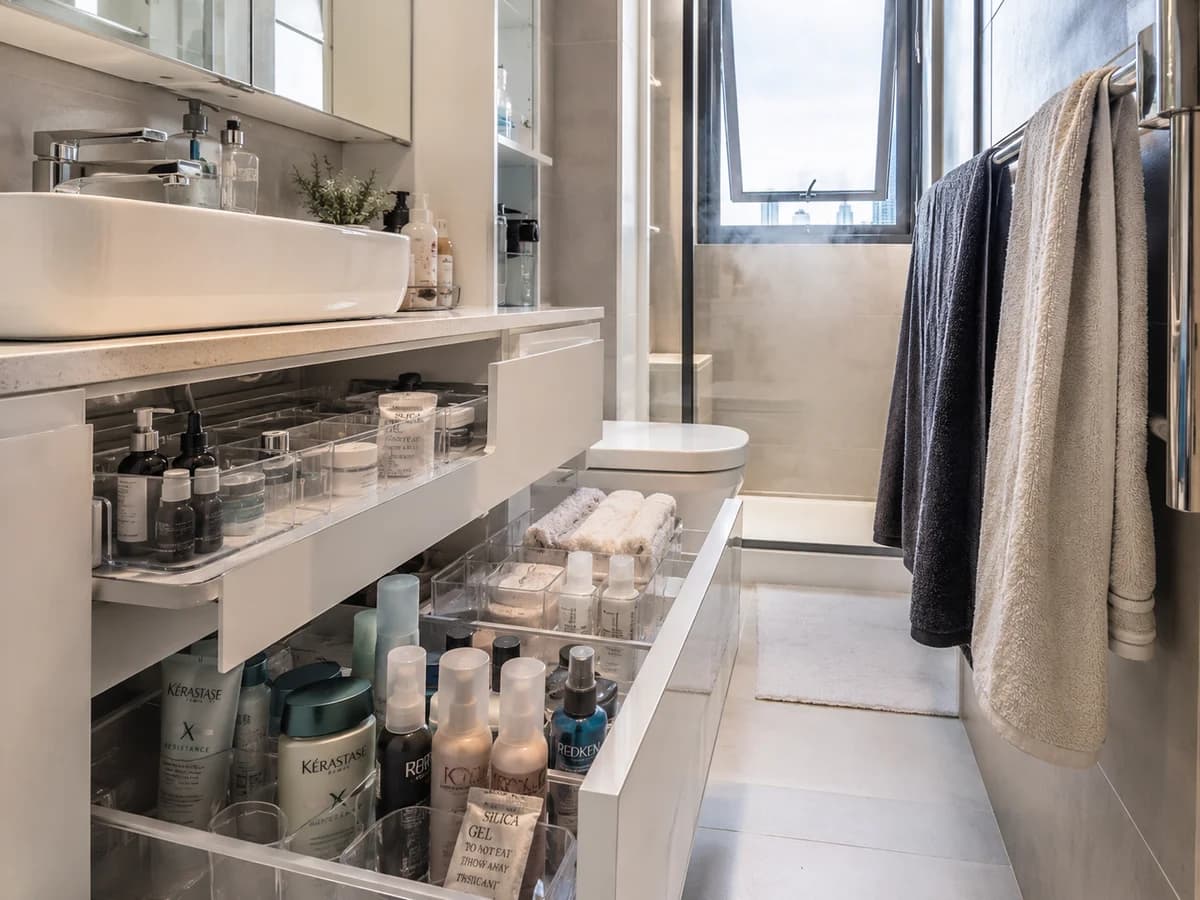
Under the sink or in a separate cabinet: your product reserve. Extra toilet paper, bathroom cleaning supplies, soap and shampoo refills. Everything in labeled boxes. Without labels, it becomes a chaos drawer within 30 days.
Zone 5: Medications (a separate zone)
Medications have their own zone, and it is not the bathroom. We cover this in detail in a dedicated section, but the principle is simple: bathroom heat and humidity degrade most medications, making them less effective or even harmful.
What belongs in the bathroom (and what does not)
One of the most impactful decisions in bathroom organization is defining what actually belongs in this space. Many items live in the bathroom out of habit, not logic.
What belongs in the bathroom
- Shampoo, conditioner and body soap (used while bathing)
- Hand soap and sink sponge
- Toothbrush, toothpaste and floss
- Razor and shaving cream
- Deodorant (if applied in the bathroom after bathing)
- Toilet paper and reserve stock
- Cotton balls, cotton swabs and a nail file
- Feminine hygiene products
What does NOT belong in the bathroom
- Medications: heat and humidity degrade most medicines: antibiotics, vitamins, birth control pills lose effectiveness. Store them in the bedroom or a kitchen cabinet.
- Perfumes: water vapor and light oxidize fragrance. A perfume kept in the bathroom loses its scent within a few weeks. Correct spot: a nightstand or vanity in the bedroom.
- Makeup: bathroom humidity promotes fungus and bacteria growth in products, especially mascara, foundation and eyeshadow. Store it on a bedroom vanity or in a dedicated case.
- Costume jewelry and jewelry: humidity speeds up oxidation and tarnishing. Metals and stones lose their shine quickly. Correct spot: a jewelry box in the bedroom.
- Extra clothes: they absorb bathroom humidity and odor. Store them in the bedroom closet and bring in only what you will wear that day.
- Occasional first-aid supplies: bandages, gauze, antiseptics for occasional use are better kept in a kitchen or hallway cabinet.
When I sort a bathroom, this is almost always what turns up: oxidized perfumes on the shelf, makeup with a trace of mold nobody noticed, tarnished jewelry sitting on the counter, and a pile of samples that were going to be "used someday." Removing these items from circulation already solves half the problem, before buying a single organizer.
A bathroom with a working system is one that does not fall apart in week five, because it was built for the real routine, not for a photo.
See home organization →Humidity control in São Paulo
São Paulo has an average relative humidity between 75% and 85%, well above the 60% considered the threshold at which humidity starts damaging materials, promoting mold, and degrading products. In bathrooms without proper ventilation, that humidity can climb above 90% during and after a shower.
This has direct implications for organization. What works in dry climates may not work in São Paulo.
The right materials for São Paulo bathrooms
Organizers made of acrylic, plastic and stainless steel work best. Wood and MDF warp, swell and grow mold quickly in humid environments, even treated ones. Also avoid bamboo organizers (they look natural but absorb humidity and mold at the base).
Controlling humidity inside the bathroom
- Silica gel in drawers: silica gel sachets absorb humidity in drawers and cabinets where products are stored. Replace every 3 to 6 months (sachets become saturated and stop working).
- Ventilation after bathing: opening a window or door for 10 to 15 minutes after a shower significantly reduces residual humidity and prevents mold on silicone joints and walls.
- Towels: dry them completely: never fold a damp towel on the hook. Open it up and stretch it out: bacteria and mold form on damp, folded towels in under 24 hours.
- Lidded containers: for items stored inside the bathroom, choose sealed containers. Shower steam settles on any open surface.
- Mandatory weekly cleaning: São Paulo's humidity turns the bathroom into the fastest bacterial growth environment in the house. Weekly cleaning is not optional: it is part of the organization system.
Medicine cabinet: a separate system
The medicine cabinet is probably the most poorly organized item in Brazilian homes. Ignored expiration dates, old prescription medications mixed with daily-use ones, everything in a box or drawer with no logic. And almost always: inside the bathroom.
Almost every medicine cabinet I open has medications from two, three, four years ago. Not because families are careless. Without periodic review, expiration dates slip by unnoticed.
In a 130 m² home in Vila Olímpia, the client called me because the medicine cabinet, kept inside the bathroom, had finally overflowed for good. She thought she needed a bigger box. When we did the sort, I found antibiotics from 2019, vitamins with packaging faded by humidity, birth control pills from a treatment that had ended three years earlier, empty syrup bottles nobody had thrown out. More than 60% of the volume was expired items or treatments that had already finished. The large box, sitting in the humid bathroom, was part of the problem: the steam sped up degradation, and nobody ever opened it to review.
We reorganized into four categories and moved everything to the kitchen cabinet. The family ended up with one small box holding 23 items in active use.
The takeaway: storing medications in the bathroom speeds up degradation and makes reviewing them harder. When access is inconvenient, the review never happens, and expired items pile up unnoticed.
Where to store them
The best options are a kitchen cabinet (more stable temperature), a bedroom drawer, or a dedicated box in a hallway cabinet. The criterion is: dry, cool, and away from direct light. Medications that need refrigeration go in the fridge, never in a cabinet, even outside the bathroom.
How to organize your medication system
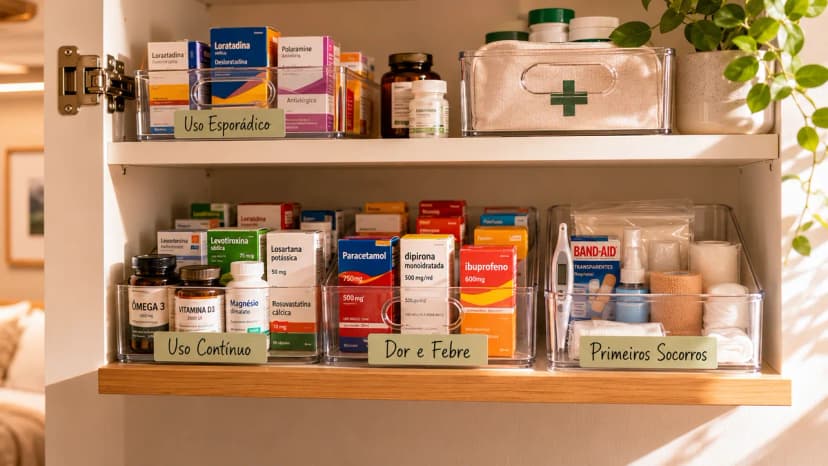
Split them into four categories, in labeled boxes or bags:
- First aid: bandages, gauze, antiseptic, medical tape, small scissors, tweezers.
- Daily use: medications taken regularly, with their package inserts.
- Occasional use: painkillers, fever reducers, antacids, allergy medication for occasional use.
- Prescription: controlled and prescribed medications in active use, kept with their prescriptions.
Quarterly expiration audit
Every three months, review all medications. Use the checklist below as a guide:
- Take EVERYTHING out of the medicine cabinet or box
- Check the expiration date of each item
- Dispose of expired items at a pharmacy (not in regular trash)
- Check the package inserts for medications in continuous use
- Reorganize by category: daily use / first aid / occasional
- Note down what needs to be restocked
- Close and store in a dry, cool place, not the bathroom
Expired medications should be returned to a pharmacy. Brazilian law (Resolution RDC 222/2018) requires pharmacies to accept medication waste for environmentally sound disposal. Never throw them in regular trash or down the sink, since the chemical compounds contaminate water and soil.
Shared bathroom: organizing by person
Bathrooms shared between partners, siblings or family concentrate conflict wherever the organization was not designed for multiple users. The solution is not more space: it is clear territory.
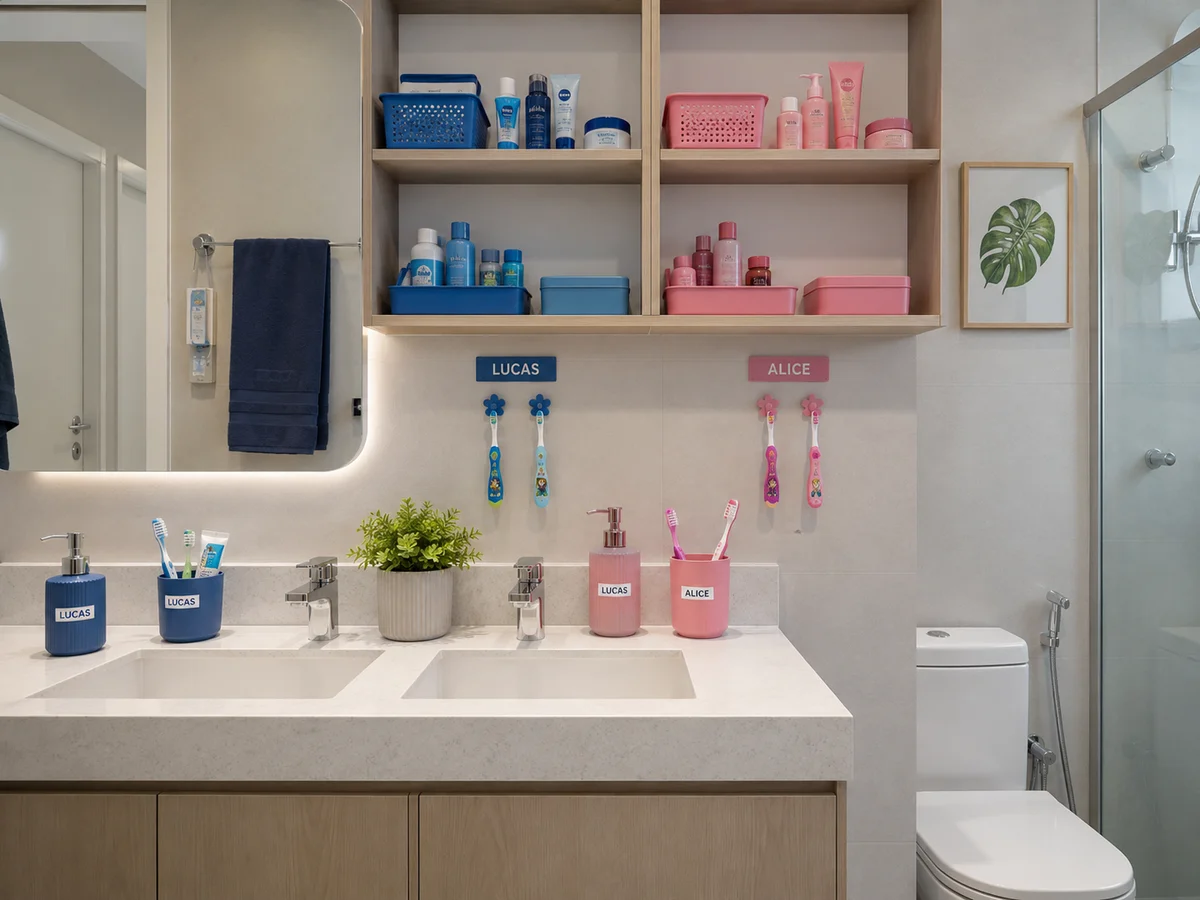
Principle: one shelf or section per person
Each person gets a designated shelf, drawer, or basket. Whatever is in that space belongs to them. What sits on the counter is shared, only truly collective items (hand soap, toilet paper). Personal items stay in each person's own space, not on the counter.
Color coding (a green basket for one person, blue for another) works better than labels in homes with young kids. For adults, name labels are enough.
Mess in a shared bathroom is almost never about carelessness. It is a lack of territory. When nobody knows what belongs to whom, the counter becomes collective space, and nobody feels responsible for keeping it tidy.
In an apartment in Pinheiros, a couple with a 7-year-old daughter shared a 4 m² bathroom. The mother would reorganize the counter, and within two days it was back to how it was. The father told me, in person, that he did not know where things were supposed to go. It was not carelessness: it was three people using the same space with no defined territory. The mother's skincare products, the father's razor and the daughter's toothbrush all shared the same counter.
We split the cabinet into three drawers, one per person. The counter kept only two items: soap and a toothbrush holder. A colorful hook at the daughter's height became her towel hook. Two weeks later, the mother wrote to me: her husband stopped mixing products because he had his own drawer, and their daughter started hanging up her towel without being reminded.
The takeaway: a shared bathroom with no territory per person creates friction. Every household member needs a defined space. When the counter is left for the collective, it accumulates everyone's stuff.
Organizing the bathroom for kids
- Hooks and shelves at a child's height (60 to 90 cm off the floor) let them grab and put back their own items without adult help.
- Teaching the habit of returning each product to its place works from around age 4 to 5, with a simple system (one hook for the towel, one spot for the toothbrush).
- Autonomy in the bathroom builds a sense of responsibility that carries over into other spaces.
Guest bathroom
For a guest bathroom, the rule is the opposite: leave only the essentials visible (soap and toilet paper), no personal items on display, minimal decoration. A guest bathroom that is always ready requires zero prep before visitors arrive.
Organizing for the morning rush
If several people share the same bathroom in the morning, set an order. It does not need to be rigid: a starting point to avoid the 15 minutes of daily negotiation that create conflict. Whoever wakes up earliest goes first, or whoever leaves earliest gets priority. With a clear rule, the bathroom stops being a source of morning tension.
A 2-minute daily maintenance routine
The zone system only holds up with a minimal maintenance routine. Two minutes a day prevent two hours of monthly reorganization.
Daily habit: three actions
- Return each product to its place after use: this single habit solves 80% of bathroom clutter. The shampoo goes back to the shower zone. The hairbrush goes back to its shelf. The face cream goes back to the mirror cabinet.
- Squeegee the shower after bathing: 30 seconds with a squeegee on the shower walls prevents soap scum and mold buildup. In São Paulo, where humidity is already high, this habit stretches the time between deep cleanings.
- Hang the towel open: not folded, not bunched up, but open on the hook to dry completely.
Weekly checklist
- Return all products to their designated spot
- Clean the sink and faucet
- Clean the shower (walls and floor)
- Wash the towels used during the week
- Empty the bathroom trash
- Check the toilet paper and soap stock
- Clean the mirror
Monthly maintenance
Once a month, spend 15 minutes to:
- Check the expiration dates of hygiene and cosmetic products
- Review the medicine cabinet (a full audit every 3 months)
- Clean the back of drawers and shelves
- Replace silica gel sachets if needed
- Check whether any new product came in without an old one leaving
The zone system reduces weekly cleaning time because clear surfaces clean faster. A bathroom organized by zones, with 2 minutes of daily maintenance, rarely needs a deep reorganization.
Frequently asked questions
Which products should not stay in the bathroom?
Medications, perfumes, makeup and costume jewelry should not stay in the bathroom. Heat and humidity degrade medications (including antibiotics, vitamins and birth control pills), oxidize fragrances within a few weeks, promote fungus and bacteria growth in makeup products, and speed up oxidation in jewelry and costume pieces. Store these items in the bedroom or in cabinets outside the bathroom.
How do you organize a small bathroom with no space?
In small bathrooms, the solution is to use vertical space: install shelves above the toilet tank, use adhesive wall organizers, turn the door into storage space with over-door organizers, choose mirrors with built-in shelves, and maximize the space under the sink with drawer units or baskets. The most important step is reducing the number of products: fewer items need less space, no matter the size of the bathroom.
How do you keep a bathroom organized with kids?
Install hooks and shelves at a child's height (between 60 and 90 cm off the floor) so they can grab and put back their own items without adult help. Limit the products kept at kid height to the essentials. Teach the habit of returning each product to its place after use starting around age 4 to 5. Use labels with photos for younger kids. Autonomy builds responsibility.
How often should you review the medicine cabinet?
Do an expiration check every 3 months and a full system review once a year. Expired medications should be returned to a pharmacy, since Brazilian law requires pharmacies to accept expired medications for proper disposal. Never throw them in regular trash or down the sink, since the chemical compounds contaminate the environment.
Want professional help?
Complete home organization in São Paulo
Silvana Santanna organizes bathrooms, closets, kitchens and every room with a professional method. Project assessment.
Request a quote on WhatsAppServing São Paulo and the surrounding area

About the author
Silvana Santanna →Personal Organizer in São Paulo, specialized in residential move organization and functional organizing projects for homes, closets, kitchens, trousseaux and home offices. Creator of the Casa Pronta™ Method, with more than 100 projects completed across São Paulo and the greater metro area.
Related posts
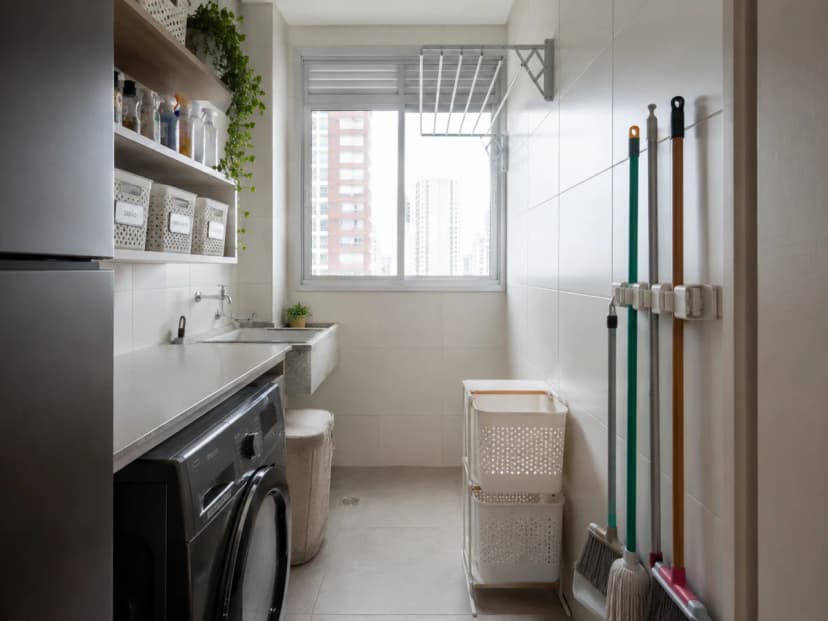
How to Organize a Small Laundry Room in São Paulo: 4 Functional Zones
11 min · Read article →
How to Organize Personal Documents at Home: A 4-Category System
16 min · Read article →
How to Organize a Medicine Cabinet: 6 Zones by Expiration and Use
10 min · Read article →
Ready to have your home organized
without lifting a finger?
Project assessment visit.