Clutter and the Brain: What Science Says
What research from Princeton, UCLA and sleep medicine shows about clutter, focus, stress and sleep, and why organizing is self-care.
Neste guia você verá:
You walk into your home after a full day, look at the pile of things with no place to go, and feel a tiredness that is not physical. It is not being precious or lacking willpower. Science has concrete explanations for that weight, and they change the way you see what an organized home does for you.
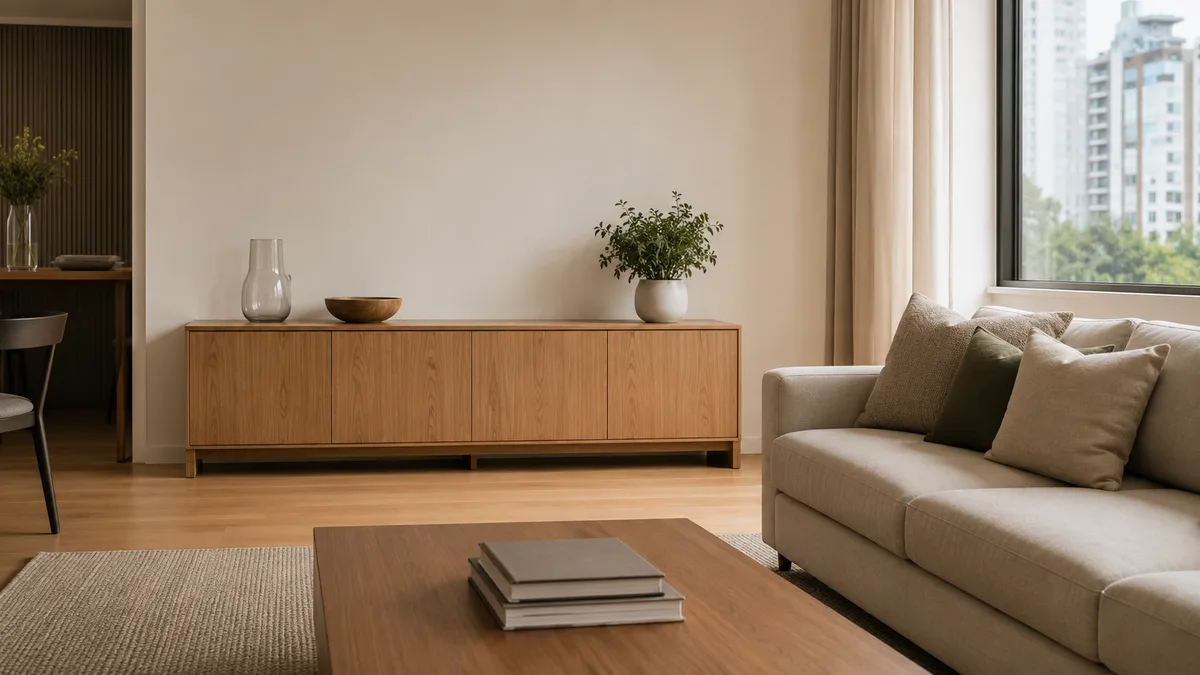
Does clutter affect the brain?
It does. Attention neuroscience research conducted at Princeton University shows that multiple objects in the visual field compete for the same brain resources. The more disorganized stimuli around you, the more the brain has to work to filter out what does not matter, and that constant filtering wears down your capacity to focus over the course of a day.
Princeton's attention and perception lab describes the phenomenon as a tug of war: there is a pull toward what you want to see and a pull from the objects competing for your attention. In crowded environments, the brain spends energy the whole time to win that pull. The Princeton report on research by professor Sabine Kastner sums it up well: visual clutter wears down cognitive function over time. Organizing reduces the competition and gives focus back. It is the same mechanism behind the link between organization and productivity at work.
A client told me she felt stupid at home. She was nothing of the sort.
In a home office inside a Perdizes apartment, a client who works in writing came to me thinking she had lost her ability to concentrate. Her desk had accumulated papers from three projects, two notebooks, mail, and objects unrelated to work. She told me she would sit down to write and be back on her feet minutes later without knowing why. We created a single work zone with nothing beyond what the week's project required, and everything else left her field of view. The following week she messaged me to say she had finished a piece in one sitting. The problem was never her mind. It was the number of things fighting for her attention.
Does clutter at home increase stress?
The evidence points to yes. A UCLA study of 60 dual-income couples analyzed how each person described their own home. Women who used words of disorder and unfinished tasks for their own home showed a flatter cortisol pattern throughout the day, a profile associated with stress and depressed mood.
Cortisol is the stress hormone, and the important finding is that the effect appeared even after controlling for marital satisfaction and personality traits. In other words, the cluttered home functioned as a trigger in its own right. The study by Saxbe and Repetti, published in Personality and Social Psychology Bulletin, is available on PubMed. At home, environment is not a neutral backdrop: it gets into the body.
She thought she needed a vacation. She needed her kitchen to work.
In a home in Pinheiros, a mother of two called me describing an exhaustion that did not go away even on weekends. The kitchen was where the chaos concentrated: a taken-over counter, cabinets with no logic, three drawers of clutter. Every meal started with a search. She told me she would snap at her family over small things and feel guilty afterward. We reorganized the kitchen by use zones, with each category in a predictable place. I did not fix her life, and that is not what organizing does. But the daily flashpoint disappeared. Weeks later, she told me mornings had stopped starting in conflict. Not everything got better. The most constant point of tension, though, did.
When the whole home works, the background mental noise disappears. That is what a well-done residential project is about.
See the service →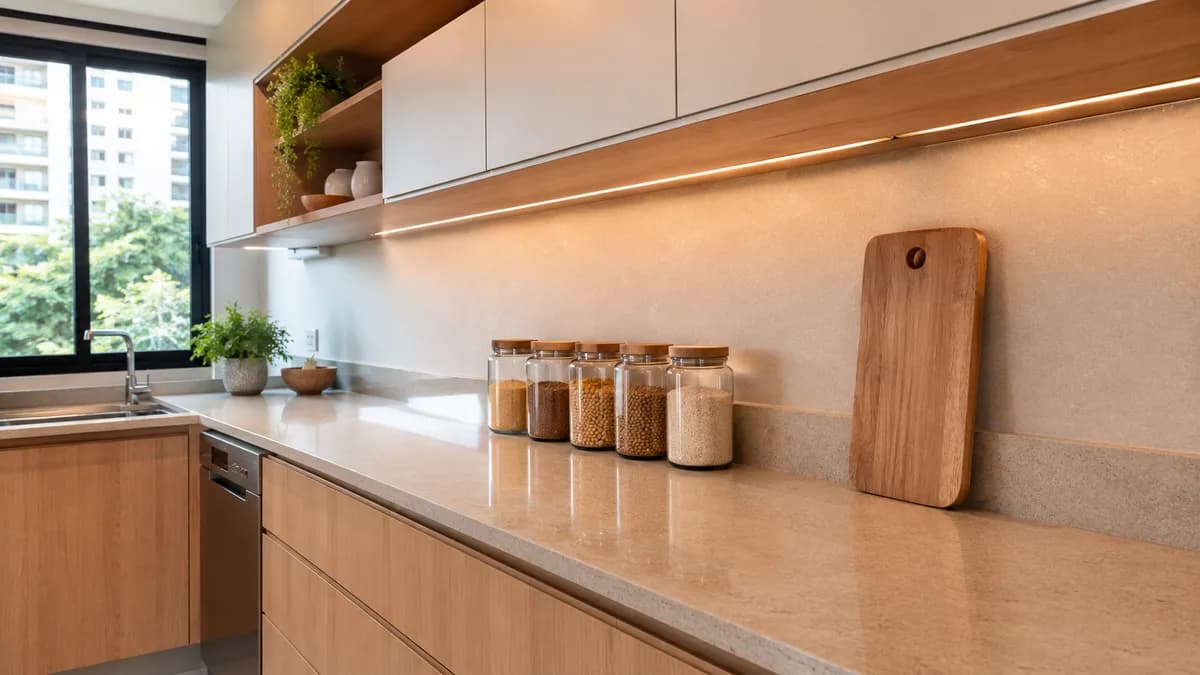
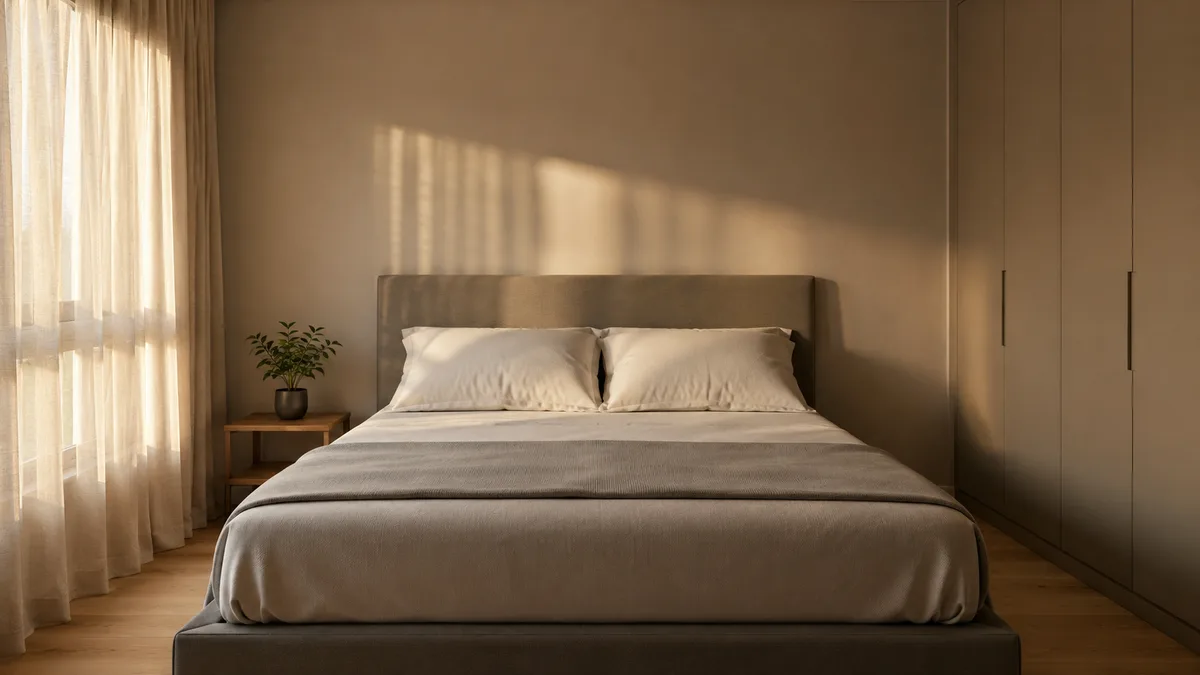
Why does a messy bedroom disrupt sleep?
Because visual clutter keeps the brain in an alert state right when it needs to switch off. Sleep medicine research links accumulation and disorganization in the bedroom to worse sleep quality, more trouble falling asleep, and more fatigue during the day. The room that should signal rest ends up signaling unfinished business.
The American Academy of Sleep Medicine reports that people with a strong tendency to accumulate show significant sleep complaints, and that visual clutter generates stress, a well-known enemy of quality sleep. The AASM material links the sense of loose ends around the bed to trouble relaxing. A bedroom with clear surfaces and everything in its place is a bedroom that helps you sleep.
Is organizing self-care or just aesthetics?
It is self-care before it is aesthetics. Psychologists at USP describe organizing and planning your routine not just as a productivity strategy, but as a self-care tool. A home that works reduces repeated decisions and lowers the mental noise that builds up when nothing has a defined place.
Jornal da USP has frequently covered the link between environment, routine and mental health, at a time when work leave for mental disorders is rising in Brazil. Organizing your home is not the solution to everything, and it would be dishonest to sell it that way. But removing the daily friction of searching, deciding and fixing frees up energy for what matters. The good-looking result comes along, and it is the least important part.
What changes when your home works
The invisible cost of the day changes. Without the constant search, without the flashpoint of clutter, and with a bedroom that invites sleep, you have more attention and more calm left over. Science measures this in focus, cortisol and sleep quality. At home, you feel it as lightness, no chart needed to notice it.
He organized his home expecting productivity. He found something else.
In an apartment in Tatuapé, a client who lives alone hired organization thinking only about getting more done working remotely. He kept putting it off because he thought paying for it was silly. After his home got a system, he told me the surprise was not productivity, it was that he stopped waking up tired. His bedroom used to pile clothes on a chair and boxes in the corner, and he was sleeping badly without connecting the dots. With the space sorted out, his sleep got better. The lesson that stuck with him was simple: the home was not just cluttered, it was charging a price he had not even noticed paying.
Organization is not perfection, and it is not a magazine home. It is functionality that gives you back focus, lowers background stress, and helps you rest. Science explains why. The difference, day to day, you feel in the first week. That is the logic behind the organization for the mind approach: reduce the invisible load before you even think about aesthetics.
Project assessment
Want that weight off your mind?
Tell me about your home on WhatsApp: I will reply with a project assessment.
Request AssessmentFrequently asked questions about clutter and health
Does clutter affect the brain?
Yes. Attention neuroscience research at Princeton shows that multiple objects competing in the visual field fight for the same brain resources. The more disorganized stimuli around you, the harder the brain has to work to filter out what does not matter, and that constant filtering wears down your capacity to focus over the course of a day. An organized environment reduces that competition and frees up attention for what you actually want to do.
Does clutter at home increase stress?
The evidence points that way. A UCLA study of dual-income couples found that women who described their own home as cluttered and unfinished showed a cortisol pattern associated with stress and depressed mood. Cortisol is the stress hormone, and the home environment functioned as a measurable daily trigger, even after controlling for other factors such as marital satisfaction.
Why does a messy bedroom disrupt sleep?
Because visual clutter keeps the brain in an alert state right when it needs to relax. Sleep medicine research links clutter and disorganization in the bedroom to worse sleep quality, more trouble falling asleep, and more daytime fatigue. The room that should signal rest ends up signaling unfinished tasks, and that gets in the way of the wind-down you need to sleep well.
Is organizing your home self-care or just aesthetics?
It is self-care before it is aesthetics. Psychologists at USP describe organizing and planning your routine not just as a productivity strategy, but as a self-care tool. A home that works reduces repeated decisions, frees up time, and lowers the mental noise that builds up when nothing has a defined place. The good-looking result is a consequence, not the goal.

About the author
Silvana Santanna →Personal Organizer in São Paulo, specialized in residential move organization and functional organizing projects for homes, closets, kitchens, trousseaux and home offices. Creator of the Casa Pronta™ Method, with more than 100 projects completed across São Paulo and the greater metro area.

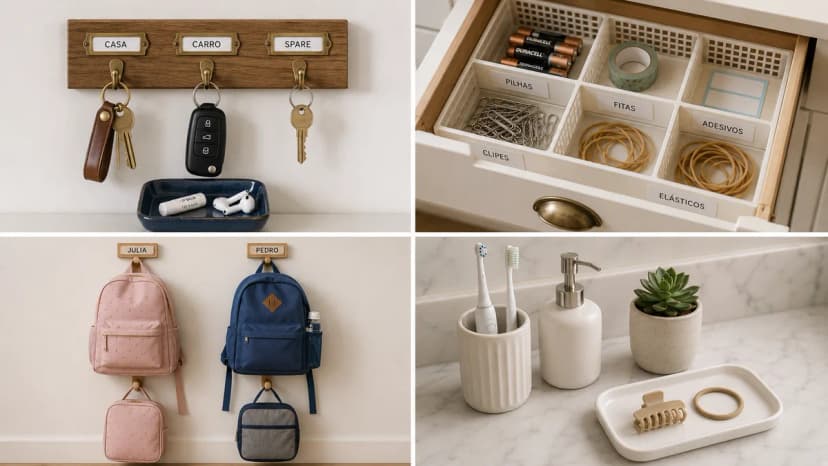
Ready to have your home organized
without lifting a finger?
Project assessment visit.