An Organized Home with a Pet in an Apartment: 4 Fixed Zones
Pets in a São Paulo apartment: entrance, feeding, hygiene and rest as fixed zones, in the routine of people who leave early and come home late.
Neste guia você verá:
- 01The problem is not the pet: it is the zone that does not exist
- 02The four fixed zones of an apartment with a pet
- 03Pet hair in an apartment closed all day
- 04Food and bedding in São Paulo humid season
- 05Dogs: the door, elevator, sidewalk route
- 06Cats: the litter box with no service bathroom
- 07Toys in a compact floor plan: rotation
- 08The routine of leaving early and coming home late
A pet in an apartment does not make a mess of the whole home: it makes a mess of the route between zones nobody ever defined. Set four fixed points, entrance, feeding, hygiene and rest, and the pet's belongings stop migrating to the kitchen counter.
In a compact São Paulo floor plan that route is short, which is precisely why it disappears. There is no entry hall, no yard, no pantry. The leash ends up on the counter because nobody put a hook three steps from the door. The food bag sits on the laundry room floor because the lower cabinet is already full of cleaning supplies. None of this is a lack of discipline: it is a lack of address.
And it is not a problem for the few. Brazil has around 160 million pets and is the third-largest pet market in the world, according to Abinpet (the Brazilian Association of the Pet Products Industry). A large share of those animals live in apartments, with both owners out of the house all day.
The problem is not the pet: it is the zone that does not exist
A messy home with a pet is not a consequence of having a pet. It is the consequence of a system built for a property you do not own. Most of what gets written about living with animals assumes a yard, a generous laundry room and someone home during the day. In a São Paulo apartment with two adults working outside, three specific things produce nearly all the disorder:
- Belongings with no address in a floor plan with no slack: when there is no defined zone, the temporary item lands on a working surface, the counter, the sofa, the laundry room floor. A compact home has no neutral corner to absorb clutter: every loose object takes up circulation space.
- Hair in a space closed from 7am to 7pm: shut windows and running air conditioning keep hair circulating and settling in the same places. It is not the amount of hair that bothers you: it is how concentrated it is on three surfaces.
- Toys with no limit: twenty toys out at once in a combined living and dining room become an obstacle course, not entertainment.
If your home is small and the squeeze is the real backdrop, read this alongside how to organize a small apartment in São Paulo: the zone logic is the same, with or without an animal.
The four fixed zones of an apartment with a pet
The classic pet station, everything in a single cabinet, works in a home with a large laundry room. In an apartment it splits into four points, each placed where the action actually happens.
Zone 1: the entrance, the most important square meter
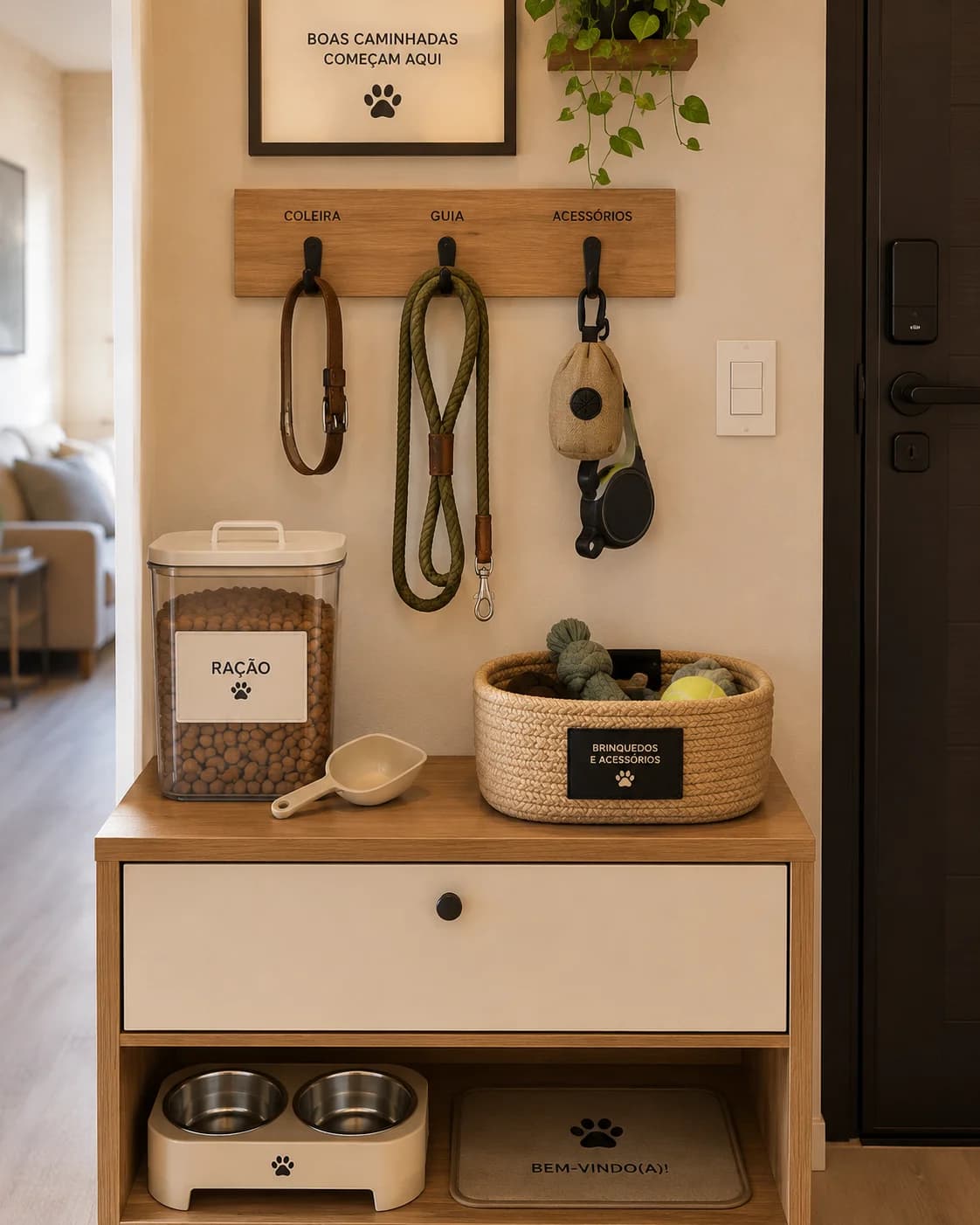
In a building, the pet has to be on the leash before the door opens: the way out runs through the lobby and the elevator. That makes the entrance the hardest-working zone of the day. A hook for the leash and collar on the wall beside the door, a bag dispenser mounted next to the hook, the pet towel on a low hook and an absorbent mat on the floor. Nothing inside a cabinet, nothing that requires opening a drawer while the dog pulls.
Zone 2: feeding, out of the walkway
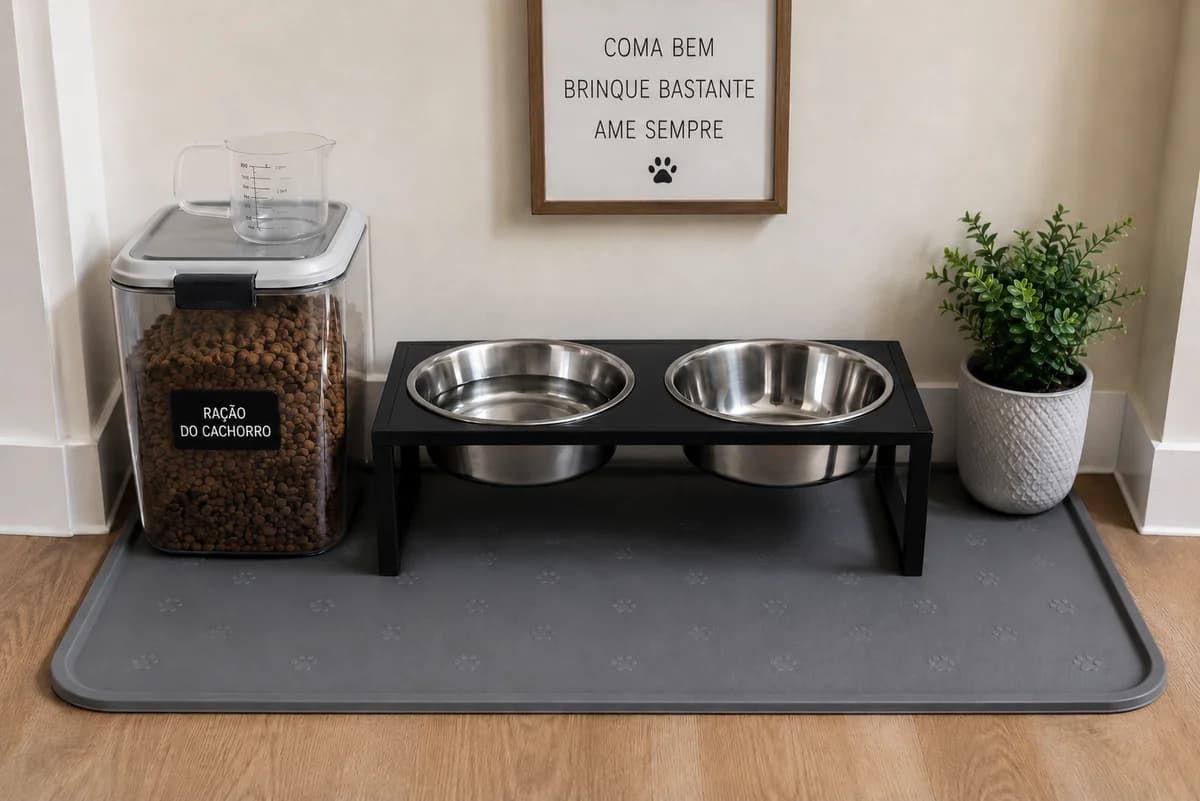
An apartment laundry area is narrow and usually a passage, not a room. Bowls in the middle of that passage get kicked and turn into puddles. Place the bowls in the corner opposite the washing machine, on a waterproof mat that marks the zone, and keep the food in an airtight bin with a scoop in the nearest cabinet, never on the floor.
Zone 3: hygiene, ventilated and away from the food
For a cat, this zone is the litter box with the scoop on a fixed holder beside it. For a dog, it is the pee pad or bath spot, with brush, shampoo and towel in their own basket, kept apart from human products. The rule that does not change: permanent ventilation and distance from the food bowls.
Zone 4: rest, with fabric that fits in the machine
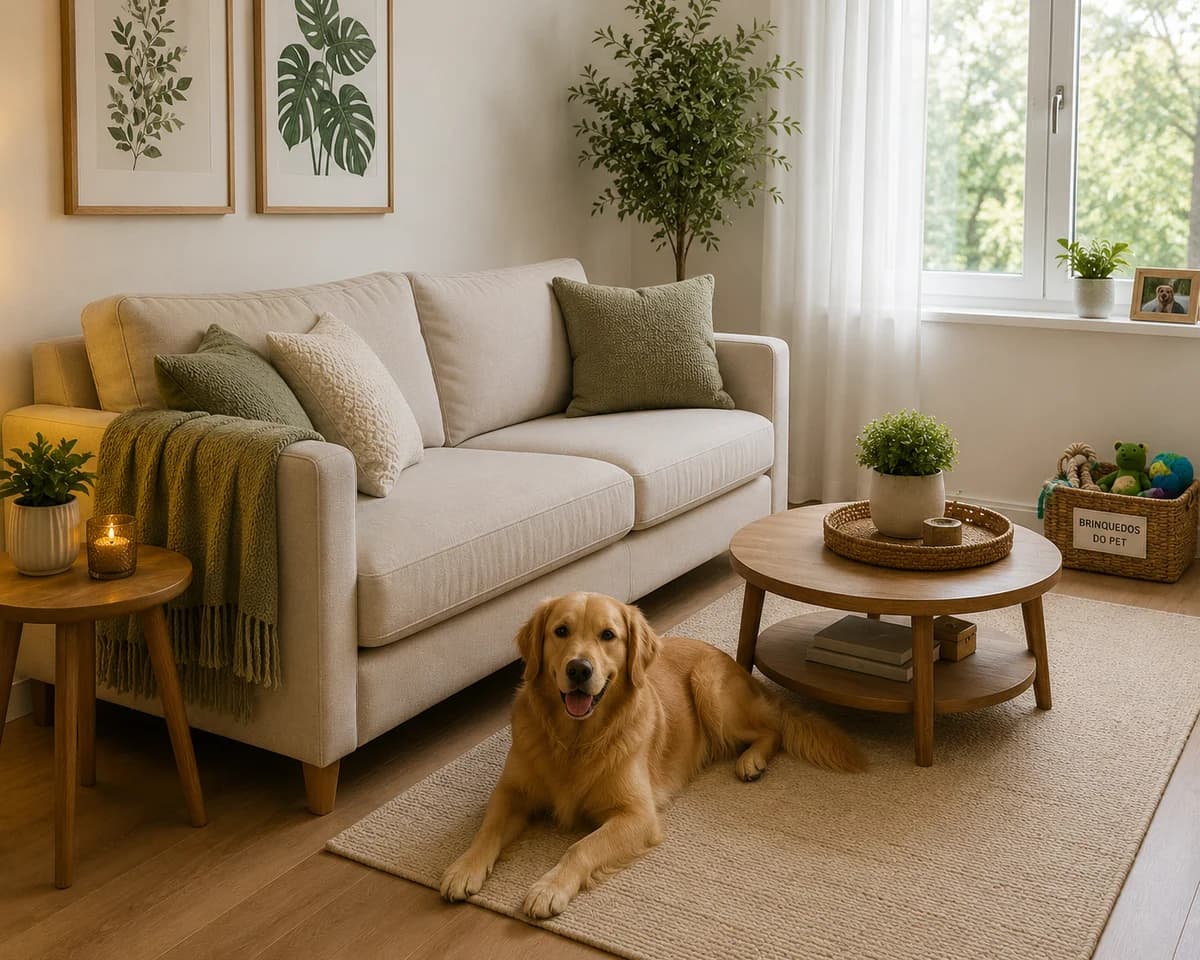
The pet bed, the sofa cover and the rug in the rest area all have to fit the apartment's washing machine. A beautiful fabric that only takes dry cleaning becomes a permanently dirty fabric. This is also where the open, low toy basket goes, at the spot where the pet spends most of its time.
Only one item falls outside the four zones: the paperwork. The vaccination card, current medications and vet history go in a labeled folder alongside the family's own documents, not in a kitchen drawer.
The mess rarely comes from the animal itself. It comes from the animal's belongings scattered in different places, with no logic for putting them back.
In a 75m² apartment in Tatuapé, a couple with a 3-year-old labrador had every item for the dog in a different room. The leash sat on the kitchen counter. The food was in an open bag on the laundry room floor. The dog's towel was a floor rag set aside for that purpose. The waste bags stayed in the owner's pocket, and he didn't always remember to restock them. On rainy days, they spent 10 minutes looking for the towel before wiping the dog's paws.
We set up the station at the entryway: a hook for the leash and collar, a wall-mounted bag dispenser, a basket with the dog's towel. An airtight bin with a scoop in the laundry area for the food. An absorbent mat by the door. Everything accessible within 30 seconds before heading out.
The owner said he stopped "dreading the morning walk." What changed was having a place for everything that belonged to the dog.
The takeaway: the entrance zone serves the person doing the caretaking, not the animal. When the owner knows where everything is, daily care stops turning into a search with the dog pulling on the leash.
Pet hair in an apartment closed all day
Hair is inevitable. Buildup is not. In an apartment, the difference is not vacuuming more: it is where you brush and which fabrics the pet uses.
Prevention at the source, with the space you have
- Brushing on the balcony or in the laundry area with the window open: with no yard, the balcony is the outdoors you actually have. Brushing in the living room redistributes hair across every surface instead of removing it. In São Paulo, where steady temperatures spread shedding across the whole year, two or three sessions a week for medium and long coats change what settles on the sofa;
- A washable cover on the furniture your pet uses: washing a cover is faster than vacuuming an entire sofa. Prefer a smooth weave: velvet and bouclé trap hair, smooth microfiber releases it;
- A rug that fits your machine: in the rest area, a vinyl or washable rug replaces natural fiber. Jute and sisal hold hair and cannot be washed in a building with no large laundry sink.
Cleaning the three points where hair concentrates
- A vacuum with a HEPA filter and an upholstery attachment: used on the sofa, the pet bed and the path from the entrance to the living room, it does more than vacuuming the whole apartment;
- A damp silicone glove on rugs and upholstery: drag the glove across the fabric, the silicone attracts hair far more effectively than an ordinary cloth;
- An adhesive lint roller in the entrance zone: dark clothes and a shared elevator call for the roller on the way out, not once you reach the office;
- Vacuum before sweeping: a broom lifts hair and scatters it, a vacuum collects it.
Hair on the sofa comes from brushing done inside. Moving the brushing to the balcony solves the problem before it ever gets in.
In a 120m² home in Lapa, a couple with two German spitz spent 45 minutes a day just cleaning up hair. They vacuumed daily, but the hair came back within hours. The dogs were brushed indoors, on the same jute rug that couldn't be washed. There was no cover on the sofa. The owner described the brush she used as "useless."
We moved the brushing to the balcony, three times a week. We put a smooth microfiber cover on the sofa and replaced the jute rug with a washable vinyl one in the dogs' resting area. With a HEPA-filter vacuum, cleaning time dropped from 45 to 15 minutes a day.
The owner said the house "seemed to have less dog" in it. It didn't. The hair built up in the fabrics had simply gone down.
The takeaway: brushing indoors redistributes hair across every surface. Brushing on the balcony is the simplest change with the biggest visible payoff, and in an apartment it is the only version of "outside" that exists.
Food and bedding in São Paulo humid season
São Paulo has a humid, rainy summer and a dry winter, and the pet's supplies feel both. In the humid months, an open food bag leaning against the laundry room wall hardens, loses fat and attracts pests. Beds and rugs take a long time to dry in an apartment with no covered balcony, and fabric that dries slowly is exactly the fabric that starts to smell.
- Food always in a closed airtight bin, sized by the cabinet space and not by the bulk bag on sale. Buy the volume that fits the bin;
- No packaging on the floor: a cold laundry room floor condenses moisture under the bag, and that is where mold starts;
- Covers and beds in rotation: two simple covers solve more than one good cover, because during the rainy stretch the first is still drying when the pet has already soiled the second.
Dogs: the door, elevator, sidewalk route
In a building, the walk does not start on the street. It starts the moment the apartment door opens, with the pet on the leash, the bag already in your pocket and a hand free for the elevator. Every item missing at that moment turns into a trip back inside.
Going out
- Leash and collar on the hook beside the door, at hand height, never inside a cabinet;
- Bag dispenser mounted next to the hook, refilled the moment it runs out;
- Pocket treats in a small container in the same zone, for elevator and lobby training;
- If the building asks for the service elevator with pets, confirm the rule in the bylaws and settle it with the front desk before it becomes friction.
Coming back, where the dirt gets in
- A washable absorbent mat on the entrance floor: the dog steps on it and part of the sidewalk dirt stays there;
- A low basin with water or a damp towel for paws on rainy days, which in São Paulo cluster in the late afternoon, exactly at walk time;
- A dedicated pet towel on its own hook, never a human bath towel;
- The leash back on the hook right away, before you sit down.
Organized feeding
- An airtight food bin with a built-in scoop, which eliminates the open bag on the floor;
- A waterproof mat under the bowls, which makes cleaning easier and marks off the zone;
- Treats in a closed, labeled container, not in the torn original packaging.
Cats: the litter box with no service bathroom
Almost every piece written about cats says to put the litter box in the service bathroom. In a large share of the São Paulo apartments delivered in recent years, that room does not exist: the laundry area is built into the kitchen and the only bathroom besides the main one belongs to the suite. The real question is not where the ideal spot is, it is which of the available options gets it least wrong.
How to choose the spot
- A ventilated corner of the laundry area, at the point farthest from the food bowls and out of the path to the washing machine;
- The shower stall of a rarely used bathroom, with the door kept ajar and a simple weight to stop it from swinging shut;
- Never inside a closed cabinet or a decorative unit with no opening: with no air exchange the odor concentrates and the cat starts avoiding the box, which moves the problem onto the rug;
- A textured mat under the box, which traps most of the granules before the hallway, and the scoop on a fixed wall holder, never on the floor.
Scoop once a day and change the litter completely once a week. A covered box with an activated-carbon filter reduces odor between scoops, but replaces neither of those two.
A scratching post built into the space
A cat with no scratching post will scratch whatever it finds, and in an apartment what it finds is the sofa or the bedroom door frame. Instead of fighting the behavior, place posts at the spots the cat already scratches and near the screened window, where it spends the day. Sisal models on a wood frame work without clashing with the living room.
Feeding
- Elevated bowls, which reduce neck strain in adult cats, on a waterproof mat;
- Food in an airtight bin: cats are sensitive to oxidized food, and in a humid summer that happens fast;
- More than one cat calls for separate bowls in different spots: they eat better without visual competition.
An apartment with a pet needs defined zones, not perfection. See how to build that system with professional help.
Explore home organization →Toys in a compact floor plan: rotation
In an open-plan living room, scattered toys are not a sign of an active pet: they are an obstacle between the sofa and the kitchen. The answer is rotation. Keep 4 to 6 toys available in an open, low basket in the rest zone, store the rest in a closed box, and swap 2 or 3 pieces each week. A pet takes more interest in what appears than in what is always there.
Throw away destroyed toys without delay: on top of the mess, loose pieces are a real choking hazard.
In a 65m² apartment in Moema, a solo tutor had 34 cat toys bought over four years. The two cats didn't use most of them. A wand toy under the sofa, plush mice forgotten in the hallway, balls scattered across the living room. Some were destroyed, but she felt guilty throwing them away: "What if they miss them?"
We threw away the destroyed ones. We set aside the ones still in good shape: an open basket in the living room with 5 toys, a closed reserve with the other 12. Every week, 2 to 3 toys switch places between the basket and the reserve.
The cats started using the basket more often. She said they played with whatever showed up as if it were brand new. The living room was left with no clutter to clean.
The takeaway: rotation keeps a pet interested without buying anything new. In a compact home, it gives the living room floor back, which is what was at stake.
The routine of leaving early and coming home late
With the four zones in place, maintenance stops being a block of weekend chores and starts fitting into the two moments when the owner is home and on their feet: before leaving and on the way back in.
- Before leaving: water and food bowls washed and filled
- Before leaving: leash, collar and waste bags back on the hook after the morning walk
- Before leaving: a window in the pet’s room set to permanent ventilation
- On the way in: paws cleaned in the entrance zone before the pet walks through the home
- On the way in: litter box scooped and whatever left the toy basket back in the basket
- Once a week: vacuum the sofa, the pet bed and the path from the entrance to the living room
- Once a week: bed, cover and pet rug in the machine, and 2 to 3 toys rotated
- Once a week: a full litter change
- Once a month: stock of food, treats and grooming products checked before shopping
- Once a month: airtight bins and the organizers in all four zones washed
Frequently asked questions about pets in an apartment
Where do you put the litter box in an apartment with no service bathroom?
In a compact floor plan, where the laundry area is built into the kitchen, the best spot is the corner of the laundry area farthest from the food bowls, with permanent ventilation and out of the path to the washing machine. The second option is the shower stall of a rarely used bathroom, with the door kept ajar. Never inside a closed cabinet: with no air exchange the odor concentrates and the cat starts avoiding the box. A textured mat under the box traps most of the granules before the hallway.
How do you reduce pet hair in an apartment that stays closed all day?
Brush the pet on the balcony or in the laundry area with the window open, never in the living room or bedroom: brushing indoors redistributes hair instead of removing it. In a home that sits closed all day, loose hair circulates and settles in the same three places: the sofa, the pet bed and the path from the entrance to the living room. Washable covers, a rug that fits in the machine and a HEPA-filter vacuum aimed at those three points solve most of it.
How do you set up the entrance zone for walks in an apartment building?
In a building, the pet has to be on the leash before the door opens, because the way out runs through the lobby and the elevator. That defines the zone: a hook for the leash and collar on the wall next to the door, a bag dispenser beside the hook, the pet towel on a low hook and an absorbent mat on the floor. Everything within arm's reach, with no cabinet to open. Coming back, clean the paws before the pet walks through the home and return the leash to the hook right away.
How do you prevent pet odor in a closed-up apartment?
Odor comes from three sources: urine, hair built up in fabric and the pet bed. Urine needs immediate enzymatic cleaning with a product made for pets, not bleach, which oxidizes fabric and locks the odor in. Hair needs vacuuming of the rest areas. The bed needs weekly washing in hot water. In an apartment closed all day, add a window in a permanent ventilation position in the room where the pet stays: still air concentrates odor more than the source itself.
How do you store pet food in an apartment with no pantry?
Food goes in an airtight bin with a scoop, sized by the space you have and not by the bulk bag on sale. With no pantry, the bin fits under the laundry counter or in the lower cabinet closest to the bowls, always off the floor. An open bag leaning against the wall is the classic mistake: in São Paulo's humid summer, exposed food hardens, loses fat and attracts pests.
An organized apartment even with a pet: zones that work in the real routine
Silvana knows the challenges of living with an animal in an apartment and designs the zones from the floor plan and the family's routine.
Request an Assessment →
About the author
Silvana Santanna →Personal Organizer in São Paulo, specialized in residential move organization and functional organizing projects for homes, closets, kitchens, trousseaux and home offices. Creator of the Casa Pronta™ Method, with more than 100 projects completed across São Paulo and the greater metro area.
Ready to have your home organized
without lifting a finger?
Project assessment visit.