How to Organize a New Off-Plan Home from Scratch in São Paulo
Just got the keys to a new or off-plan home in São Paulo? See how to plan and organize every room from scratch, before you furnish and before the move arrives.
Neste guia você verá:
Why does organizing a new home start before the move?
Because the empty home is the only version of the property where you decide everything without obstacles. No furniture in the way, no boxes stacked up, none of the rush of moving day. It is in this window, between getting the keys and the truck arriving, that the decisions most expensive to fix are made calmly.
And a lot of people are in that situation in São Paulo right now. Residential launches in the city grew 34% in 2025, with nearly 140,000 new units in twelve months, according to Sinduscon-SP. Each of those keys handed over is a family about to repeat the same mistake: filling the home before planning how it will actually work.
After years organizing moves in São Paulo, I learned that the difference between a calm move and a chaotic one almost never lies in the day of the truck. It lies in the three weeks before it. Whoever uses the empty home to plan walks into the new place with a map. Whoever does not decides everything on the fly, with the sweat of the move already dripping.
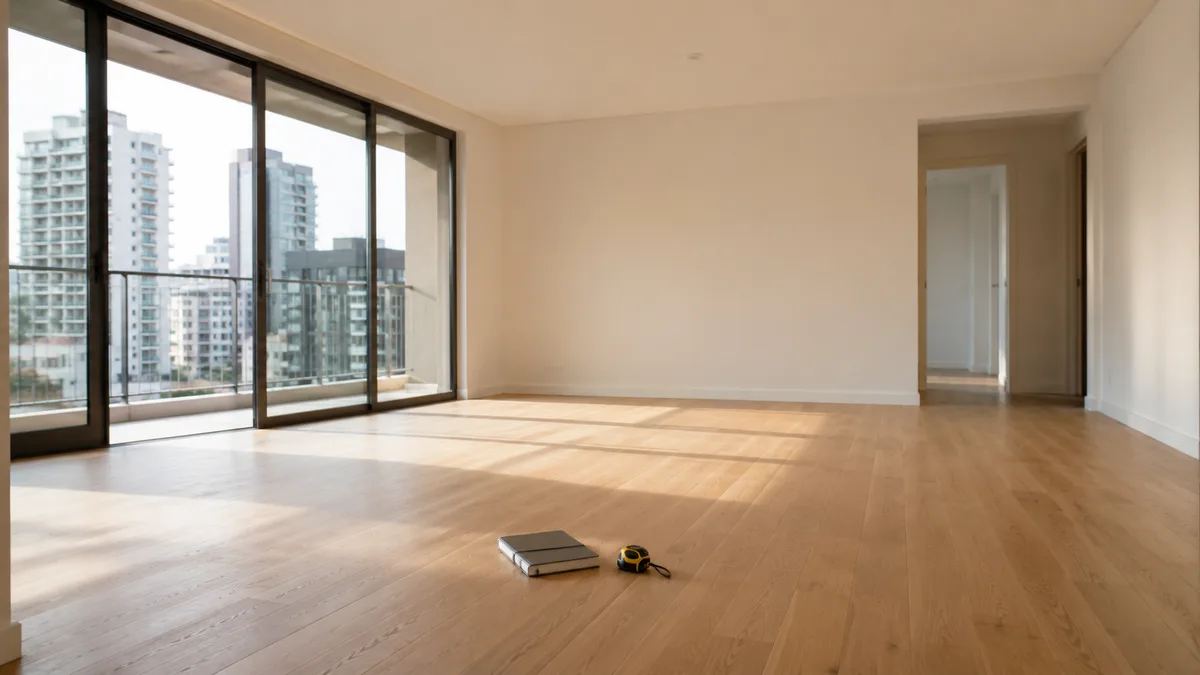
What can you decide while the home is still empty?
You can define the function of each room, mark on the floor where each use zone will sit, and check whether the outlets, light points and water connections match what you plan to place there. With the space empty, each of these decisions costs a strip of masking tape. With the home full, it costs moving furniture around.
The point almost no one checks in time is the fixed infrastructure. Where are the kitchen outlets in relation to the fridge, the microwave and the small appliances? Does the bedroom light point sit over the bed or over the middle of the room? Does the living room outlet reach where the TV will go, or will it depend on a visible extension cord? In the empty home, you walk through the rooms and see these conflicts before they turn into a workaround.
One simple technique solves much of this: mark the outline of the main furniture and the circulation zones on the floor with masking tape. You walk through the plan at real scale and feel what the 3D render does not show.
A couple who got the keys to a new apartment in Vila Leopoldina called me three weeks before the move. Three bedrooms, the smell of fresh paint, nothing inside. They wanted to "just move in," but had not yet decided what would go in each corner, and cabinetry and furniture were already arriving the following week.
We spent the afternoon marking on the floor with masking tape where each zone went and checking the outlets against the real position of the appliances. In the middle of it, we noticed the planned closet, already designed, had one module too many for the clothes the couple actually owned. The husband wanted to close the project quickly, he was impatient. Pushing the signature back by a week was not comfortable, but it avoided paying for drawers that would sit empty.
The lesson: the empty home is the only chance to test decisions at no cost. Every adjustment made there is a strip of masking tape repositioned. That same adjustment, later, is a heavy piece of furniture to move or a built-in to rework.
How to plan the cabinetry before buying the built-ins?
By reviewing the carpenter’s project against what the family actually uses, not against what looks good in the 3D render. Built-ins are designed from the real inventory of belongings: how many clothes, which appliances, what needs to stay within reach. Closing the cabinetry based on the render is the fastest route to a beautiful, useless drawer.
The render deceives because it was made to sell, not to serve. It shows the kitchen with three wine glasses and a vase of flowers. Your real kitchen has an air fryer, a robot vacuum, an electric pressure cooker and your grandmother’s stand mixer. If the project did not reserve space for what you use every day, those items end up on the counter, and the counter becomes a dumping ground within the first month.
Before signing any built-in project, take inventory of what will live there. Count, measure, list. It is that survey that tells you how many drawers you need, at what depth, and where. The carpenter draws well what you specify well.
A client in a gated community in Tamboré was one day away from signing the kitchen and closet project. The 3D was beautiful. It had a tower of shallow drawers in the center of the kitchen and a niche dedicated to wine glasses. Except she rarely hosts formal dinners, and the drawer tower stole the space where the air fryer and the robot vacuum would fit. We reviewed item by item what she actually uses.
We cut the drawer tower and opened a niche for the small appliances. She had already paid the deposit, so not everything could be changed: the large stand mixer still ended up without a defined spot and lives on a high shelf to this day. Adjusting the essentials within the deadline saved the kitchen from becoming a cluttered counter, but it left the lesson that reviewing the project a week earlier would have saved the mixer too.
Before closing the built-ins for your new home, it is worth a professional eye on the project: does what you really use fit what the carpenter designed?
See the cabinetry consulting →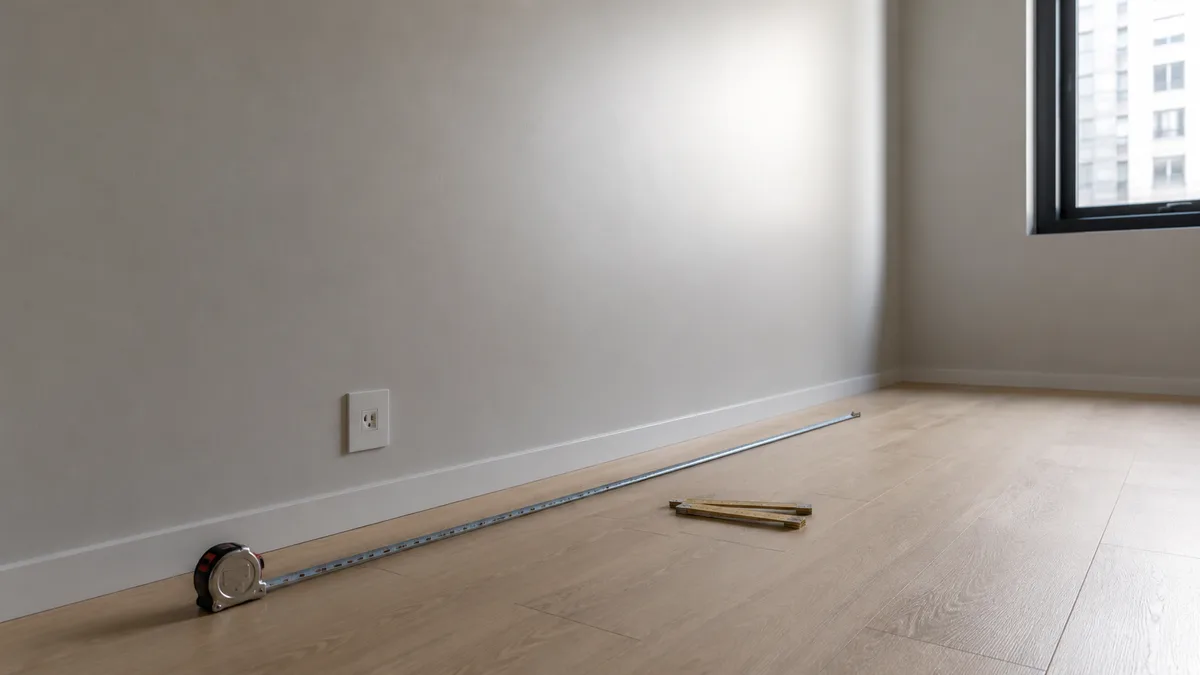
In what order should you organize the rooms when you get the keys?
Start with the rooms where the routine cannot stop: a basic kitchen and the bedrooms. Keeping those two working on the first day protects sleep and meals, which is what keeps the family standing while the rest settles. The living room, home office and leisure come afterwards, without rush and without harm.
The logic is simple: organize first what breaks the routine if it is not ready. No one gets sick because the living room spent a week with boxes. But a child without a made-up bedroom on the first night, or a kitchen where you cannot even make a coffee, turns the first days into pure strain.
Suggested order of priority
- Bedrooms, starting with the children’s: bed assembled, bedding and everyday clothes within reach
- The kitchen at its basics: essential dishes, whatever makes coffee and the simple meals of the first days
- Bathrooms: towels, toiletries and items for immediate use
- Laundry area: the minimum to handle the first load of dirty clothes
- Living room and social areas: they can wait days without harming the routine
- Home office, leisure and seasonal items: last, and at a calm pace
This same reasoning is what supports moving organization with the Casa Pronta method: walking into the new home with the essential rooms already working, instead of opening box after box in the dark.
How to reach moving day with the home ready to receive everything?
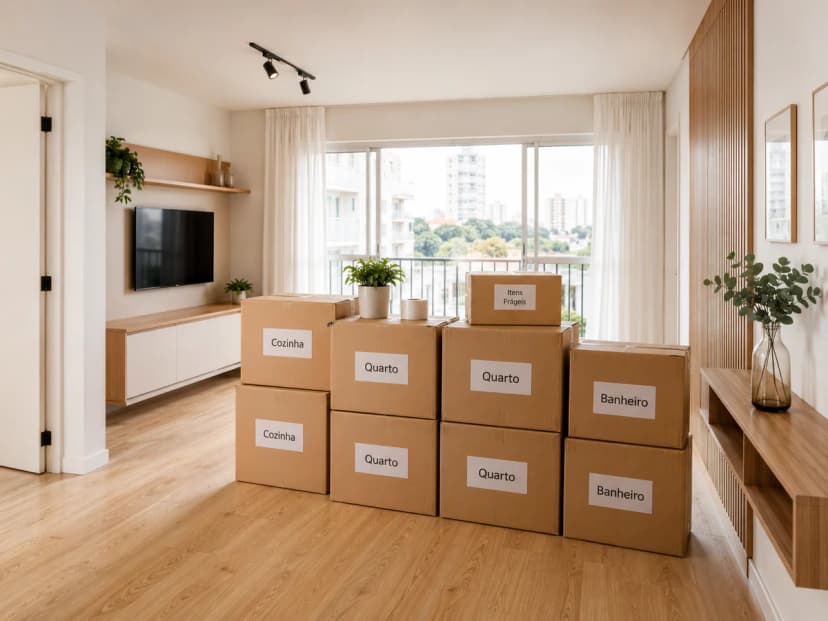
By deciding, before the truck arrives, where each box will be unloaded and in what order the rooms will be set up. Boxes labeled by room and a clear sequence of priority avoid the classic scene: everything piled up everywhere, with no idea where to start. The plan made in the empty home becomes the script for the day.
A family with two young children moved into a new home in Granja Viana. On their first move, with no plan, the truck arrived and the boxes ended up in any corner. No one knew where to start. The children spent the first night on a mattress on the floor, in the middle of boxes, and the parents slept exhausted with no bedroom ready.
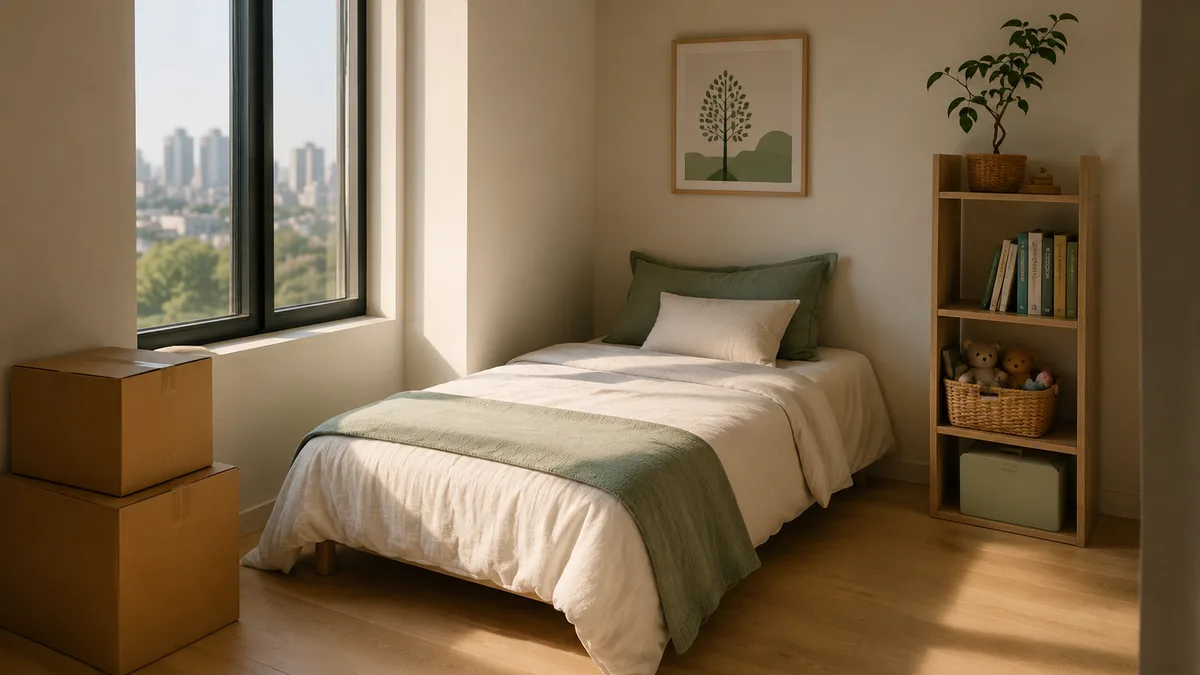
On the next project, we flipped the logic. Before the truck left, we decided that the boxes for the children’s bedrooms and the basic kitchen would be the first to come down and the first to be opened. The children’s bedrooms were set up on day one, with a bed, bedding and a box of toys within reach. The children’s sleep was preserved. The living room spent weeks with boxes against the wall, and that was fine: no one needed it ready in order to live.
The lesson: the order in which the rooms are set up decides whether the first week is chaos or calm. Starting with what the routine demands, sleeping and eating, gives the family firm ground while the rest finds its place. If you want a roadmap for what to do once the boxes arrive, the post on how to organize your home in the first 7 days after the move picks up exactly from this point.
Common mistakes when organizing a new home (off-plan or newly delivered)
The mistake I see most in the field is buying before planning: storage boxes, furniture and built-ins closed with no inventory of what the family actually owns. The second is trying to organize the whole home at once, instead of setting priorities. Both come from the rush to "get it done," and both charge dearly later.
- Closing the cabinetry from the render: the pretty project on the screen does not know your air fryer or your pile of clothes. With no inventory before the signature, you end up with useless drawers and no space for what you use every day.
- Buying organizers before measuring: boxes and baskets bought on impulse almost never fit right. Measure the cabinets and niches first, buy afterwards. In a new home this is easy, because everything is empty.
- Ignoring the fixed infrastructure: finding out the outlet does not reach the counter, or the light point sits over the wrong spot, after everything is set up turns into a visible extension cord and permanent improvisation.
- Organizing everything at once: spreading energy across every room at the same time leaves the whole home half done. Prioritizing sleeping and eating delivers rooms that are truly ready from the first day.
- Losing the empty-home window:postponing decisions to "when the move arrives" trades the cheap strip of masking tape for the heavy piece of furniture you now have to move.
Organizing a new home does not mean leaving everything perfect before you live in it. It means using the calm and the empty space in your favor to decide what needs to work on the very first day, and letting the rest find its place little by little. A home that starts this way does not impress in the handover photo. A month later, it still makes sense for the people who live in it, and that is what matters.
Frequently asked questions about organizing a new home in São Paulo
Is it worth hiring a personal organizer before furnishing a new home?
Yes, and this is the moment of greatest impact. With the home empty, you can decide the function of each room, check whether the power and light points match where the furniture will go, and review the cabinetry project before committing. Once the home fills up with furniture and boxes, every adjustment costs effort and money. Planning while the space is empty avoids buying the wrong built-ins and having to redo decisions later.
What is the difference between organizing a new home and post-move organization?
Organizing a new home happens before: with the place still empty, planning where everything will go and reviewing the cabinetry before buying. Post-move organization happens after the truck arrives, when there are boxes to open and belongings to place. One prepares the ground, the other executes with the things already inside. Ideally the first happens so the second is fast and free of improvisation.
Can I plan the organization of a home still off-plan, before I get the keys?
You can, and the best moment is as soon as you have the floor plan with the measurements in hand. With the plan you can define the function of each room, size the cabinetry around what the family actually uses, and plan the order of the rooms for the move. When the keys come out, you already walk in with a plan instead of deciding everything on the fly, in the middle of the neighbours’ renovation and a tight deadline.
Which room should I start with in a new home?
Start with the rooms where the routine cannot stop: a basic kitchen and the bedrooms, especially the children’s. Keeping those two working on the first day protects sleep and meals, which is what holds the family together while the rest settles. The living room, home office and leisure areas can wait days or weeks with no harm. Organizing everything at once is the mistake that turns the first week into chaos.
Receiving a new home?
A new home planned and organized from scratch in São Paulo
Silvana Santanna plans and organizes new homes in São Paulo, from empty space to a ready move, with the Casa Pronta method. Project assessment.
Request an assessment on WhatsAppServing São Paulo and the region

About the author
Silvana Santanna →Personal Organizer in São Paulo, specialized in residential move organization and functional organizing projects for homes, closets, kitchens, trousseaux and home offices. Creator of the Casa Pronta™ Method, with more than 100 projects completed across São Paulo and the greater metro area.

Ready to have your home organized
without lifting a finger?
Project assessment visit.